UC ANR is committed to providing an accessible and inclusive web experience for all users. If you encounter an accessibility barrier or need content in an alternative or remediated accessible format, please contact anraccessibility@ucanr.edu.
For many of us, gardening involves a constant battle with weeds. Basically, a weed is nothing more than a plant growing where it is not wanted, the classic example being dandelions in the lawn. But as the old saying goes, “One man’s trash is another man’s treasure,” and there are many “weeds” that are, in…
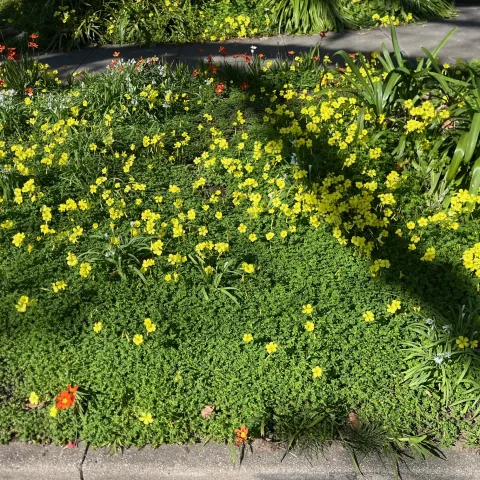
Bermuda buttercup (Oxalis pes-caprae), also called buttercup oxalis or sourgrass, might be a familiar sight in winter and spring, particularly to those who live in coastal regions or the Sacramento Valley. Some people enjoy seeing this plant’s cheerful yellow flowers pop up in their spring gardens, but for…
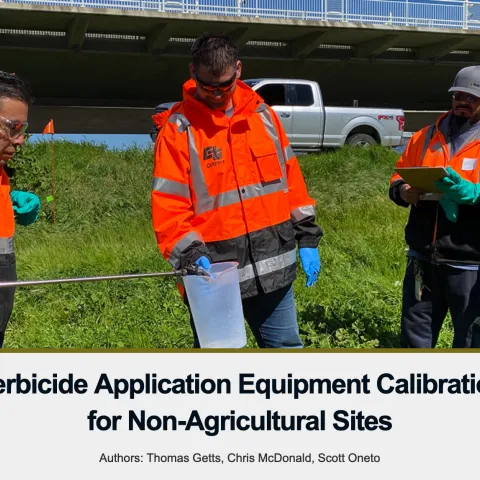
Calibration might sound intimidating, but it’s critical for safe and effective herbicide application. Proper calibration ensures that the correct amount of pesticide is applied to an area while achieving the desired level of pest control. To support land managers and pesticide applicators, the UC Statewide…
General situation, thrips population development Planting is in full swing. Temperatures and precipitation this spring are close to historic norms, and the thrips population predictions are very similar to those we saw last year. We’re currently at the peak of 1st-generation adults; they’ll be laying their…
Dear Colleagues,1) California Department of Food and Agriculture’s (CDFA) Integrated Pest Control Branch is now accepting applications for the Vertebrate Pest Control Research Program (VPCRP). This funding opportunity is designed to support innovative research and education projects aimed at…
Armillaria root rot, also known as Oak root fungus, is a disease of many different plants. There is no known effective cure. Root rot fungus disease of trees and woody plants. Affects palms, succulents, ferns and other herbaceous plants like begonia, daffodil, dahlia, and geranium. No…
Seedlings sometimes fail to sprout or die soon after. Seeds may rot before germinating, shoots may decay before they emerge, or stems of seedlings may be attacked near the soil line, causing young plants to collapse. These diseases are collectively called “damping off,” likely caused by a number of soil…
Downy mildews, including Peronospora and Plasmopara spp., are pathogenic water molds (oomycetes) that primarily damage foliage. Hosts include cane berries, roses, various herbaceous ornamentals, and many fruit, grain, and vegetable crops. Category Fungi Signs/Symptoms Downy mildew causes pale green to…
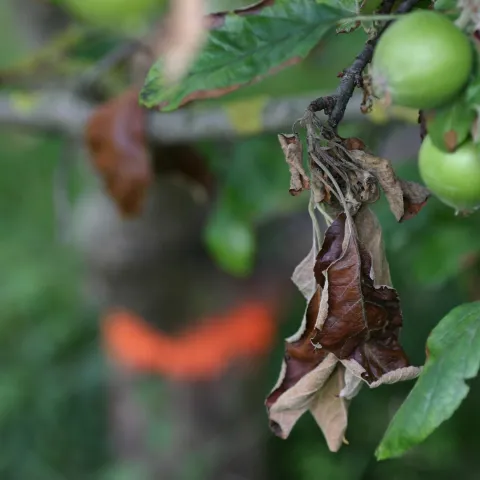
Fire blight is a common and frequently destructive disease of pome fruit trees and related plants. The disease can destroy limbs and even entire shrubs or trees. Caused by the bacterium Erwinia amylovora. Pear (Pyrus species) and quince (Cydonia) are extremely susceptible. Apple, crabapple …