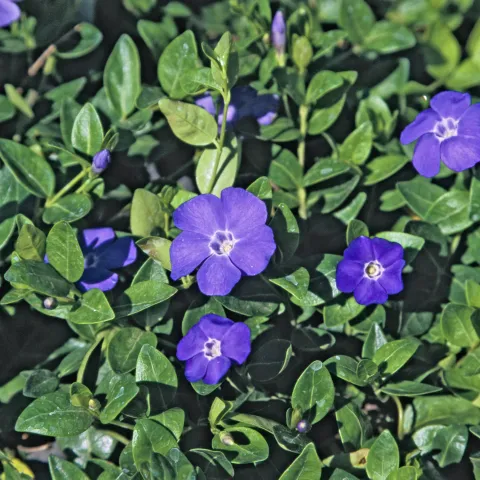
You might be surprised to learn that a few of your favorite ornamental plants are invasive to California and can “escape” your yard causing big problems in the wild. When plants escape landscape and garden boundaries, it is often due to seed distribution or aggressive roots. An invasive plant species can…
Winter rains and damp conditions in many parts of California may have brought a surprise visitor to your lawn: mushrooms! A few mushrooms sprouting in your lawn can be a good sign: it means there's plenty of organic matter in the soil. But if patches of mushrooms are sprinkled across your lawn, something…
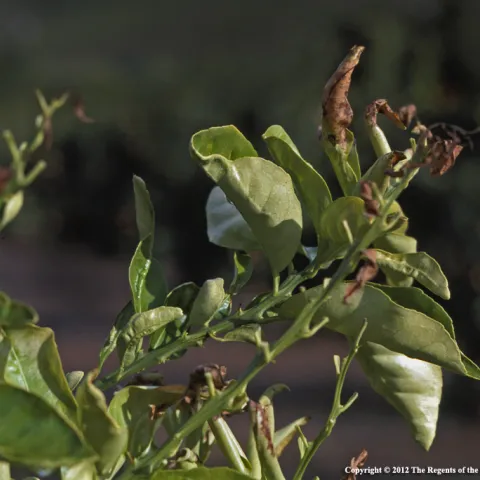
Freezing temperatures damage plants by causing ice crystals to form in their cells. Frost-damaged vegetation withers and turns a dark brown or black. Ice crystals can also form in citrus fruit, causing juice vesicles inside the fruit to rupture and the fruit to dry out. Although frost-damaged fruit is…
Jacqueline Champa, UC Master Gardeners of Placer County From The Curious Gardener, Fall 2010All summer you looked forward to your first, fresh-picked apple of the season. Picking a beautiful apple off the tree, the only imperfection is a slight red spot on the skin---somewhat like a blossoming…
By Elaine Applebaum, UC Master Gardeners of Placer County Q: I have a lot of nectarines on my tree this year but most have ugly brown and yellow scabby-looking scars on them. They’re also much smaller than the ones in the grocery store. Some of the leaves are curled and distorted, too. What am I…
The “Transition to Organic Webinar Series,” held on Wednesdays Jan. 14-March 18, covers the certification process, market dynamics, soil health, and pest and weed management.
By Trish Grenfell, UC Master Gardener of Placer CountyQ: I've been told to rotate the crops in my vegetable garden. Last year’s garden was very successful, and I don’t want to “fix it if it is not broken”. A: Crop rotation, which has been around for centuries, refers to the practice of…
There are a number of problems that can arise when growing tomatoes. Here are some problems you may encounter and why they happen.1) BLOSSOM DROP When daily temperatures are greater than 90 degrees and nights are higher than 72 degrees, the dried-out blossoms simply fall off the plant. No blossoms = no…
By Elaine Applebaum, UC Master Gardener of Placer CountyQ: Last year the Master Gardener Office diagnosed nematodes as the cause of my tomato crop and told me to change the location of my tomato bed next year. Unfortunately, I forgot all about it and planted this year’s tomatoes in the same place. Help…