UC ANR is committed to providing an accessible and inclusive web experience for all users. If you encounter an accessibility barrier or need content in an alternative or remediated accessible format, please contact anraccessibility@ucanr.edu.
Quick! How long have insects inhabited this earth? If you're taking a biology or an entomology course, you'll be asked that question on an exam. If you're attending the Entomological Society of America conference Nov. 16-20 in Reno, you probably already know that. A good answer: 400 million years.
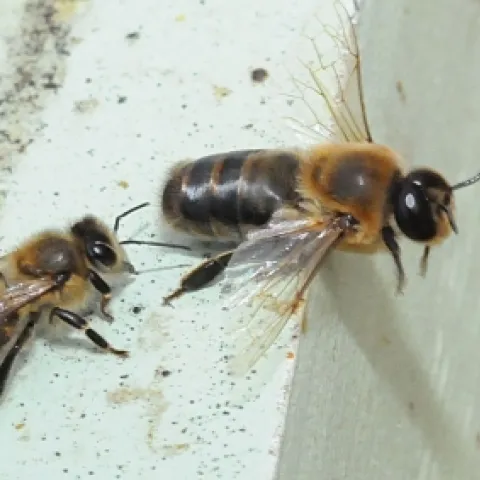
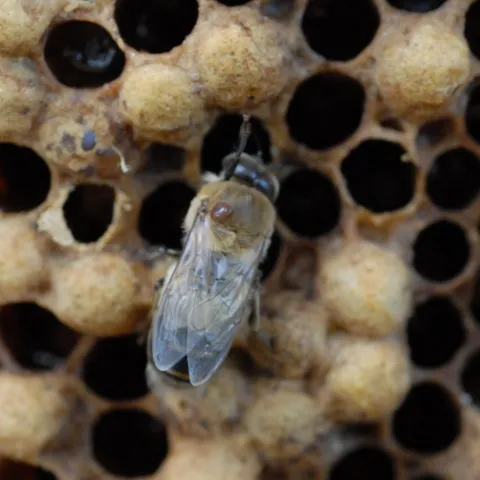
It's tough being a drone honey bee this time of year. The drones, or male bees, don't survive the winter. Bee breeder-geneticist Susan Cobey of the Harry H. Laidlaw Jr. Honey Bee Research Facility at UC Davis admits to having a soft spot for drones.
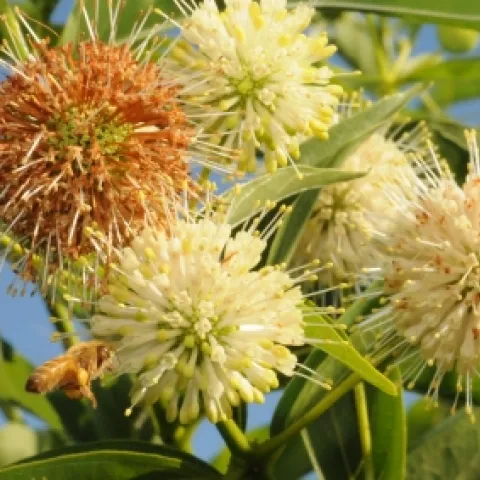
A bee on a ball. When it flowers, the button-willow (Cephalanthus occidentalis), also known as willow, buttonbush, honey ball, and button ball (oh, that's so close to butter ball!) attracts honey bees and butterflies like you wouldn't believe.
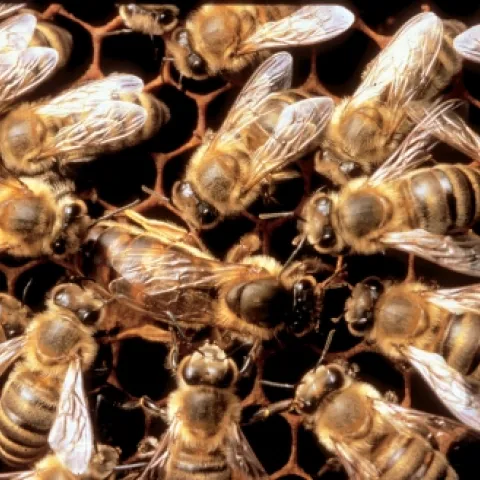
If you were a queen bee, you'd be laying about 1500 to 2000 eggs today. It's your busy season. "She's an egg-laying machine," said bee breeder-geneticist Susan Cobey of the Harry H. Laidlaw Jr. Honey Bee Research Facility at UC Davis. "And she's the mother of all the bees in the hive.
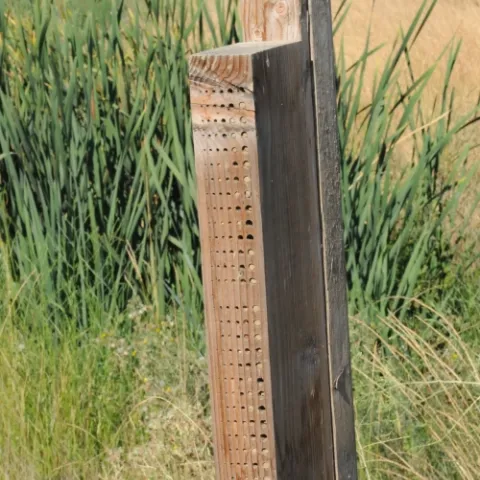
Build it and they will come. Baseball's Field of Dreams? No, a bee nesting block. Think "bee condo." It's an artificial nesting site made of wood and drilled with different-sized holes and depths to accommodate the diversity of native pollinators. Often the bee block is nailed to a fence post.
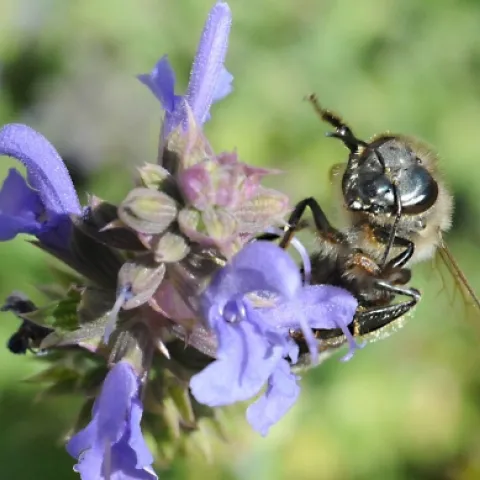
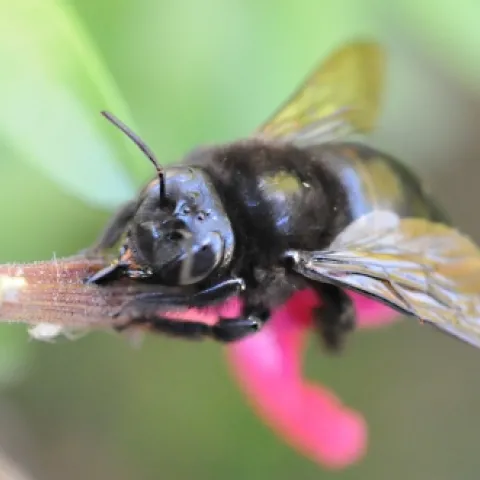
Robber at work. No, this isn't a bank heist or a gas station hold-up or a home invasion. A carpenter bee is slitting the sides of salvia (sage) to steal the nectar. Floral larceny! Book 'em, Danno! Carpenter bees are nectar robbers.
It's a mighty mite and it's causing beekeepers fits. The varroa mite (see photo below) is an external parasite that attacks honey bees. It sucks blood from the adults (apparently preferring drones, the male bees) and from the brood (immature bees).
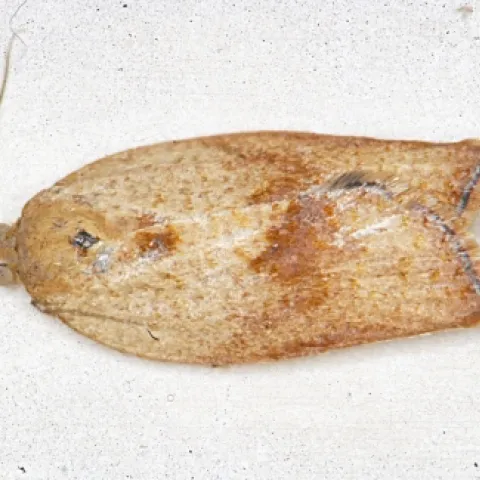
Bam! LBAM is back in the news. The California Department of Food and Agriculture announced Aug. 29 that it has established a 19-square-mile quarantine straddling portions of two counties after the light brown apple moth (LBAM) was found July 23 in Napa County and Aug. 10 in Sonoma County.
As a child, Dennis Price loved to watch the honey bees. I could sit and watch them all day, he said. He still does. Love the honey bees, that is. And he never tires of watching them. If you attended the California State Fair on Sunday, Aug. 17 or Saturday, Aug.
Hillary Thomas' biological control research on a leaf-eating beetle that targets saltcedar has scored a bullseye. Thomas, a doctoral candidate in entomology at UC Davis, has received a $15,000 Robert and Peggy van den Bosch Memorial Scholarship to support her research.