

Agriculture

Primary Image
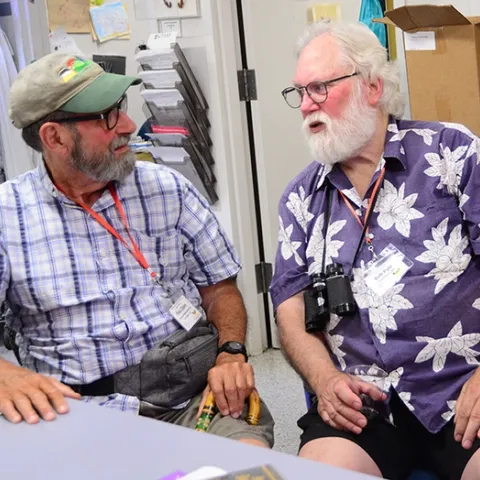
Legendary Lepidopterists Paul Opler (left), an octogenarian, and Robert Michael Pyle, a septuagenarian, chat during their visit to the Bohart Museum of Entomology. It was part of the Lepidopterists' Society's 68th annual conference. (Photo by Kathy Keatley Garvey)
Bug Squad: Article

A Gathering of Lepidopterists at UC Davis

August 8, 2019
By Kathy Keatley Garvey
They are legends. Two of those attending the four-day international Lepidopterists' Society conference held recently at the University of California, Davis, are as celebrated in Lepidoptera circles as the butterflies they study.
View Article
Primary Image
UCCE animal science specialist Frank Mitloehner. (Photo: UC Davis)
ANR News Blog: Article

UN releases major climate change report

August 8, 2019
By Jeannette Warnert
Keeping global warming below 2 degrees C (3.6 F) can be achieved only by reducing greenhouse gas emissions from all sectors, including land and food, said the United Nations' Intergovernmental Panel on Climate Change in a report released Aug. 8, 2019.
View Article
Primary Image
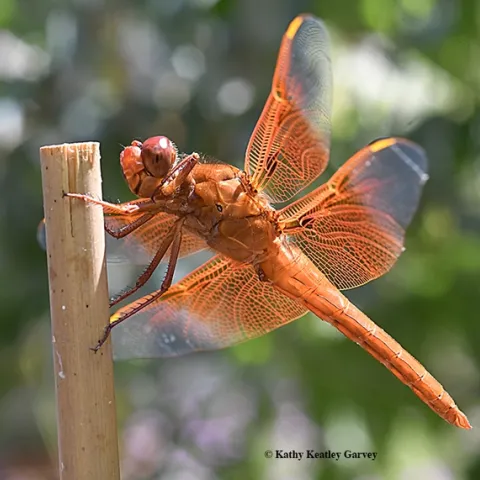
How magical is the dragonfly! This is a male flameskimmer, Libellula saturata, photographed in Vacaville, Calif. (Photo by Kathy Keatley Garvey)
Bug Squad: Article

How Magical Are the Dragonflies

August 7, 2019
By Kathy Keatley Garvey
How magical are the dragonflies. They zig-zag through the pollinator garden, a perfect portrait of a predator: multifaceted eyes, strong wings, and mouthparts that include a toothed jaw and flap like labrium.
View Article
Primary Image
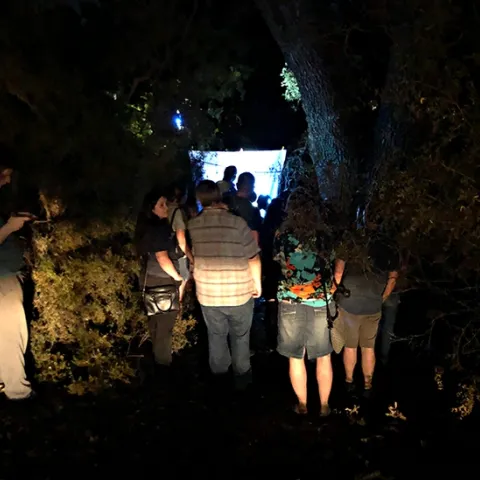
Visitors gather at the blacklighting display just outside the Bohart Museum of Entomology. (Photo by Kathy Keatley Garvey)
Bug Squad: Article

Oh, What a (Moth) Night!

August 6, 2019
By Kathy Keatley Garvey
Oh, what a (Moth) Night! It was a family night in more ways than one. Families who attended the Bohart Museum of Entomology's annual Moth Night last Saturday, Aug. 3, not only saw specimens from scores of insect families inside the UC Davis insect museum, but outside as well.
View Article
Primary Image
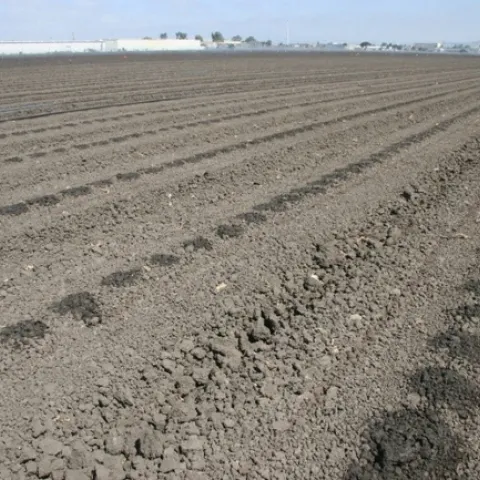
Photo 1. Seeded lettuce field being germinated with buried drip.
Salinas Valley Agriculture: Article

Fate of surface applied nitrogen in season-long drip irrigated fields

August 5, 2019
By Michael D Cahn
During the past two years acreage of season-long drip in lettuce has increased rapidly in the Salinas and adjacent valleys. Using drip for the entire crop cycle allows growers to germinate seeded crops with buried tape (Photo 1), and eliminates labor needed for installing and removing sprinklers.
View Article
Primary Image
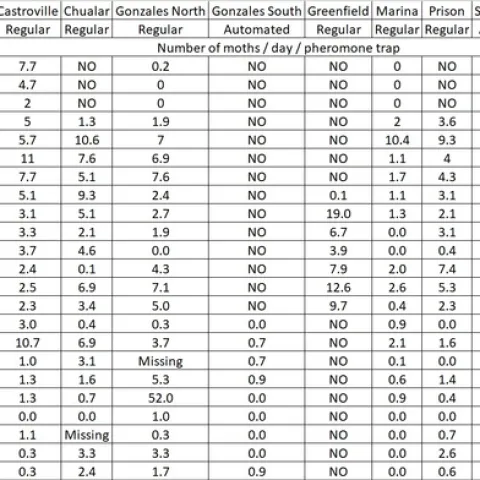
DBM tendencies jul19
Salinas Valley Agriculture: Article

Update on diamondback moth area-wide monitoring program

August 5, 2019
Last year, this pest was present in large numbers during August and September. The idea is to have additional data from the pheromone traps to inform the IPM decision making process. Below is a table showing the number of moths per day and per trap since February. Table 1.
View Article
Primary Image
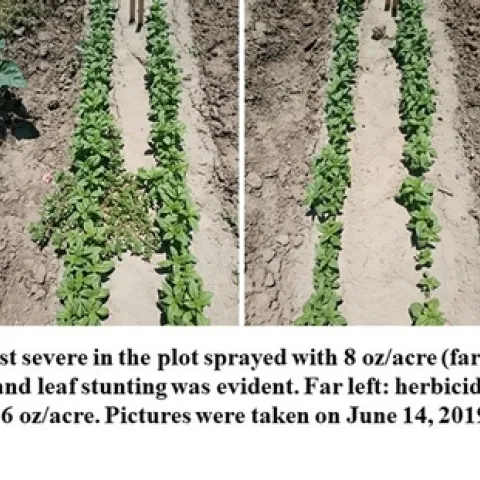
Crop injury was the most severe in the plot sprayed with 8 oz./acre (far right). Germination was severely inhibited, and leaf stunting was evident. Far left: herbicide-free plot; middle left: 4 oz./acre; middle right: 6 oz./acre. Pictures were taken on June 14, 2019 (38 days after seeding).
UC Weed Science (weed control, management, ecology, and minutia): Article

Evaluating the performance of a sulfentrazone herbicide on basil

August 4, 2019
By Zheng Wang
The purpose of this research is to collect performance data to support registration of sulfentrazone herbicides on basil. Leafy green and culinary herb growers are affected by a limited number of herbicides, resulting in tremendous manual weed removal.
View Article
Primary Image
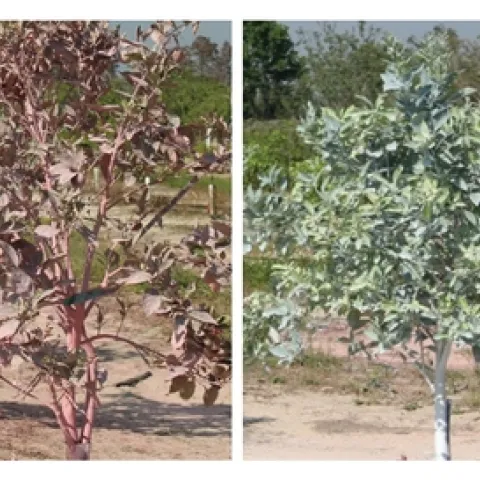
2-year old ‘Hamlin’ sweet orange in Florida with red or white particle films
Science for Citrus Health: Article

Using particle films to manage ACP

August 2, 2019
By Barbara Alonso
The particle films are applied to crops to manage environmental challenges like high heat or sunburn, or manage pests, such as aphids or psyllids. Particle films can reduce infestations because the particle films hide the natural plant colors that help some insects find their plant host.
View Article