mg-logo
UC Marin Master Gardeners

Spring 2025

A Westringia for every garden

Primary Image
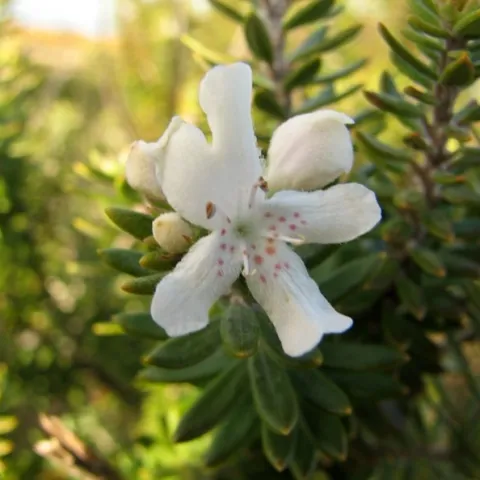
Westringia
Body
Westringia
Photo: Commons.Wikimedia.org

Looking for an attractive plant that uses little water, is pest and deer-resistant, looks good year-round, and can serve a variety of garden purposes? Westringia may be just the plant for you. This easy-care evergreen shrub has gray-green to green or variegated foliage. Westringia is native to Australia. A member of the mint family (Lamiaceae), these shrubs are sometimes called coast rosemary, since the foliage somewhat resembles rosemary. 

Reasons to love Westringia

  • Wide variety of shapes and sizes. From groundcovers to large shrubs 12 feet tall and 6 feet wide, there are plenty to choose from. Click here to see some popular varieties.
  • Easy to grow. They grow in most soils. Most varieties prefer sun, but some grow in part-shade.
  • Long bloom season. Many varieties flower consistently or intermittently throughout the year. As with other members of the mint family, the upper petal (or lip) is divided into two lobes. There are four stamens, and the leaves are in whorls of 3 or 4.
  • Good choice for coastal locations. Westringia tolerates wind and salt spray.
  • Drought resistance. Westringia is an excellent choice for a water-wise and Earth-friendly garden. In warmer, inland climates, some additional summer water will help keep it happy.
  • Helps with erosion control. This is helpful when planting on a hillside.
  • Useful in many settings. Generally speaking, these shrubs are used in hedges, mixed borders, screens, mass plantings and wind breaks.
  • Moderate growth habit. Westringia won’t outgrow your border anytime soon.
  • Pest resistance. Westringia are generally not bothered by pests.
  • Deer resistance. Many varieties are unappealing to deer.

Some varieties to consider for your garden:

Westringia fruticosa

W. fruticosa, the Australian or Coast Rosemary, is an evergreen shrub that grows up to 6' tall and 12' wide. Its growth rate is moderate. It has soft, gray green leaves. Its white flowers bloom throughout the year, especially in frost free areas. W. fruticosa prefers full sun. It is drought tolerant but will appreciate occasional watering in spring and summer. Its tolerance for wind and salt spray makes it a great choice for coastal areas.

Westringia fruticosa
Westringia fruticosa ‘NFL25’ Mundi. Photo: SK Reid, UCANR

Westringia fruticosa ‘NFL25’

‘Mundi’ Coast Rosemary is a groundcover version of Coast Rosemary. Darker green than other Westringia, it is a good-looking foliage plant with a dense form and nice texture. In addition to serving as a groundcover, it is a good “front of the border” option for a mixed border. It is generally not bothered by pests or disease, blooms throughout the year, and has low water requirements.

Westringia brevifolia
Westringia brevifolia ‘Raleighii’. Photo: UCANR

Westringia brevifolia

W. brevifolia (small-leafed Westringia) is an evergreen shrub, 5 to 6 feet tall and 3 to 5 feet wide, with small, narrow, gray-green leaves and pale purplish blue to white flowers almost year-round. It grows in sun or shade, and in most soils. It does best along the coast. W. brevifolia Raleighii’ (Raleigh Westringia) is a somewhat larger variant of W. brevifolia at 5 to 6 feet tall and 6 to 8 feet wide. 

Westringia 'Wynyabbie Gem'
Westringia 'Wynyabbie Gem'. Photo:  UCANR

Westringia 'Wynyabbie Gem'

Westringia 'Wynyabbie Gem' is an evergreen shrub that grows to 6 feet tall and wide.  It has narrow gray-green leaves and small lavender flowers that bloom almost year-round.  It prefers sun to part shade, and good drainage. 'Wynyabbie Highlight', a variant of 'Wynyabbie Gem', has variegated leaves.

Westringia fruticosa ‘Morning Light’ 

W. Fruticosa ‘Morning Light’ is a small evergreen shrub that grows 3 feet tall and wide. It has white edged leaves and small white flowers that bloom intermittently through the spring. It is very drought tolerant.

UC Marin Master Gardeners

Penstemon: too good to be true?

Primary Image
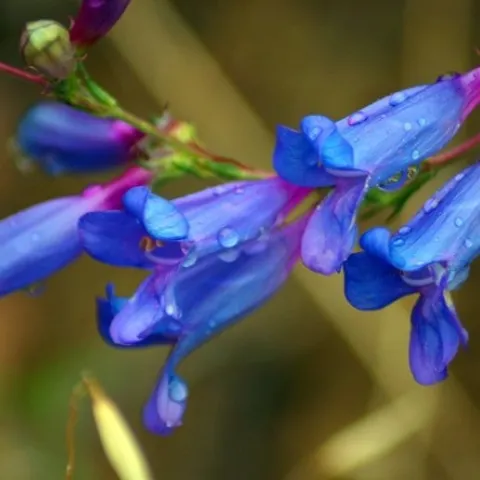
Penstemon
Body
Penstemon
Photo: Flickr.com

Foothill penstemon is a true blue California native that blooms profusely yet needs little water. It also attracts bees, butterflies, and hummingbirds – but deer stay away. This beautiful perennial has close relatives available in many colors: white, yellow, pink, purple, and red. 

Penstemon is the largest genus of flowering plants indigenous to North America, with 280 species and more than 100 native to California. Commonly known as “beardtongue,” these tubular, nectar-rich flowers are pollinator magnets, attracting native bees, honeybees, bumble bees, butterflies, and hummingbirds. Click here to see many varieties of penstemon.

Penstemon mexicali
Penstemon mexicali is a non-native perennial with gorgeous blooms. Photo: Public domain

How to grow penstemon

Penstemon are fast-growing summer bloomers, easily grown in a variety of soil types so long as it’s well draining. To keep penstemon happy, plant them in full sun to partial shade with good air circulation. They prefer little fertilizer. Once established in the right place, they require minimum care and will often re-seed. At maturity, most plants are just over one to two feet tall and wide although some cultivars are larger. Many non-native varieties also grow well in our Mediterranean climate and are readily available.

CA native penstemon are naturally adapted to our growing conditions

While many California natives go summer dormant to adapt to our dry summer months, various varieties of penstemon flower from April through September and require only occasional watering once established. 

Foothill penstemon
Photo: Flickr, Ron Parsons

Foothill penstemon (Penstemon heterophyllus) is a stunning CA native perennial herb with profuse clusters of blue to magenta tubular flowers. It is found in all major coastal mountain ranges in California plus the northern Sierra foothills. Bloom time is generally May through June. Remove dead flower stalks to encourage more flowering. Carpenter bees find foothill penstemon irresistible. 


Penstemon heterophyllus
Photo: Las Pilitas

Penstemon heterophyllus ‘Margarita BOP’ is another excellent variety, a low-growing, evergreen perennial prized for its long-lasting, vibrant blue-to-rose-purple flowers. Thought to be a hybrid of Penstemon heterophyllus and Penstemon laetus, its name comes from where it thrived with little care - “Bottom of the Porch.” This adaptable plant flourishes in various garden settings, from borders to rock gardens and slopes. It is drought-adapted once established and benefits from cutting back spent flower spikes to encourage reblooming. A magnet for hummingbirds and butterflies, Margarita BOP penstemon is an excellent choice for pollinator-friendly landscapes

Scarlet bugler
Photo: Las Pilitas

Scarlet bugler (Penstemon centranthifolius) is known for its bright red to orange-red tubular flowers that are irresistible to hummingbirds. It grows easily in northern, southern, and central California and thrives in rocky, well-drained soils, making it a perfect addition to rock gardens, slopes, and pathways. The upright, slender stems can reach over three feet in height, with thick, smooth leaves arranged in pairs along the stem.

UC Marin Master Gardeners

Gardener's checklist for spring

Primary Image
spring blooms
Body

MARCH

Image
brown scorched leaves on a citrus tree

Maintenance and prevention

  • Chop up cover crop foliage into small pieces if you grew a cover crop. Turn under or add the clippings to your compost pile.
  • Replace path mulches that have been washed away by heavy rains.
  • Apply two to four inches of mulch where existing mulch is thin or soil is bare, especially around newly planted trees and shrubs. Keep mulch back a minimum of 3 inches from tree trunks and 6 inches from perennials to discourage pathogens.
  • Inspect irrigation system for leaks and non-functioning emitters and sprayers. Make any needed repairs or changes.
  • Protect sensitive plants from cold injury when frost is predicted. Late frost is possible.
  • Sharpen pruning shears and other garden tools as needed. Clean and disinfect your pruning shears after use. Finish with a light coat of oil to protect the blades.
  • Eliminate standing water in gutters, drain pipes, and flowerpots to deter mosquitoes.
  • Clean winter debris from ponds, fountains, and bird baths.
  • Deadhead spring blooming bulbs. Leave the foliage in place to wither naturally and reenergize the bulb for next year.

Planting and propagating

  • Shop for rhododendrons, camellias, and azaleas while they are in bloom.

Cutting and pruning

  • Prune freeze damaged plants after all chance of frost has passed.
  • Prune fuchsias after chance of frost passes.
  • Finish pruning roses and planting new roses.
  • Clean up dropped leaves and old mulch around pruned roses.

Pests and weeds

  • Handpick snails and slugs after dark or apply pet-friendly bait.
  • Be diligent about pulling weeds before they set seed.
  • Apply one to four inches of mulch around plants and on bare areas of the garden to suppress weeds and help retain soil moisture as winter rains subside. Keep mulch away from the crown of plants.
  • Water in early morning if irrigation is required, to prevent foliage staying wet overnight. This can attract snails and slugs and cause fungal diseases.

Feed and fertilize

  • Test soil for pH, nitrogen (N), phosphorus (P), and potassium (K), and apply appropriate organic fertilizer.
  • Apply compost or organic all-purpose fertilizer to trees, shrubs, and perennials, especially those that were planted last fall.
  • Repot houseplants and give them their first feeding. Spring is the best time.
  • Feed citrus trees with organic fertilizer if needed.
  • Fertilize azaleas, camellias, and rhododendrons with an organic fertilizer after they have bloomed.

Edibles

  • Prepare beds for planting.
  • Hang codling moth traps in apple, pear, and plum trees.
  • Plant starts of arugula, asparagus, broccoli, cabbage, cauliflower, celery, chard, collard greens, kale, leeks lettuce, bunching onions, peas, and rhubarb.
  • Learn more about crops to plant in March and other activities in the edible garden.


APRIL

Image
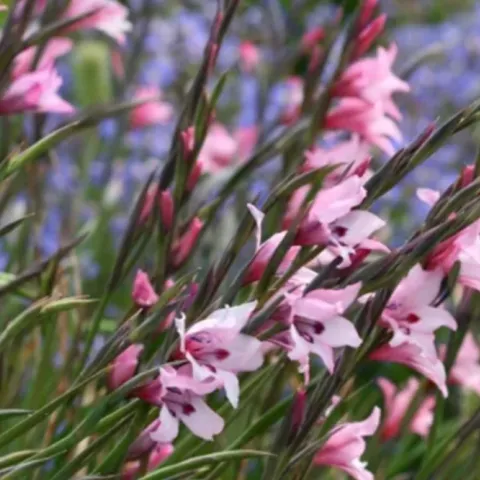
pink flowers blooming in spring

Maintenance and prevention

  • Troubleshoot irrigation system for missing or clogged emitters and broken spray heads.
  • Begin irrigation as rainy season ends.
  • Mulch around new plants to suppress weeds and retain moisture.
  • Renew mulch around existing plantings. Keep mulch clear of stems and trunks.
  • Clean winter debris from ponds, fountains, and bird baths.

Planting and propagating

  • Plant summer bulbs, corms, and tubers, such as callas, cannas, dahlias, gladiolus, and tuberous begonias.
  • Take softwood cuttings of trees and shrubs that have flowered.
  • Sow seeds of summer to fall blooming annuals. Keep planting beds moist.
  • Plant a tree or shrub for Earth Day or National Arbor Day.

Cutting and pruning

  • Prune back herbaceous perennials such as salvia to promote plant bushiness.

Pests and weeds

  • Check often for aphids on tender new plant growth. Remove infestations with a hard spray of water or insecticidal soap.
  • Handpick snails and slugs after dark or apply pet-friendly bait.
  • Be diligent about pulling weeds before they set seed.
  • Avoid using pesticides that may harm beneficials that feast on aphids, mites, whiteflies, and other insects.
  • Keep an eye out for early signs of insect infestation—blast any you see with a garden hose.
  • Set yellowjacket traps at the perimeter of the yard (not near eating areas) to discourage yellowjackets from visiting.

Feed and fertilize

  • Feed lawn with a slow-release organic fertilizer.
  • Renew container plants by adding a slow-release organic fertilizer or repotting in fresh soil.
  • Fertilize spring bulbs after bloom using an organic fertilizer. Remove dead flowers but not the leaves until they wither.
  • Fertilize citrus if needed, using an organic fertilizer.
  • Apply chelated iron to azaleas, camellias, and gardenias if leaves are yellowing between the veins.

Edibles

  • Move frost-tender seedlings and plants outdoors if weather permits. Harden off transplants before planting by gradually exposing them to outdoor conditions.
  • Thin fruit on apple trees.
  • Plant arugula, broccoli, celery, cucumber eggplant, ground cherries, kale, leeks, lettuce, bunching onions, peppers, pumpkins, squash, and tomatoes. Use crop extenders (covers) for heat loving crops.
    In cooler areas, plant cabbage, cauliflower, chard, collard greens, spinach, peas.
  • Learn more about crops to plant in April and other activities in the edible garden.


MAY

Image
yellow and orange daffodils in bloom

Maintenance and prevention

  • Check hose fittings for spent washers and leaks. Ensure hose has a shut off valve or other water conserving feature.
  • Aerate and fertilize lawn areas using an organic fertilizer. Re-seed bald patches and start mowing warm-season turf.
  • Replace any undesirable plants in containers and replenish soil, mixing in compost. Inspect for root rot (favored by excessive water and poor drainage).

Planting and propagating

  • Repot cymbidium orchids if they have outgrown their containers or if the planting medium has broken down.
  • Continue to plant seeds of summer and fall blooming annuals.

Cutting and pruning

  • Prune spring-flowering shrubs after bloom is past.
  • Pinch back chrysanthemums and annual flowering plants to encourage branching and compact growth.
  • Cut off spent flowers for continued bloom.
  • Prune azaleas, camellias, and rhododendrons after they have finished blooming. Feed with a balanced organic fertilizer formulated for acid-loving plants monthly during the spring and summer.
  • Prune pines.
  • Remove canes that are growing inward on modern roses. This aids in air circulation. For old garden roses that bloom only once, do the major prune after the bloom cycle is complete. Pick up diseased leaves.

Pests and weeds

  • Monitor and control snails, slugs, and aphids.
  • Use beneficial nematodes to manage grubs in your lawn.
  • Keep an eye out for early signs of insect infestation—blast any you see with a garden hose.
  • Set yellowjacket traps at the perimeter of the yard (not near eating areas) to discourage yellowjackets from visiting.

Feed and fertilize

  • Fertilize citrus if needed, using an organic fertilizer. 

Edibles

  • Move frost-tender seedlings and plants outdoors if weather permits.
  • Harden off transplants before planting by gradually exposing them to outdoor conditions.
  • Thin fruit.
  • Remove remaining spring crops and prepare beds for summer crop.
  • Plant beans, bunching onions, cucumbers, eggplant, ground cherries, kale, lettuce, melons, peppers, squash, and tomatoes.
  • In cooler areas, plant arugula ,beets, broccoli, cabbage carrots, celery, and peas.
  • Learn more about crops to plant in May and other activities in the edible garden.
UC Marin Master Gardeners