
Weeds are the troublemakers in your garden. There they are, lurking among the flowers, persisting, and interfering with your plans for a California native garden or a pollinator paradise. Weeds compete aggressively with desirable plants for water, nutrients, and sunlight. Invasive species threaten ecosystems, harm wildlife, and disrupt our water supply.
The key to eradication is to learn as much as possible about these garden enemies. Marin Master Gardeners can help identify weeds and create a management plan. The UC Statewide Integrated Pest Management Program Home / UC Statewide IPM Program (UC IPM) has many useful features, including the Weed Photo Gallery--UC IPM, which contains hundreds of images and management tips for more than 150 common California weeds.
The goal of weed management is to use the least harmful method for people and the environment—and to apply it at the right time. Cultural controls include site preparation, soil testing, and irrigation management. Mechanical or physical controls range from hoeing and hand-pulling to mulching or soil solarization (covering soil with clear or black plastic). Gardeners have specialized tools available, like the weed fork and the push-pull hoe (also called a hula hoe) that cuts in both directions. The weed wrench is a back-saving device that levers broom plants out of the ground. Perennial weeds may take several years to bring under control. Chemical herbicides are always a last resort.
Here are four troublesome invaders that plague my garden. They thrive on neglect and reward persistent control.
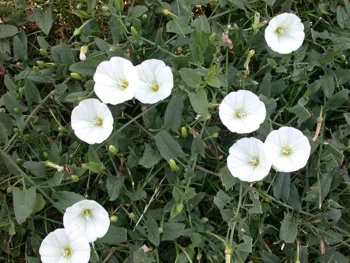
Field bindweed (Convolvulus arvensis)
This nemesis was already lurking on the front bank when I moved here many years ago. Roots can extend up to 20 feet deep, and seeds can live for 60 years. Its white morning-glory-like flowers seem innocent, but the word “field” in its name hints that it can take over entire landscapes. Bindweed entwines around other plants, and each tiny piece of root left behind can produce a new plant. Persistent hand pulling is essential. Tilling the soil will only spread the fragments. When soil is moist, loosen it with a fork and patiently remove entire roots. In severe infestations, mulching with black plastic for several months can help smother the root system but complete death under mulch takes more than 3 years. Prevent flowering so seeds—viable for decades—never form.
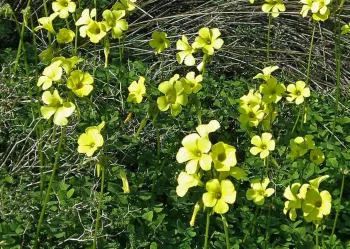
Bermuda buttercup (Oxalis pes-caprae)
This bright yellow spring bloomer, originally from South Africa, has spread throughout California. It develops from underground bulbs and forms dense mats. Gophers and voles enjoy the bulbs and help disperse them. When hand-pulling, remove the entire plant, including rhizomes and bulbs. Removing tops prior to flowering also helps. A thick layer of mulch may smother young plants before they emerge.
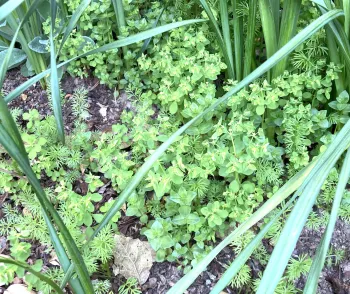
Petty spurge (Euphorbia peplus)
This winter or summer annual fills bare spaces with leafy green plants and inconspicuous flowers. Like all spurges, it produces a milky sap, which can be irritating or toxic. Fortunately, petty spurge and other annual Euphorbia species are easily controlled by manual removal before they set seed.
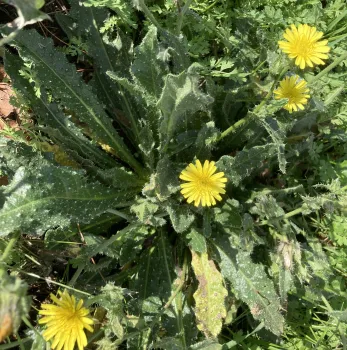
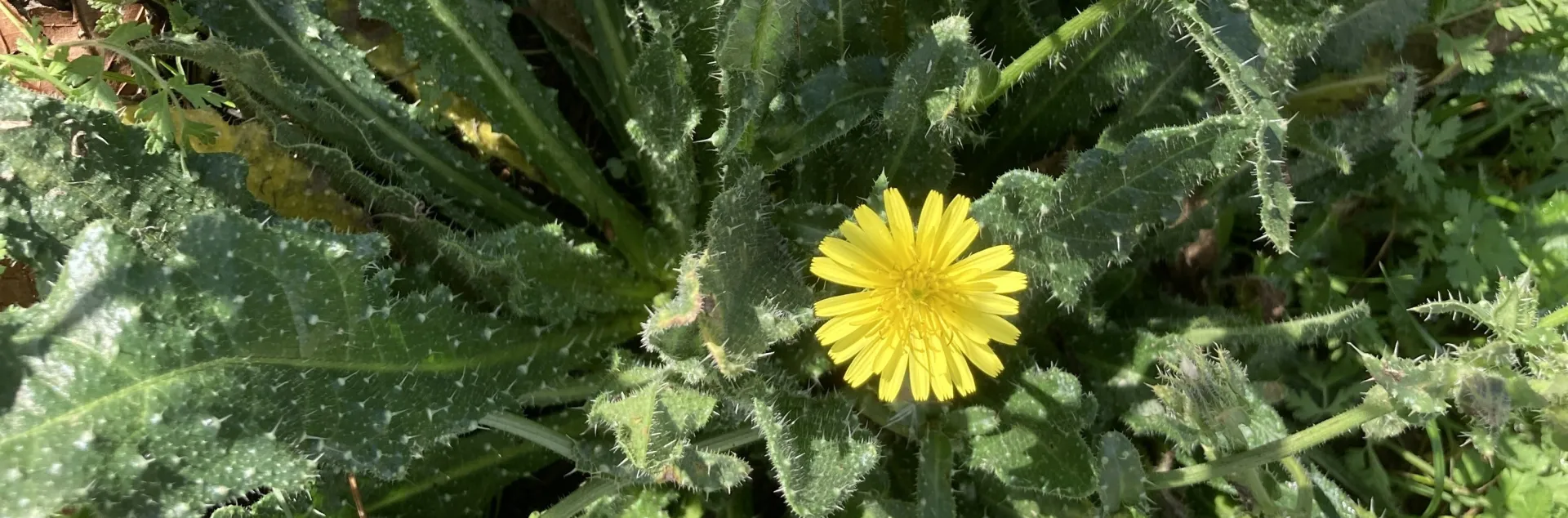
Bristly oxtongue (Helminthotheca echioides)
Native to the Mediterranean region, this winter or summer annual (sometimes biennial) is widespread in California. It can grow over three feet tall with sprawling stems and leaves covered in bristly hairs giving a warty appearance. The yellow, dandelion-like flowers produce seeds that disperse far on the wind. Hand pulling is effective, especially when the weed is still in its basal rosette stage.
The Marin–Sonoma Weed Management Association monitors invasive weeds throughout the North Bay and evaluates the risk from each species. There is even a Japanese knotweed action team working to remove current infestations and prevent further spread.
Remember to weed when the soil is moist to avoid disturbing the soil structure. Mulch with organic materials right after weeding to suppress new growth. Avoid chemicals and herbicides whenever possible. Hand weeding, mulching, and the use of cover crops are science-based, earth-friendly ways to manage weeds.
By Alice Cason, February 14, 2026