
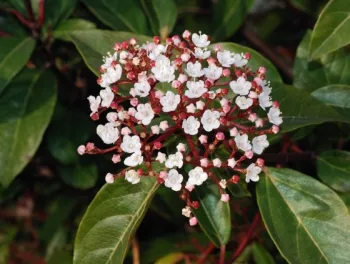
Viburnum tinus is a broadleaf evergreen woody shrub that grows 6-12 feet tall and up to 10 feet wide. It is deer, drought, and salt tolerant. Showy, fragrant flowers bloom from November to spring, much to the delight of butterflies, birds, and bees. The flowers appear in clusters, the deep pink buds and white flowers often appearing at the same time.
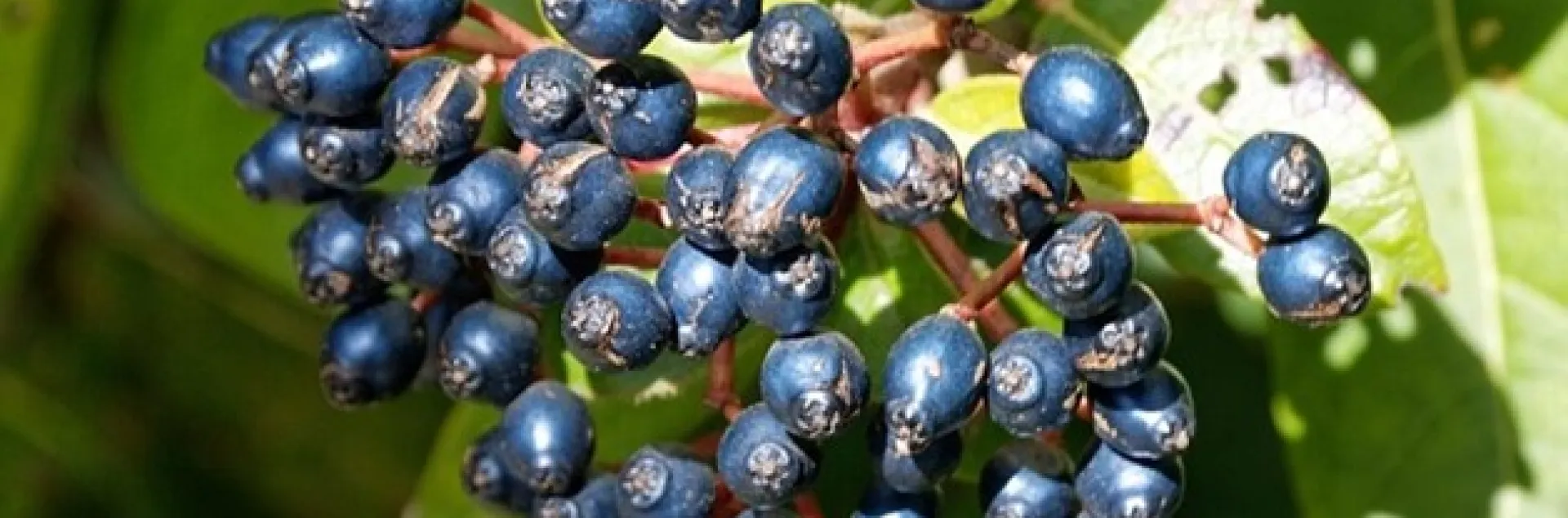
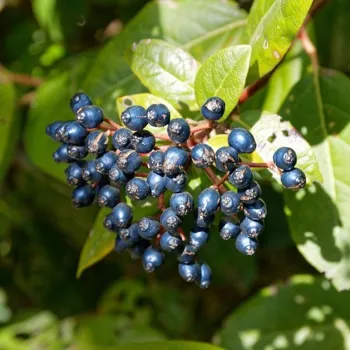
The fruit is also a food source for wildlife – the seed pods are metallic blue through summer, morphing to black as they mature. The 2 to 3-inch leaves are lustrous, dark green, oval, leathery, and slightly rolled at the edges. New stems emerge an alluring wine red. This easy-care plant is native to the Mediterranean areas of Europe and North Africa.
How to grow Viburnum tinus
This lovely shrub is suitable for all areas in Marin County in full sun or part shade, although it prefers some shade where summers are hot and long. It also appreciates rich soil and regular moisture – but it tolerates drought once fully established. Viburnum tinus can be pruned to whatever shape is desired. Watch for aphids, thrips, spider mites, and scale. (Learn more about managing invertebrate pests.) Mildew can be also a problem if grown near the ocean.
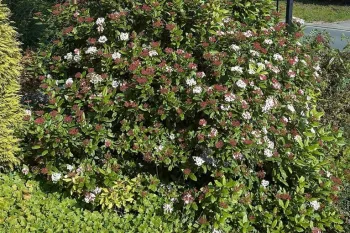
Versatility: a major selling point
Viburnum tinus has dense foliage right to the ground, which makes it a great choice for a hedge, screen, small tree, stand-out flowering shrub, and even a clipped topiary shape. It is used in a variety of landscape themes including butterfly, cottage, pollinator, and winter gardens.
What’s in a name?
The common name for Viburnum tinus is laurustinus or laurustine. The word “laurustinus” is Latin for “laurel-like tinus,” referencing its evergreen foliage that resembles a laurel tree.
Many Viburnum to choose from
Viburnum tinus is just one member of the viburnum (Viburnaceae) family. There are more than 150 other species of viburnum, both evergreen and deciduous. Here are a few cultivars to consider:
‘Viburnum tinus ‘Robustum’ – This cultivar has coarser and rougher leaves, less pink in the flowers, and more resistance to mildew. It makes an excellent small, narrow tree.
‘Viburnum tinus ‘Spring Bouquet’ – This plant has slightly smaller and darker green foliage and is fairly compact, topping out at about 6 feet. It is a good choice for hedges.
Viburnum tinus ‘Spirit – This cultivar has slimmer foliage, grows to about 6 feet, and tends to have a compact habit. It’s a good choice for low hedges.
Here’s more on these and other viburnums to consider.