
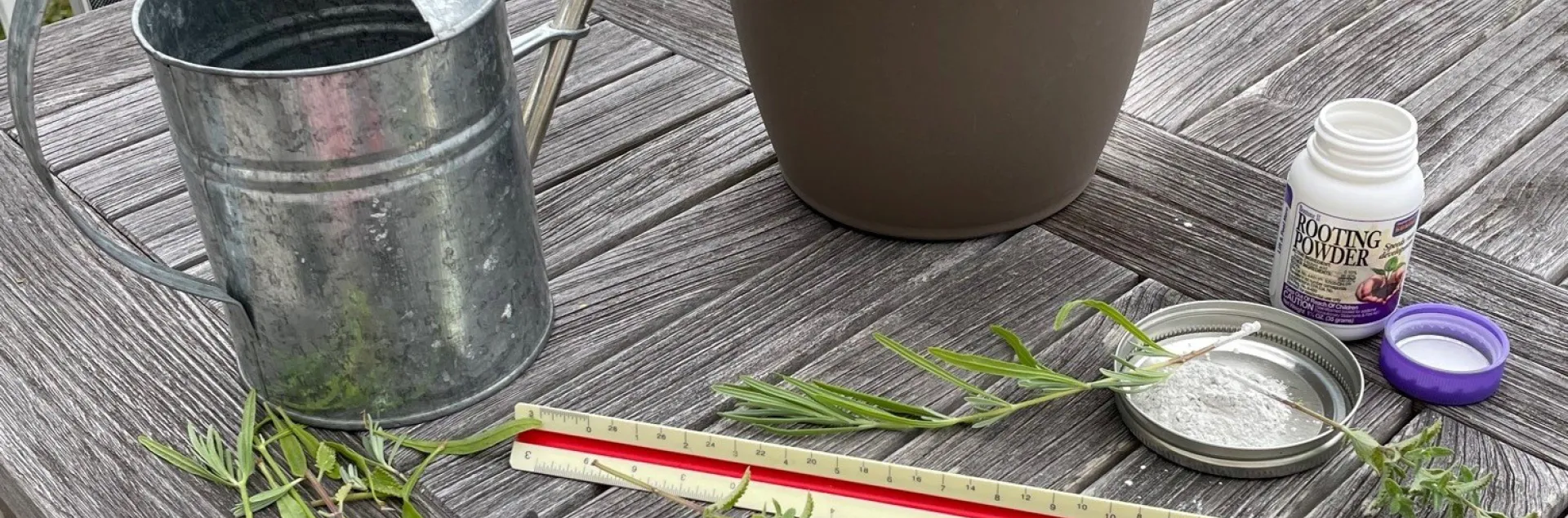
Vegetative reproduction from stems, roots and leaves is common to all plants and results in an identical plant from which the cutting came; it’s a clone. As gardeners, we propagate cuttings for many reasons including it may be easier and quicker than growing a new plant from seed, the parent plant may produce little or no seed, a plant’s seeds will not be true to the parent plant, and of course, because it can save money. There is another reason, perhaps the best. Taking a cutting is something shared from the garden with a friend or family member. Sharing plants is just plain fun because a bit of your garden ends up in a friend’s garden or vice versa and this exchange forevermore generates a shared bond.
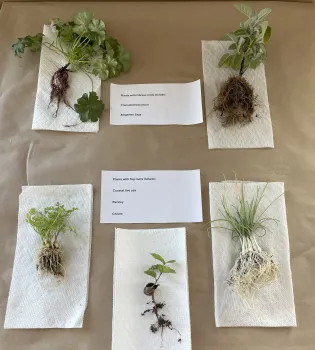
Understanding a plant’s roots, shoots, and growth habits increases the likelihood of success with vegetative reproduction. A plant’s shoot system consists of the plant’s branches, stems and leaves; in effect these are plant parts above the ground. A plant’s root system consists of the underground parts that anchor the plant in soil, absorb water and minerals, and store excess food for the plant. Root systems are either fibrous like grasses or tap roots with enlarged and elongated roots like oaks. Some plants use a combination of both root systems. While roots probe soil for water and minerals, the shoot system of a plant grows above ground growing leaves which intercept or capture light to manufacture food for the plant; photosynthesis. To maximize capturing light, leaves form and grow in one of three patterns, alternate, opposite or whorled in a ring around the stem. Gardeners know that to make plants fill out, stem tips must be pruned. This action suppresses the growth at the tip of the plant and stimulates the buds at the base of the plant to form branches. Stem tips contain auxin, the plant hormone that encourages stem growth and root growth. The cuttings of some plants may not contain enough auxin and thus benefit from being treated with a rooting compound of synthetic auxin.
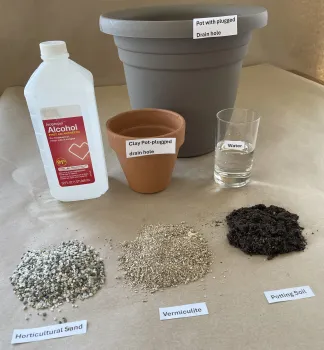
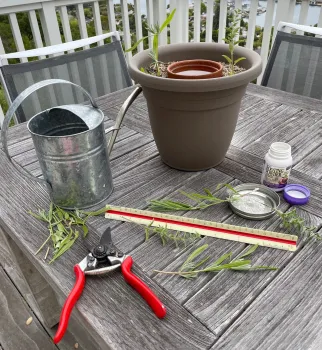
Many woody and herbaceous plants have been propagated by asexual propagation for many years. Familiar examples include the Peace rose and the Bradford pear. To take a cutting for the purpose of propagation, first assess several factors to increase success. Begin by selecting a plant that is healthy and make a stem-tip cutting 4 to 6 inches long from this season’s growth with sharp, clean clippers dipped in alcohol. Cut just below a node; this is the point on the stem from which shoots, leaves and flowers would emerge. Softwood cuttings can be taken from deciduous or evergreen species in the spring and root in 2 to 5 weeks. Broadleaf evergreen species like photinia, holly, camellias, pittosporum are ready for cutting mid- summer to late summer as their growth flush is completed. Rooting should take about 4 to 6 weeks. Hardwood cuttings from deciduous plants should be taken after leaves have dropped. From the stem’s cutting, remove the lower 2 inches of leaves, dip the cutting into a rooting hormone and place the cutting into the rooting medium mix made of equal parts of vermiculite, potting soil and horticultural sand purchased at a nursery. To keep the rooting medium moist, fill a small, clay pot with water and insert into the larger pot and cover with plastic or glass to prevent the rooting mix from drying out. Place in indirect light and maintain a temperature of 65 degrees to 75 degrees. When roots develop and are several inches long, give a tug and you should feel some resistance. Gradually remove the coverings of plastic or glass and pot up the new plant in potting soil. Acclimate to outdoor conditions slowly and plant next spring in the garden.
By Anne-Marie Walker, October 4, 2025