
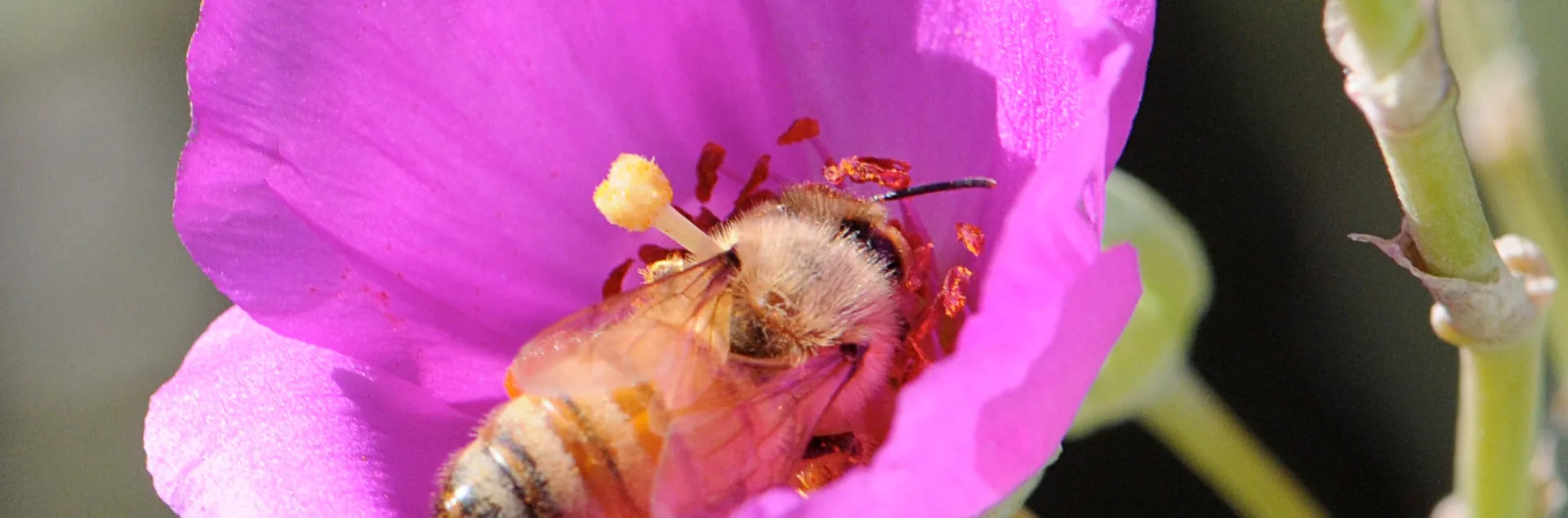
The Marin Master Gardeners are always talking about pollinators and how important they are as essential to food security and healthy ecosystems. More than 80 percent of the world's flowering plants depend on pollinators for reproduction, including many wildflowers and other important native plant species.
Without the diversity of plant life that pollinators help support, our air, soil, and water quality can all suffer. While wind, rain, birds, and bats are active pollinators, the real workhorses are bugs like bees, wasps, butterflies, flies, and beetles.
Just like us humans, pollinators have their favorite dining sources that provide what they need visually and structurally.
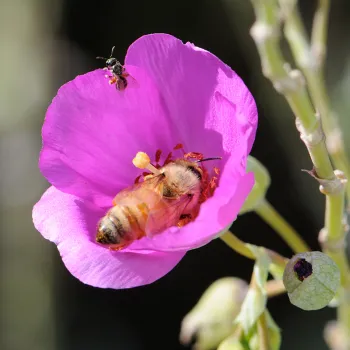
- Honeybees are the ones we know best, but there are approximately 3,600 bee species native to the United States. Ninety percent of these bee species are solitary, meaning that they the females build and provide for their own nests. All our bee friends possess hairs and other anatomical structures that are equipped to collect and transport their pollen load. Bees stalk brightly colored flowers with a sweet scent that they can walk on to sip nectar
- Bumble bees are recognized by their round, fuzzy black bodies. They operate a little differently by performing buzz pollination, which involves grasping a flower with their jaws and dislodging the pollen by vibrating their wing muscles. Many wildflowers and backyard crops like tomatoes and peppers benefit from buzz pollination.
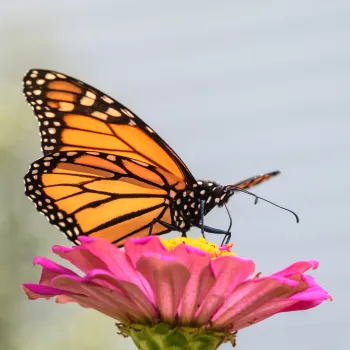
- We all know the beloved monarch butterfly, but there are many other species of butterflies and moths that are important to the pollination scene. Some of the species are generalists and not too picky about the plants they visit, but others of the species have specific habitat needs. Butterflies and moths need a place to land when they visit, so they prefer flowers with broad, flat faces. Then they use their straw-like mouth parts to suck the nectar from deep inside.
- Hummingbirds have long beaks and brush-like tongues for digging deep into a flower for its pollen. They are also attracted to bright colors, especially red.
- The fly is second only to bees for their importance as a pollinator. They are more adaptable to rough weather conditions when bees won’t head out. They are kind of accidental pollinators because they collect pollen while feeding on nectar. Flies are also willing to visit putrid or foul-smelling plants that others won’t pay any attention to.
Every gardener can make a difference by attracting and nurturing pollinators in their yards.
- Provide flowers in a variety of different colors and shapes to attract any pollinator in your hood.
- Provide as much continuous bloom as possible. It is pretty easy to do from spring to fall, but try to provide choices in winter for those pollinators that do not migrate.
- By practicing Integrated Pest Management (IPM), you protect pollinators from chemicals destructive to their food choices and their well-being.
- Provide water sources by placing birdbaths or saucers on the ground. Pollinators also drink from puddles and any moisture on leaves.
- Prioritize native species like Milkweed, Poppies, and Asters for your local pollinators.
The Marin Master Gardeners are here to help you! Besides all the information you can find about pollinators on our website and in our quarterly newsletter, the Leaflet, we are hosting a Pollinator Plant sale on Saturday, March 7, 9 AM to 12 PM outside the Falkirk Green House in San Rafael. Thirty-five plus varieties of pollinators are being grown organically in the greenhouse now, including literally five hundred Narrow Leaf Milkweed to feed hungry, hungry monarch caterpillars. Many native plants will be available to help the native pollinators. “Bug Hotels” will be available to purchase for the kiddos to decorate. Learn more at https://youtu.be/OmdGkEnUwlg
By Dot Zanotti Ingels, February 28, 2026