
Like people, some plants demand center stage. California poppies and lupine are springtime darlings, followed by fragrant sage in summer and crimson maples in fall. But what about the supporting players who work hard but never seem to get the limelight? Cue the manzanitas.
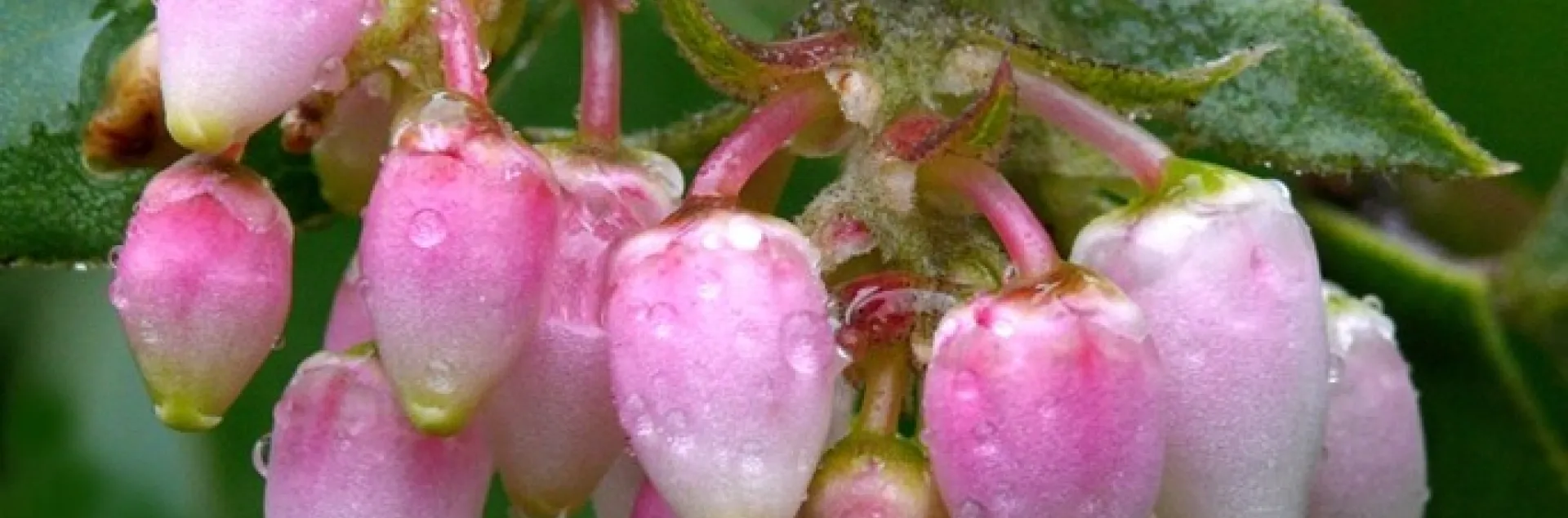
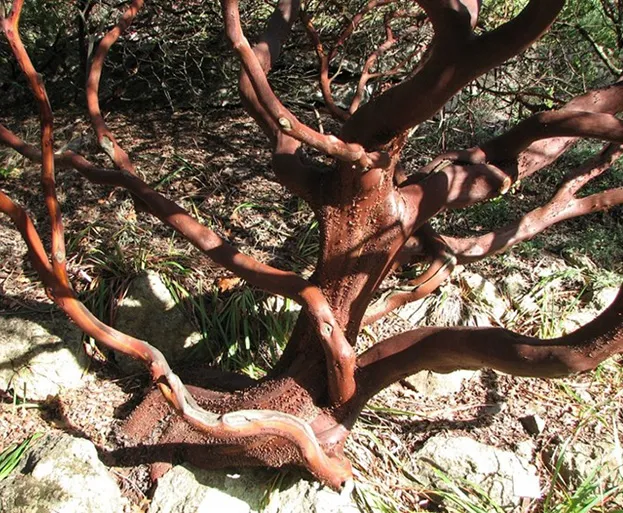
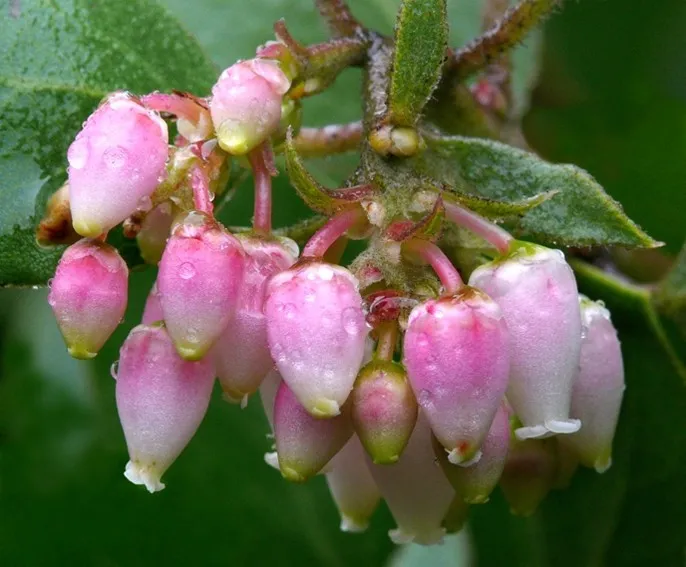
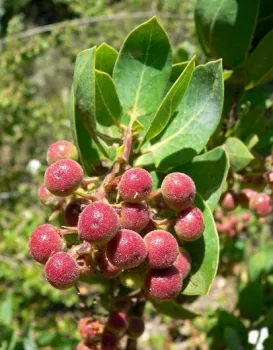
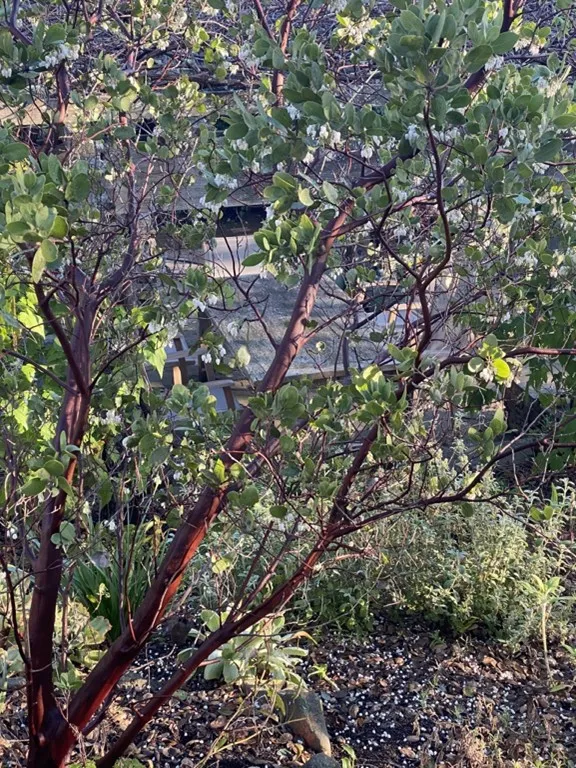
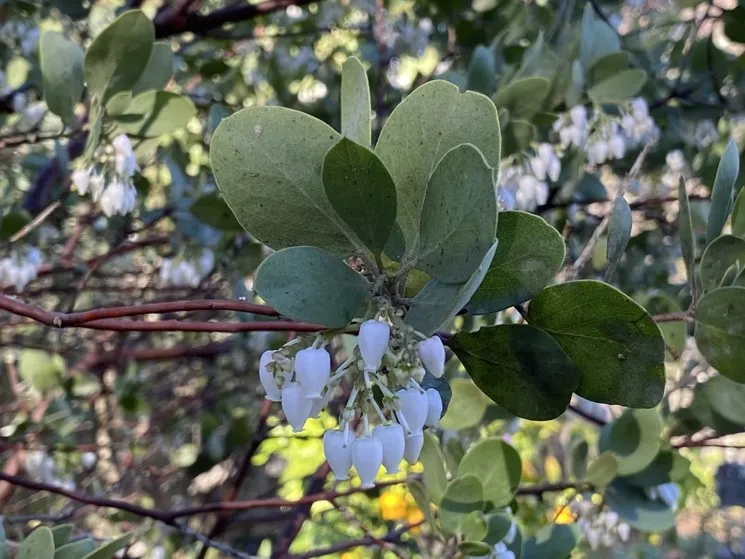
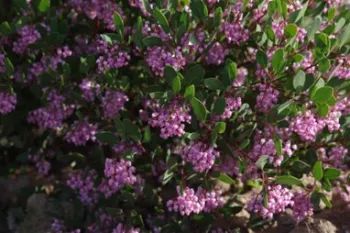
Manzanitas, aka Arctostaphylos, are rugged California native evergreen shrubs and trees with white or pink mini-bell flowers that dangle in delicate panicles in winter and spring and turn into “mini-apples” in summer and fall. Manzanita bark is stunning and variable -- sinewy and smooth, peeling and revealing, old and gnarled – in colors spanning cinnamon, burnt mahogany, chocolate brown, and driftwood gray. Like cracks of lightning, manzanita bark illuminates gray days and reduces the winter drab factor.
Year-round beauty and many ecological benefits
Manzanitas are outstanding additions to any garden, whether for low groundcovers, uplit accent trees, background shrubs, or hedges. In addition to their innate year-round beauty, manzanita provide many benefits to the environment (and to gardeners!):
- Pollinator-friendly. Hummingbirds and bees delight in having a food source during the colder months in late winter and early spring. This is especially true for California native bees that emerge after overwintering in ground nests and hollow stems. Manzanitas are among the first plants they forage.
- Food for many animals and birds. Summer and fall manzanita berries feed bears, deer, coyotes, foxes, quail, and many other birds.
- Low water. These tough plants thrive on little water once established. This is due in part to their leaves, which have tiny pore-like stomates on both leaf sides instead of one side as in most plants. The result? The leaves are held perpendicular to the ground instead of parallel to minimize sun exposure and water loss.
- Erosion control. Thanks to their extensive roots, manzanitas are an excellent choice to help keep steep slopes intact.
- Long-lived. Manzanitas can live 100 years or more and disperse seeds that survive underground for hundreds of years.. Their elixir for long life? Co-mingling root fungi (mycorrhiza) with others in their own plant community, dramatically increasing the ability to absorb water and minerals, even in poor soil.
How to grow and care for manzanitas
Manzanitas are easy and satisfying to grow. Here’s how:
- Grow in full sun.
- Plant in well-draining soil. In general, manzanitas do not like water to linger on their roots, leaves, or at the crown of the plant (where the roots meet the stem).
- Do not amend soil with compost or other rich organic matter.
- Avoid fertilizer.
- Water deeply until established, then cut back. Manzanitas are vulnerable to fungal diseases that thrive in warm, moist conditions, so avoid summer watering as much as possible.
- Prune judiciously. Manzanitas bloom on old wood. If necessary, only prune in August through October before flower buds emerge. Use thinning and re-leadering cuts sparingly to unveil the plant’s natural structure. Make as few cuts as possible and do not force an unnatural shape. Never use heading cuts, which can lead to fungal issues and suckering.
Many manzanitas to choose from
Manzanitas grow on dry slopes of chaparral and coastal range mountains, which is why we get to witness their quiet beauty on numerous Marin trails – from dry rocky slopes and ridges to the borders of pine and redwood forests to the exposed ocean-facing slopes of Point Reyes. Some even grow in serpentine soil where few other plants survive. Take a walk in China Camp, on the Shoreline Trail, or on King Mountain to spot these austere treasures.
There are more than forty species of manzanita in California, not to mention all the cultivars, subspecies, and hybrids.[1] They are a promiscuous bunch, interbreeding freely to the point where it’s even hard for botanists to tell one species from another. They range from 2-inch ground huggers to 20-foot trees – and everything in between.
If you’d like to add a manzanita to your landscape, here are a few to consider:
- Groundcovers: Arctostaphylos uva ursi, ‘Emerald Carpet,’ ‘Pacific Mist’
- Taller specimens: ‘Dr. Hurd,’ ‘Austin Griffiths,’ ‘Howard McMinn’
- Here are more common manzanitas for northern California gardens
A long, venerable family line and history
All manzanitas are cousins to madrone, rhododendron, azalea, and a host of edible berry-producing plants including huckleberry, blueberry, and cranberry. The berries are indeed edible. Just ask the native Americans, who ate manzanita berries raw, dried, fresh, and crushed for cider. (Manzanita means “little apple” in Spanish.) They chewed the leaves to curb nausea and settle upset stomachs and made poultices from soaked leaves to combat poison oak rashes. One tribe dried and smoked manzanita leaves for good luck.
Today many coastal manzanitas are endangered or rare, due in part to development. Among the rarest species is the Franciscan manzanita, which had not been seen since 1947 but was discovered thriving amid the litter and car exhaust fumes during the Doyle Drive expansion just south of the Golden Gate Bridge. That plant was moved to an undisclosed location for further research and propagation. The good news? It is now available in nurseries.
Regardless of which manzanita you choose, you can look forward to years of a carefree plant with a long and proud history.