
The delicate gossamer-winged butterfly gives color and grace to your garden. Besides being beauties, they are good pollinators in our gardens and in the wild. Groups of butterflies are called kaleidoscopes, flutter, or swarm. The purpose of a butterfly’s life is to find a mate and a host plant for the next generation’s eggs. Consider including host plants in your garden for everyone’s benefit.
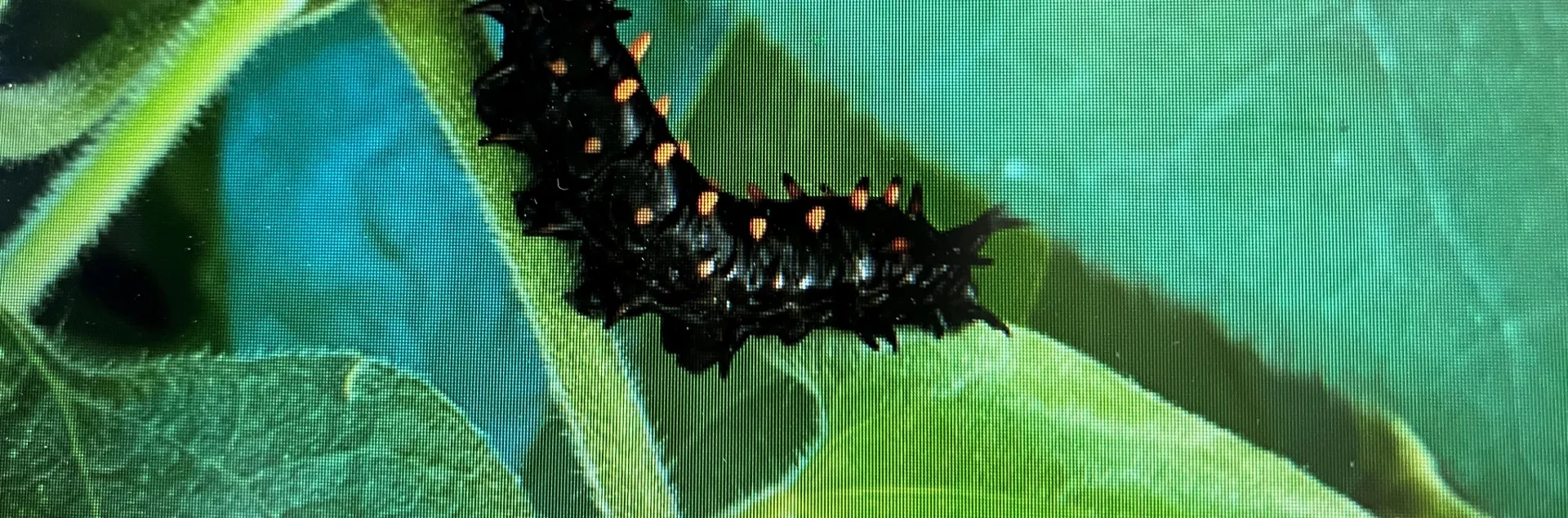
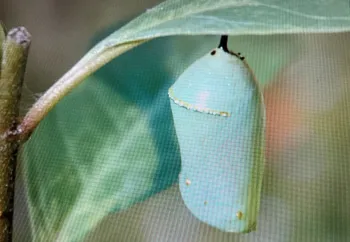
Butterflies survive primarily on plant nectar. As they drink, the plant’s pollen collects on their bodies, then transfers to the next plant, and they become pollinators. Butterflies go through metamorphosis, beginning with laying eggs on host plants, like milkweed, that will provide food for the emerging tiny caterpillars. If your milkweed has chewed leaves, it’s a good sign that you have caterpillars. At full size, the caterpillar will form a pupa or chrysalis, the mummy-like stage that will become an adult butterfly. When caterpillars are ready to form their chrysalis, they may leave the host plant to evade predators.
Many butterflies live only one or two weeks, but the Western Monarch lives for 2 to 6 weeks in summer. The last generation lives long enough to migrate south and return in spring. The California Tortoise-shell and Mourning Cloak overwinter as adults and survive for several months.
There has been a 22% decline in American butterflies in the last 20 years due to habitat loss, climate change, and pesticide use. Their decline is concerning because the butterfly is an indicator of ecosystem health. We need to help them recover by growing plants that nurture them.
Native butterflies have coevolved with native plants for many years and depend on each other for survival. Butterflies are attracted to large swaths of the same plant. Some good nectar plants are buddleias, verbenas, and lantana because they bloom for long periods of time, and asters, sunflowers, and daisies that offer a landing pad in late summer and fall.
Some trees that host Swallowtail butterflies are cottonwood, willow, ash, and sycamore for the Western Tiger Swallowtail. The herbs dill, parsley, and fennel host the Anise Swallowtail, and the California Pipevine hosts the Pipevine Swallowtail. Oaks are favored by the California Sister, Golden Hairstreak, and the Mournful Duskywing.
Skippers are a type of smaller butterfly known for their darting flight and pollinating abilities. Host plants are grasses and legumes such as black locust.
The Cabbage, Checkered, and Spring Whites butterflies host plants are in the mustard family and nasturtiums. The Red Admiral is the most widespread butterfly in California and host plants are nettles: baby’s tears, hops, and pellitories.
Passionvine is the host plant for the Gulf Fritillary. The Painted Lady’s host plants are thistles, pearly everlasting, and fiddleneck. The Common Buckeye’s host plants are snapdragon, mimulus, penstemon, and plaintain.
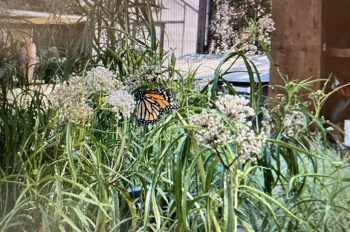
Two butterflies seen in Marin are migrants. The Painted Lady’s migration is from Southern California. The Monarch, a larger butterfly with a wingspan of 3.3-4 inches, migrates to the California coast in winter to shelter in blue gum eucalyptus, Monterey Pine, and Monterey Cypress. The Monarch lays her eggs on milkweeds, Asclepias. Preferred are Narrow-leaf milkweed, A. fascicularis, and Showy milkweed, A. speciosa. Poisons derived from milkweed make the showy orange and black Monarch and her caterpillar unpalatable for birds.
Some butterflies migrate even longer distances. Scientists have evidence of a Painted Lady butterfly crossing the Atlantic Ocean from French Guiana to West Africa with no nectar for 5 to 8 days. Evidence included pollen DNA from shrubs in French Guiana, DNA from the butterfly and wind data showing a tail wind. Those delicate-looking wings are stronger than anyone knew.
You can support butterflies by doing these things: Garden with natives and nectar plants, offer host plants, don’t use herbicides or pesticides, replace your lawn with natives, leave the leaves in flower beds and under trees for winter habitat, and remove invasive plants.
By Sara O’Keefe, November 15, 2025