
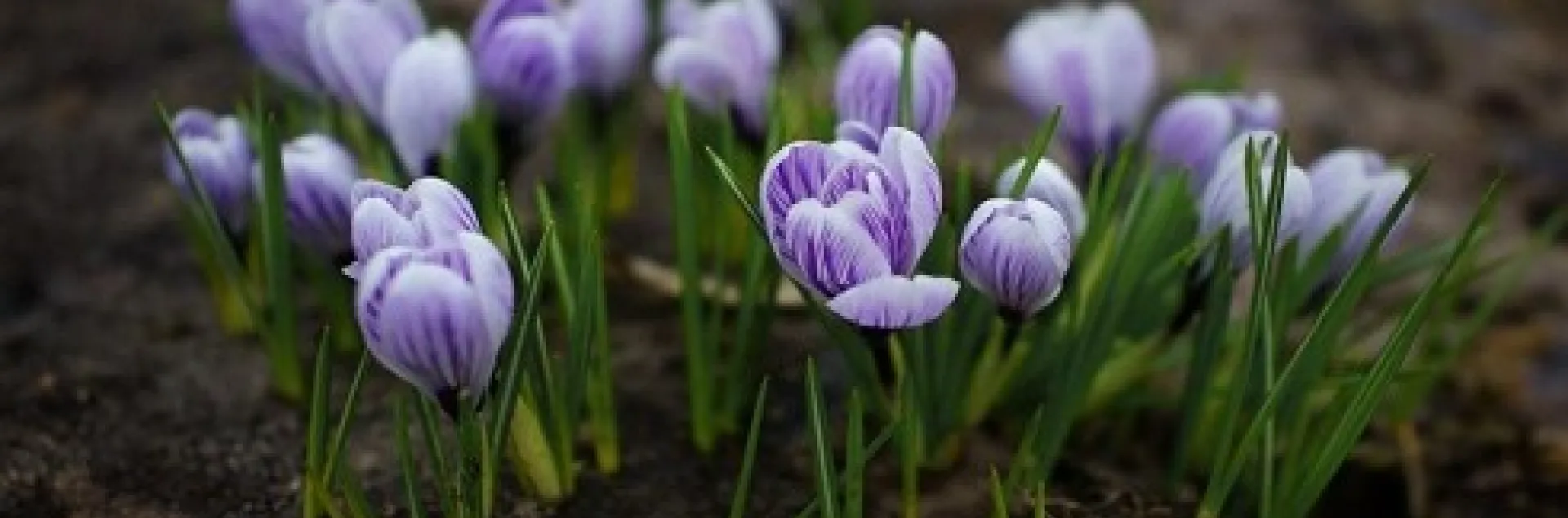
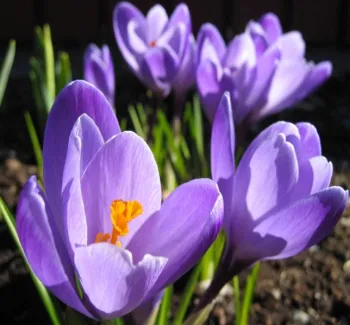
Blooming in shades of purple, white, yellow, pale pink, and anywhere in between, crocus are cheerful additions to any garden. While many species bloom in early spring, some, such as saffron crocus (Crocus sativus), bloom in autumn. These different species need different care, but there’s sure to be at least one (or two or three) that would be a wonderful addition to your garden.
Crocus are perennials in the iris family, Iridaceae. They are native to Europe and Asia and typically grow a petite 3 to 6 inches tall and bloom for two to five weeks. Crocus grow from corms, which are similar to bulbs in that they store food for the flowers when dormant. Although some species of crocus resemble tulips, there are differences. Crocus are shorter than tulips – often just a few inches tall –-- and they have open cup-shaped flowers and thin, grass-like leaves.
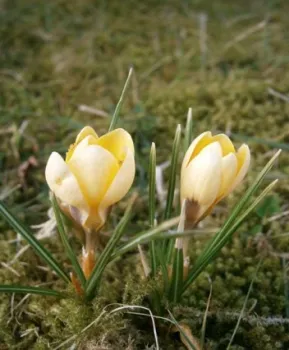
Spring-blooming crocus: harbingers of spring, symbols of hope
The most common ornamental crocuses bloom in early spring and are considered symbols of hope and new beginnings. These crocus are native to the Mediterranean region and are a favorite of pollinators, providing them with an early source of nectar in late winter or early spring. In our climate, spring crocus bloom in February and March, making them a welcome respite from gloomy winter days!
Here’s how to grow spring-blooming crocus for years of delightful flowers:
- Pre-chill the corms. Spring-blooming crocus can grow in Marin’s USDA zones 9 and 10. However, due to our mild winters, it's a good idea to pre-chill the corms before planting for one to three months in the refrigerator at 35 to 45° F. Note that some bulb companies offer pre-chilled corms so you can plant them as soon as they arrive.
- Plant in fall. Plant corms in October or November to ensure best spring bloom.
- Grow in sun or part shade.
- Plant in well-drained, healthy soil. Crocus loathe becoming waterlogged, so provide well-draining, compost-rich soil. As a bonus, soil rich in compost blocks nematodes and mites that can infect corms.
- Place pointy side up. Plant the corms several inches deep, a few inches apart, pointy side up.
- Choose from a variety of planting locations. Grow corms in pots, raised beds, or in the ground. You can even plant crocus in a lawn for a stunning spring display: just make sure to wait to mow until the leaves have turned yellow and have died back, as the bulb is still photosynthesizing to make next year’s blooms when the leaves are green.
- Prevent pests. Squirrels, mice, and other rodents love to munch on crocus corms. To avoid disappointment, consider planting crocus under a layer of wire mesh.
- Add fertilizer. When planting, fertilize crocus with a small amount of an organic balanced fertilizer.
- Don’t worry about irrigation. Because they are naturally adapted to our Mediterranean climate, crocus rely on our winter rains for growth and are tolerant of our long, dry summers.
Here are some spring crocus to consider:
- Crocus tommasianus grows 3-4 inches tall and comes in shades of lilac and lavender. They are sometimes called “tommies.”
- Crocus vernus is a larger-flowered species that has been hybridized into a range of varieties. These include the amethyst ‘Flower Record,’ the pale ‘Jeanne d’Arc,’ and the delightfully striped ‘Pickwick.’
- Crocus chrysanthus has a mild honey-like scent and is often called golden crocus for its coloring, although some varieties are white or have maroon markings on the outside of the petals.
- See more spring-blooming crocus.
Autumn blooming crocus: one edible, one poisonous
There are two main groups of autumn-blooming crocus: saffron crocus and colchicum. Both are often called autumn crocus, but it’s very important not to confuse the two. Why? Because saffron crocus is a prized culinary ingredient while colchicum is poisonous to humans!
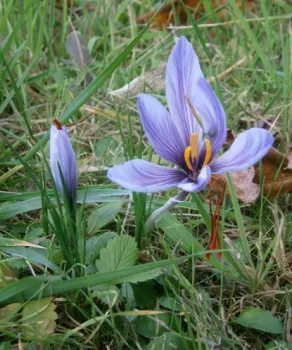
Saffron crocus (Crocus sativus) was first cultivated for dye, perfume, and medicine in ancient Greece, Egypt, and Minoan Crete as early as 4,100 years ago. It was spread by human cultivation across Eurasia and beyond. Because of our Mediterranean climate, saffron crocus is well-suited to our climate and growing conditions. Here’s how to grow saffron crocus:
- Plant in August or September.
- No need to pre-chill the corms.
- Plant corms under wire mesh to prevent rodents from invading.
- Choose from a variety of growing locations. Like spring crocus, saffron crocus can be grown in pots, raised beds, or in the ground.
- Plant in well-drained soil at least 4 inches apart to maximize saffron production.
- Harvest in October or November. Harvest the bright red stigmas when they are fully open and usually in mid-morning when the dew has evaporated. Use tweezers and dry them in a 200° oven for 7 to10 minutes. Although it takes 4,000 stigmas to make an ounce of saffron, a little goes a long way – it only takes a few stigmas to flavor a dish.
- Wait till leaves die back before removing them. Like spring crocus, waiting to remove leaves ensures the bulb has enough energy to flower the following year.
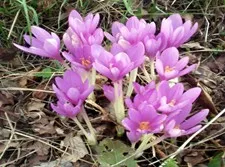
Colchicum spp. resembles the goblet-shaped blooms of true crocus, but it is actually like a distant cousin, falling under the lily family. It flowers in colors ranging from white to pink to purple. Colchicum may struggle in warmer parts of Marin, but if you want to try growing this plant, here are some tips:
- IMPORTANT: wear gloves when planting, as all parts, including the corms, are poisonous.
- Plant in August for September and October bloom.
- Plant in part shade in a deep pot or in the ground.
- Don’t remove brown leaves until they’ve died fully back.
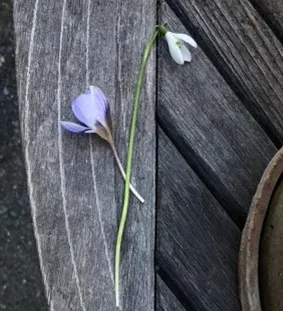
See more fall-blooming crocus.
With the wide variety of crocus available, there’s a crocus to suit every type of garden – and gardener. It’s never too early to look forward to spring, and now’s the best time to plant spring-blooming crocus for a stunning display come March!