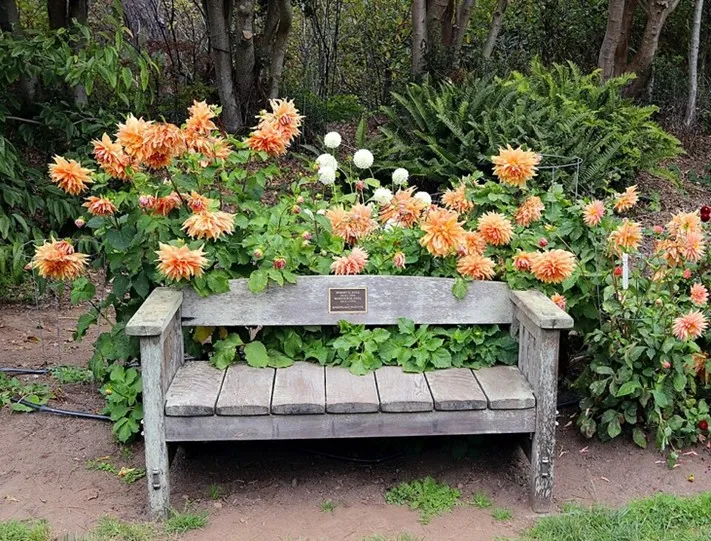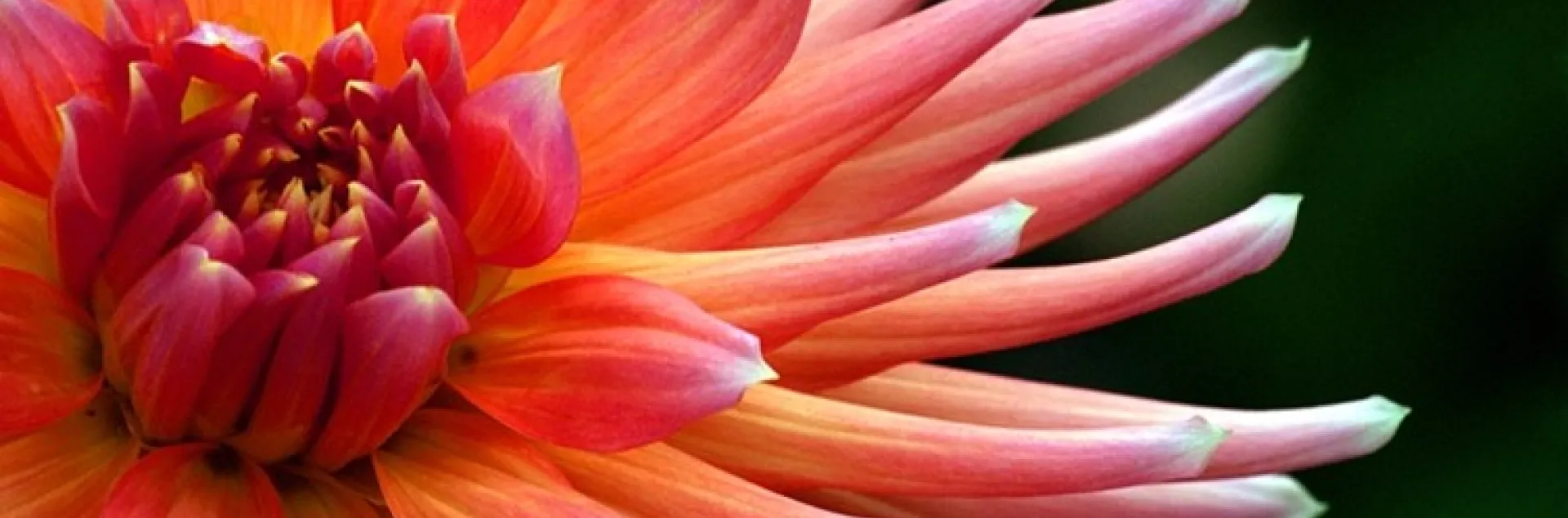

Looking for an easy-to-grow perennial that blooms summer through fall? How about one with flowers available in a rainbow of colors and that range from 2-inch pompoms to dinner-plate size? Dazzling dahlias at your service! These bushy plants are excellent choices in many landscape settings. Dainty white blooms lend a formal look, 10-inch blooms with spiky petals add a wild feel to the garden, and a pot by the front door filled with dahlias is a great way to spiff up an entry. Check out some common dahlia varieties.
Originally from the highlands of Mexico and Central America, the nutritious, starchy tubers were a food source for the Aztecs. While some tubers are still edible, the variety of hybrids, along with the use of pesticides and fungicides, make eating tubers safe only after thorough research. Better to enjoy the blooms. Today, the dahlia is the national flower of Mexico and the official flower of San Francisco.

What’s a tuber?
Whether you choose to plant in pots or in the ground, it’s important that you start with healthy tubers. Like bulbs, tubers are underground pods that contain the nutrients a plant needs to grow, survive, and reproduce. Healthy tubers should feel firm like potatoes – with no soft spots or strong, moldy odors. Local nurseries and plant societies carry a selection of dahlias, both as tubers, and later in spring, as established plants. For a wider range of options, search online. The biggest challenge you may encounter when growing dahlias is deciding which ones to grow! The variety of dahlias is staggering: there are only 42 species but more than 57,000 cultivated varieties.
What do dahlias need?
Marin’s climate is close to ideal for darling dahlias. They also benefit from:
- Six hours of sunlight every day. In extremely hot areas, go for morning sun and some afternoon shade.
- Healthy, well-drained soil. Dahlias do not like wet feet.
- Water two to three times per week for established plants; more during heat spells.
How to grow and care for dahlias
New to dahlias? Not a problem. Here’s how to add one or more dahlias to your garden.
- Plant tubers directly in the ground in spring after the last frost. Use a good quality planting mix, incorporating compost. Mix in an all-purpose, low-nitrogen fertilizer. Excessive nitrogen will lead to more foliage and fewer flowers.
- Dig a hole 4 to 6 inches wide.
- Place tubers horizontally on the soil with an eye facing up.
- Cover with 2 to 3 inches of soil.
- Allow 2 feet between plants for room to grow.
- Insert support stakes or a tomato cage if growing a tall variety. Install these as you are planting. This way you won’t injure any tubers by adding stakes later.
- Water lightly once the tuber is planted. Dahlias are very susceptible to rot at this stage. Once the plant starts to grow, water periodically.
- When three sets of leaves appear, pinch the center growth just above the third set. This will encourage a stronger, bushier plant that encourages more blooms.
- Deadhead regularly. This will help keep the blooms coming well into the fall.
- When temperatures drop, allow the leaves to yellow before cutting the plant down to about 4 inches. Dahlias will be fine left in the ground with our mild winters.
- Dig up the tubers every two or three years. Share with neighbors and/or use them to expand your dahlia bed. If you wait longer to dig them up, you’ll probably see the tubers poking up in the soil and the vigor of your plant will decrease.
Pests and Diseases
Don’t be discouraged by the list of possible problems below. Dahlias are actually quite easy to grow, and they provide an abundance of blooms to fill your vases and share with friends.
- Snails, slugs, and earwigs. You are most likely to see these pests when tasty young stems and leaves emerge. Pick these creatures off regularly or apply an organic pet- and wildlife-safe bait before they eat your young dahlias to the ground.
- Thrips and mites. Deadhead plants regularly to discourage these unwelcome visitors.
- Cucumber beetles. Hand pick early in the morning.
- Leaf miners. These pests disfigure leaves, but they don’t affect flowers. Remove infected leaves.
- Powdery mildew. This is a common nuisance to dahlias. Keep plants well-watered, fed, and encourage good air circulation. Remove infected leaves.
Learn more about dahlias
For further information, visit the American Dahlia Society and consider joining a local society. No growing space, but want to enjoy the flowers? There is no place better than Dahlia Dell in San Francisco, home to more than 700 varieties of dahlias. Peak bloom time is July thru September.