
Robin Martin, UC Master Food Preserver Online Program Volunteer
Although the best pumpkins for cooking are the smaller, sweeter varieties of pumpkin, pretty much any pumpkin can have its life extended after its role as an autumnal decoration is concluded. Prepare and freeze* pumpkin purée for soups, cakes, butters, pies, and even lattes and cocktails! It’s so easy, you wouldn’t believe it! What makes a pumpkin undesirable for cooking is if the pulp is excessively stringy. In addition, anything that is moldy should obviously be composted rather than preserved in any form.
To prepare a pumpkin for eating or preserving, it’s important to wash the exterior of the pumpkin to remove any dirt and to reduce the bacterial load on the surface. Even though you won’t eat the peel, surface contaminants can travel into the flesh of the pumpkin on the knife when you cut into it. After washing the pumpkin, cut it in half from the top to the bottom, then scoop out the seeds and pulp. Reserve this – we’ll review how to cook delicious pumpkin seeds later!
At this point, there are two primary ways to cook the pumpkin flesh in advance of freezing:
Boiled: To boil the pumpkin, peel it and cut it into 2-inch chunks. Cook in boiling water until a fork easily penetrates the pieces.
Baked: To roast the pumpkin (my preference), place the halves of pumpkin cut-side down on a baking pan and bake at 350ºFfor about 90 minutes, or until you can stick a fork through the skin and into the flesh easily.
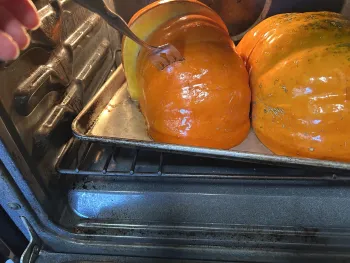
Pumpkin halves in the oven being probed for readiness (Robin Martin, used with permission).
Once the pumpkin is at the desired tenderness, drain and cool it on the counter for no longer than two hours. Remove the roasted pumpkin flesh from the rind. Use a masher or food processor (my preference) to purée the pumpkin. Pack the pumpkin purée as-is into food-safe freezer containers (plastic bags – my preference - or rigid containers) and freeze for up to one year for best quality. Alternately, strain the purée to remove much of the liquid and then pack and freeze. Or make any of the recipes below!
Basic Pumpkin Seeds
Pumpkin seeds are a delicious out-of-hand snack or gorgeous addition to salads and vegetable side dishes. First, extract the seeds from the flesh and carefully wash them to remove any remaining pumpkin tissue. The seeds can then be dried in a dehydrator at 115º to 120ºF for one to two hours, or in an oven on warm for three to four hours, stirring frequently. After drying, seeds can be roasted. To roast pumpkin seeds, toss the dried pumpkin seeds with oil (approximately 1 teaspoon per cup of seeds) and season with your favorite spice blend. Roast in a preheated oven at 250ºF for ten to fifteen minutes. (Process adapted from https://hgic.clemson.edu/factsheet/pumpkin-basics/).
Pumpkin Bread

Pumpkin bread (Robin Martin, used with permission).
Ingredients
2 cups flour (all-purpose or one-to-one gluten free flour for a gluten-free option)
½ tsp salt
1 tsp baking soda
½ tsp baking powder
1 tsp ground cloves
1 tsp ground cinnamon
1 tsp ground nutmeg
½ cup softened butter
1 cup white granulated sugar
½ cup brown sugar
¼ cup apple sauce
2 large eggs
15 oz pumpkin purée, liquid strained out through a cheesecloth
Instructions
Preheat oven to 325ºF.Set rack in the middle of the oven. Grease two 8” x 4” loaf pans with butter and dust with flour.
Combine the dry ingredients - flour, salt, baking soda, baking powder, cloves, cinnamon, and nutmeg in a bowl.
In an electric mixer bowl, beat the butter and sugar on medium speed until blended, add the eggs one at a time, beating well. Beat until light and fluffy. Add the pumpkin and the apple sauce. Don’t worry if it looks curdled.
Add the dry ingredients and mix at low speed until combined.
Divide the batter into the two pans. Bake for 65-75 minutes or until a toothpick inserted in the center comes out clean. Let the loaves cool in the pans for about 10 minutes then turn onto a wire rack to cool completely.
When completely cool, slice one loaf and put it in a labeled freezer baggie and freeze. You can toast and enjoy it later at a moment’s notice. Outside the freezer, the other loaf will be good for a few days.
Freezer Pumpkin Butter
Ingredients
2 pints pumpkin purée
¾ cup apple juice
2 tsp ground ginger
½ tsp ground cloves
1½ cups white sugar
2 tsp ground cinnamon
1 tsp ground nutmeg
Note: you can adjust the spice quantities to suit your own taste.
Instructions
Combine pumpkin, apple juice, spices, and sugar in a large saucepan. Stir well. Bring the mixture to a boil. Reduce the heat and simmer for 30 minutes or to desired thickness. Stir frequently. Transfer to sterile half-pint freezer containers. Leave half-inch headspace and store in the freezer for up to 1 year.
Yield: about 5 half-pint freezer containers.
Recipe source: https://ucanr.edu/sites/default/files/2019-10/312416.pdf
Easiest Pumpkin Shrub for a Party
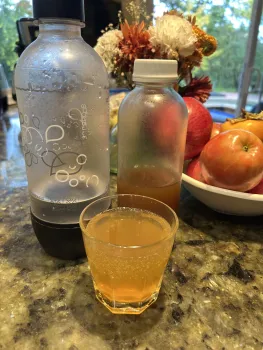
Pumpkin shrub in a glass (Robin Martin, used with permission).
A shrub is a sweetened, vinegar-based fruit (or vegetable) flavored mixer for both alcoholic and non-alcoholic drinks. This one is delicious with maple bourbon or just some seltzer.
Ingredients
Flesh from a 3 lbs. roasted pumpkin or squash
1½ cups white sugar
1½ cups apple cider vinegar
¼ cup fresh ginger, grated
1 Tbsp ground cinnamon
Instructions
Add the pumpkin flesh to a glass or plastic container. Add the sugar, vinegar, ginger, and cinnamon. Stir to combine. Place in refrigerator overnight or for up to 24 hours.
Put the pumpkin mixture through a food mill or sieve, squeezing the liquid into a bowl. Discard the solids and pour the liquid into a jar or bottle.
Shrubs should be stored in the refrigerator, where they will keep for up to a year. Always check your shrub before consuming it, and if there are any signs of mold, or if the shrub starts to look bubbly, cloudy, or slimy, throw it away. When in doubt, throw it out.
Recipe adapted from https://www.seriouseats.com/pumpkin-shrub-fall-drinking-vinegar-for-mixing-cocktails
*Freezing is the only recommended method for preserving pumpkin purées, butters, and preserves. It’s important to recognize that home canning (for shelf-stable) pumpkin purée is not recommended because it, and other winter squashes, are low-acid foods that must be processed in a pressure canner to ensure safety. Purées can be too “thick” and viscous to allow effective heat transfer by fluid convection in the jars; hence heat may not penetrate evenly and completely during processing. Without even heating during the pressure-canning process, spores of the Clostridium botulinum bacterium may survive, putting anyone who eats the food at risk of botulism, a deadly food-borne illness. For instructions on home canning, see https://ucanr.edu/site/uc-master-food-preserver-program-orange-county/pumpkins
Additional resources:
nchfp.uga.edu/blog/plenty-of-pumpkin-possibilities
nchfp.uga.edu/how/freeze/vegetable/freezing-pumpkin/