
Paige Weisskirch, UC Master Food Preserver Online Program Volunteer
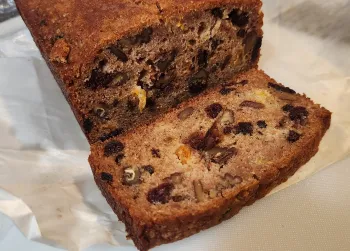
Dried fruit bread (Photo caption: Paige Weisskirch, used with permission).
Every November, I open my pantry and face the same situation: half-empty bags of dried apricots from the previous year’s baking; figs I dehydrated with good intentions; some crystallized ginger that seemed essential at the time; and at least three bags of raisins I can't quite remember purchasing. They sit there, taking up valuable real estate, slowly hardening into little fruit pebbles.
This is exactly why I fell in love with fruitcake, or at least the idea of it. Not the neon-red-cherry-studded doorstop version that inspired Johnny Carson to joke about one fruitcake being passed around the world forever. Fruitcake has a reputation problem it doesn't entirely deserve. It's been the punchline at holiday parties for decades, but it's also survived for literally thousands of years. That alone deserves some respect.
War Rations to Wedding Cakes
One of the first known fruitcakes, called satura, originated in Ancient Rome. Roman soldiers carried this dense mix of barley mash, raisins, pomegranate seeds, and honeyed wine on military campaigns. Portable, calorie-dense, nearly indestructible.
The Crusades opened trade routes, flooding European markets with exotic dried fruits and spices. Each region developed its own version. Italy gave us panforte and panettone. Germany perfected stollen, that buttery, sugar-dusted Christmas staple. Britain went all-in on fruitcake for the holidays, along with plum puddings so beloved they inspired Christmas carols.
When sugar from the Americas hit European markets in the 1600s, fruitcakes got sweeter and more decadent. Candied fruits transformed them into luxury items reserved for weddings and major celebrations.
The Victorian Era Goes All In
Victorian England turned fruitcake into an obsession. Dense, boozy, and baked weeks or months before Christmas, these cakes became the centerpiece of holiday tables. Fruitcake became the choice for royal weddings. Queen Victoria and Prince Albert served one at their 1840 wedding. In 2016, a slice from that cake sold at auction for around $1,500. A 176-year-old piece of cake.
Why It Lasts Forever (Almost)
Fruitcake's legendary shelf life is a result of science, not magic. Dried fruits and nuts have low moisture content, so bacteria don't have much to work with. High sugar concentration binds with water, making it unavailable for mold and bacteria to grow while retaining enough moisture to keep the cake soft. Alcohol (usually rum, brandy, or bourbon) denatures bacterial proteins, essentially sanitizing the cake from the inside out.
Traditional bakers often "season" their fruitcakes by wrapping them in liquor-soaked cloth and adding small amounts of alcohol periodically over months. The flavors mellow and deepen, like aging wine. According to the USDA, a store-bought fruitcake can last six months in the fridge or a year in the freezer.
The legends are real. In 2017, researchers found a 106-year-old fruitcake from Robert Falcon Scott's 1912 Antarctic expedition. It was still in "excellent condition."
From Punchline to Nostalgia
Early 20th-century America embraced fruitcake, thanks to mail-order catalogs and the newly established U.S. Parcel Post Service (1913). It became shorthand for Christmas, and for comedians, an easy target.
Still, plenty of people loved it. Truman Capote's 1956 short story A Christmas Memory captures the joy of fruitcake-making: a boy and his older cousin gathering pecans, pouring whiskey into the batter, declaring "Oh my, it's fruitcake weather!" It's sweet and nostalgic, and it makes me want to bake one - almost.
Fruitcake is a time capsule, a joke, a tradition, and occasionally a delicious surprise. You're following in the footsteps of centuries of bakers who understood that the best fruit desserts are the ones that make use of what you've got. Whether you're making a traditional booze-soaked version or this lighter dried fruit bread, you're part of a baking tradition that goes back thousands of years. And unlike Johnny Carson's immortal fruitcake, this one will actually get eaten.
A Lighter Take: Dried Fruit Bread (Cake?)
If you like the idea of fruitcake but find traditional versions too heavy or too sweet or too boozy, try this recipe. This version honors fruitcake's original purpose but skips the candied fruit for the natural sweetness of dried fruit. And I really love this recipe because it's the perfect solution for all those random containers of dried fruit that accumulate in the pantry. That quarter-cup of dried cherries left over from scones, the dates you bought for one recipe, those apricots that are starting to get too chewy, toss them all in. The recipe is forgiving and actually benefits from a mix of whatever dried fruit you have on hand.
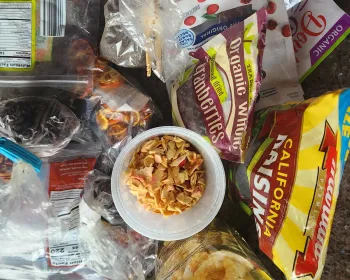
Assorted packages of dried fruit (Photo caption: Paige Weisskirch, used with permission).
Recipe adapted from James Beard’s Persimmon Bread via David Lebovitz
Makes 2 loaves
Ingredients:
Dry Ingredients:
3½ cups (440g) all-purpose flour, sifted
1½ tsp salt
2 tsp baking soda
½ tsp ground nutmeg
1 tsp ground cardamom
Mix-ins:
1 cup (approx 4oz or 120g) pecans, toasted and chopped
2 cups (approx 11oz or 300g) dried fruit, chopped (apricots, raisins, dates, figs, craisins or whatever you have)**
Wet Ingredients:
2 to 2½ cups (400-500g) sugar*
2 cups (475mL) fruit purée (applesauce, persimmon, plum, or pear)
¾ cup (170g) melted butter or (180mL) neutral vegetable oil *
2 large eggs, beaten
2/3 (160ml) cup bourbon, brandy, or rum or ½ cup (120ml) of strong brewed black tea (Earl Grey works well)
1 Tbsp orange zest
1 tsp vanilla extract
*Note: For a moister loaf, use 2½ cups sugar and vegetable oil instead of butter.
**Note: The metric weight for dried fruit can vary depending on how densely it's chopped and which fruits you use. The weight provided is approximate.
Instructions:
Prep (15 minutes before baking):
Position oven rack in the lower-center position and preheat oven to 350°F.
Butter two 9”x5” loaf pans. Line bottoms with parchment paper or flour the pans and tap out excess.
Make the batter:
3. In a large mixing bowl, sift together flour, salt, baking soda, spices. Whisk to combine.
4. Create a well in the center of the dry ingredients.
5. Add sugar, fruit puree, melted butter (or oil), eggs, bourbon (or tea), orange zest, and vanilla to the well. Stir gently to combine.
6. Fold in pecans and dried fruit. Mix just until no dry flour remains visible - don't overmix.
Bake:
7. Divide batter evenly between the two prepared pans (each should be about 3/4 full).
8. Bake for 65 - 75 minutes, or until a toothpick inserted in the center comes out clean (internal temperature should reach 195-200°F).
9. Check at the 45-minute mark. If tops are browning too quickly, tent loosely with aluminum foil.
Cool and serve:
10. Remove from oven and let loaves cool in pans for 10 minutes.
11. Turn out onto a wire rack and cool completely before slicing.
Storage & Serving Tips:
Better with time: The flavor deepens after 1-2 days. Store wrapped in plastic wrap at cool room temperature for up to 3 days or refrigerate for up to a week.
Freezer-friendly: Wrap tightly in plastic, then foil. Freezes for up to 3 months.
Flexible formula: Swap fruit purées or dried fruits based on what you have on hand, this recipe is forgiving.