
Puns, cartoons enliven comprehensive new guide by veterinarians about backyard chickens
Gathering fresh eggs laid by chickens in your backyard may sound idyllic, but keeping the birds healthy requires some special knowledge. Avian influenza, salmonella, predators, food safety, choosing the correct feed, what’s snake oil and what’s not, and how to pick the right breed for you are just some of the common chicken conundrums people want practical science-based information about.
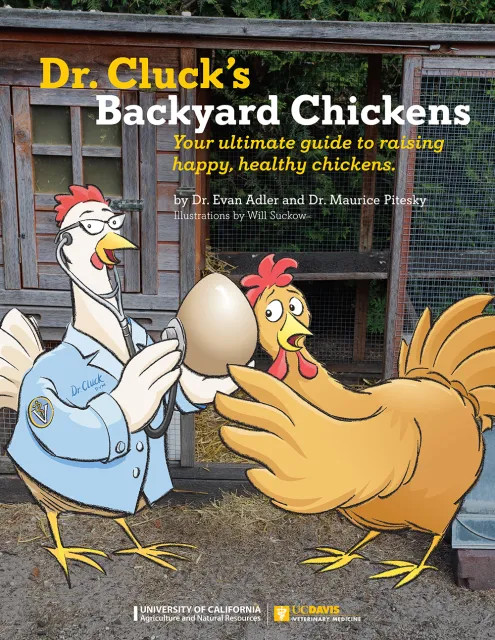
The new book “Dr. Cluck’s Backyard Chickens,” published by the University of California Agriculture and Natural Resources and available in paperback and hardbound, provides backyard chicken owners with science-based advice for poultry care at every life stage.
This fun-to-read guide is the first comprehensive how-to book that is peer-reviewed, poultry vet-approved and reads like your favorite sitcom.
In the book, Maurice Pitesky, professor of Cooperative Extension in the UC Davis Weill School of Veterinary Medicine, and veterinarian Evan Adler advise readers on choosing breeds, setting up a brooder, diagnosing disease, understanding nutrition and making compassionate end-of-life decisions.

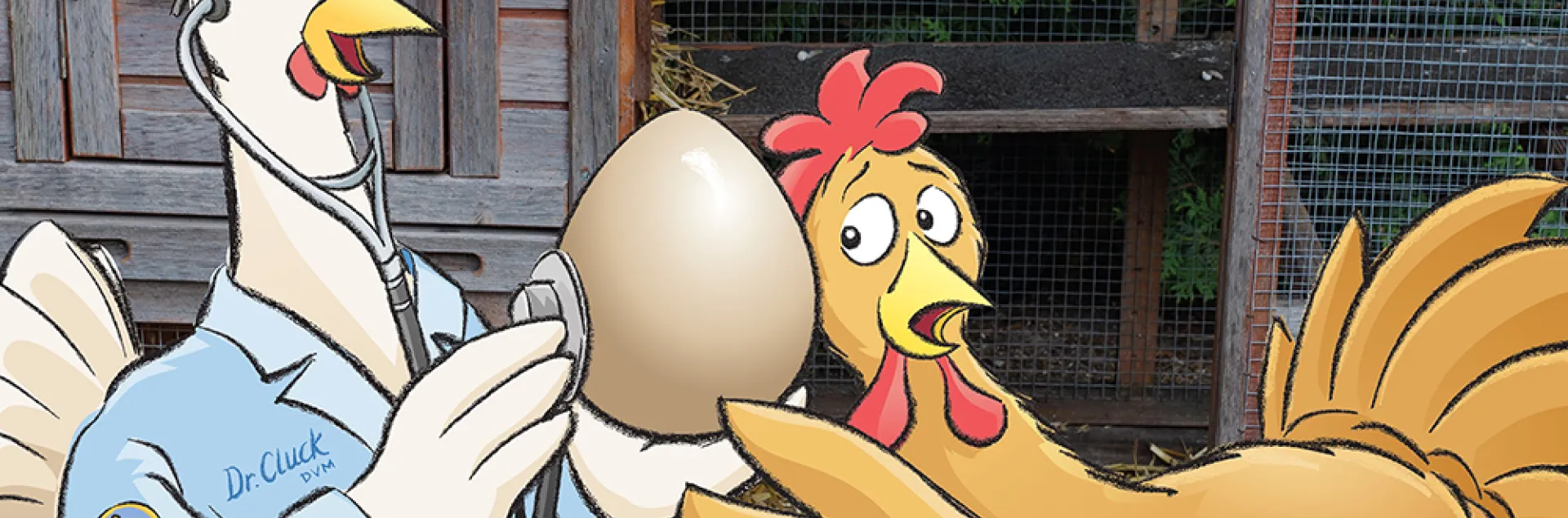
“Dr. Cluck,” a cartoon poultry veterinarian and her colorful cast of coopmates lead readers through each chapter with chicken puns and personality, making the book as entertaining as it is educational.
“Chickens are fun and taking care of them and reading about them also should be fun,” said Pitesky. “While there are lots of backyard chicken books, this book is unique in that it is written by vets, peer-reviewed by experts and entertaining for all.”
The book includes a glossary, full index and chapter-by-chapter references so readers can verify and explore the science behind the guidance.

Dr. Cluck, drawn by illustrator Will Suckow, wears eyeglasses and a light blue lab coat and states in the introduction: “I, Dr. Cluck, do hereby pledge allegiance to not use any fancy words in this book without explaining them – with liberty and chicken wings for all.”
Co-author Adler, who trained in veterinary medicine at University College Dublin in Ireland, found that illustrations helped him learn. “I am a visual learner and often arranged my college notes into summary diagrams, which ended up being humorous,” he said, “which made some pretty boring topics, less boring.”
“When I first met Maurice, we each thought the other had a good sense of humor,” said Adler, who has worked with farm animals and now works in private practice treating mostly companion animals and some exotic animals in the Sacramento area. “He asked me to join him on this chicken writing adventure. I then made it my personal mission to incorporate my own learning and storytelling techniques to make it easier and most of all more fun to learn about and love chickens.”
The book is organized into four parts covering the complete arc of chicken ownership:
- Before Getting Chickens: Space, commitment, choosing ideal breeds, setting up safe coops and brooders, and acquiring your flock responsibly.
- Living with Chickens: Caring for chicks, transitioning to layers, nutrition, weight and health, managing rodents and recognizing illness early.
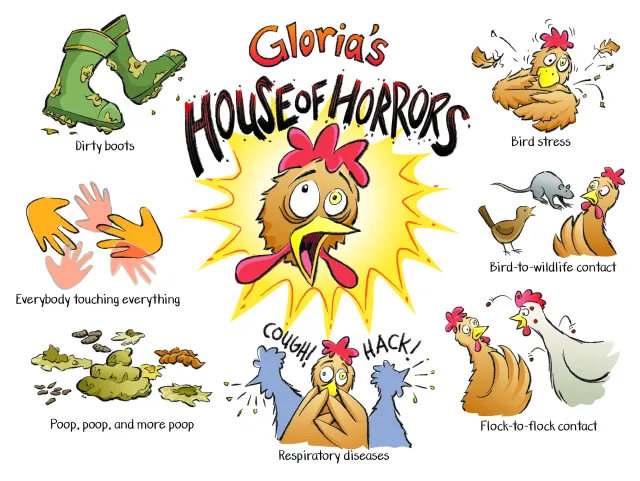
- Chicken Diseases: Respiratory diseases, Marek’s disease, skin diseases, gut and reproductive disorders with practical biosecurity strategies to prevent them.
- End-of-Life Decisions: Humane meat processing and compassionate euthanasia guidance, approached with the same science-based care as every other topic in the book.
“Our format merges science and silliness with the goal of education and entertainment,” Pitesky said. “The book can be read crop to cloaca, or cover to cover, or can be a reference book or just a fun coffee table book.”

The authors caution against raising chickens for cheap eggs.
“Keep in mind that the eggs the chickens lay will be more expensive than the eggs you buy from the store,” said Adler, who has been raising backyard chickens for 10 years.
Before bringing home chicks, Pitesky recommends doing some homework by reading and identifying resources – such as a veterinarian who treats chickens – before there is a problem.
Adler added, “Use proper fencing to keep chickens in and predators and pests out, use a store-bought balanced feed, set up their enclosure before you get them and get the relevant vaccinations.”
He advises poultry owners to observe their chickens to learn what is “normal” so they recognize “abnormal.”
“Keep their daily health simple by embracing your birds’ FLAWSS: Feed, Light, Air, Water, Space and Sanitation,” Pitesky said. “Backyard chickens are fun, but also a responsibility. Remember backyard chickens often live for more than five years!”
Key book features
- Comprehensive biosecurity protocols for backyard poultry
- Complete life cycle management and husbandry from chick management through end-of-life care
- Peer-reviewed veterinary guidance presented without technical jargon
- Disease prevention strategies from UC Davis specialists
- Engaging illustrations and entertaining educational icons for easy navigation
- Suitable for young adults through experienced keepers
- Emphasis on community protection through responsible flock management
The 228-page, 8.5-by-11 inch “Dr. Cluck’s Backyard Chickens” book (UC ANR Publications; ISBN 978-1-62711-246-8) can be ordered for $29 for the paperback or $70 for hardbound copy at https://anrpublications.org.