It was definitely an "Arachnid Kind of Day" when the Bohart Museum of Entomology at the University of California, Davis, hosted an open house themed "Eight-Legged Encounters."
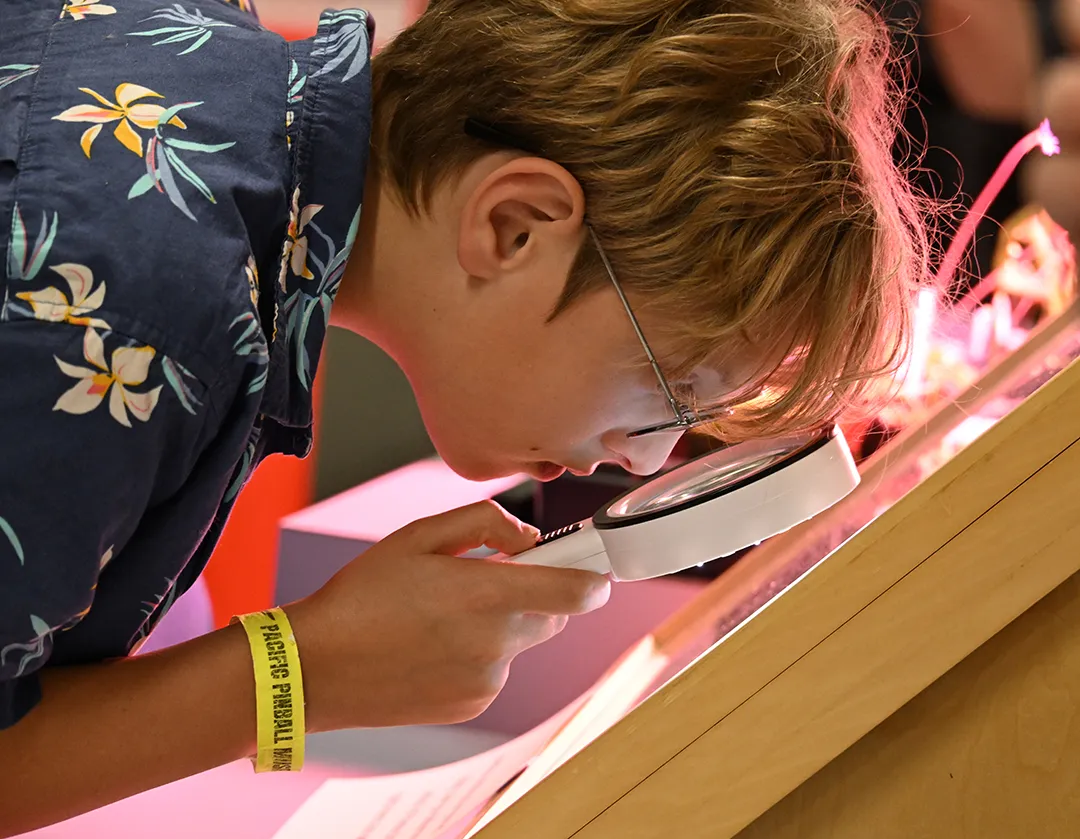
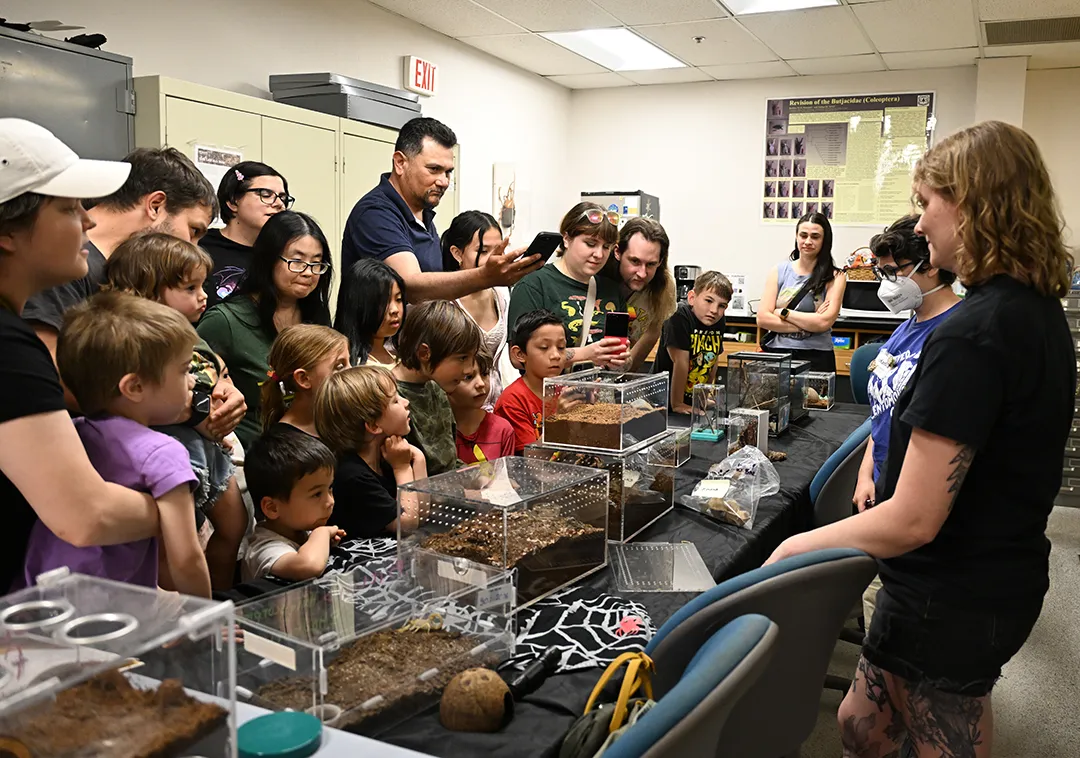
The event, free and family friendly, drew some 300 visitors during the three-hour time frame.
Doctoral candidate Emma "Em" Jochim co-chaired the open house with UC Davis alumnus and junior specialist Felix Duley, both from the lab of Professor Jason Bond, director of the Bohart Museum. He serves as the Evert and Marion Schlinger Endowed Chair in the Department of Entomology and Nematology, and executive associate dean, UC Davis College of Agricultural and Environmental Sciences.
"Many of the kids who came by yesterday were incredibly knowledgeable about arachnids which was so exciting to see!" Duley said. "In particular, one little boy and his older brother, who I had seen previously at the UC Davis Biodiversity Museum Day, spent a fair amount of time checking out the live and preserved arachnids and asking all sorts of questions. The questions included the lifespan of tarantulas, "which always gets a surprised response--some females of certain species can live around 20 to 25 years."
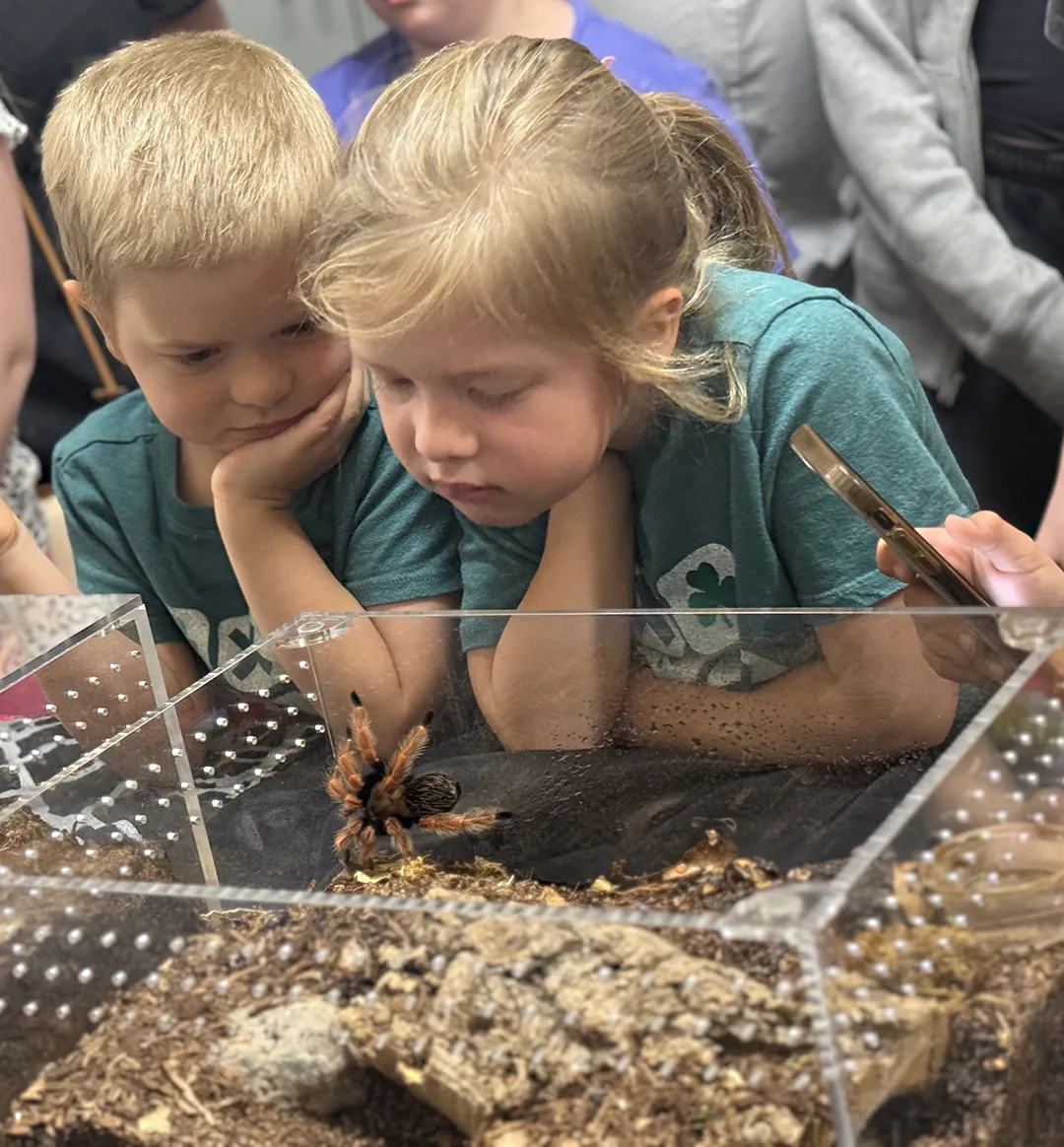
Other questions included the potency of tarantula venom, which Duley says, varies "greatly from species to species."
"And many people asked about the 'aggressive' nature of tarantulas which I was happy to share with them was unfounded; tarantulas found in California are not at all aggressive and have little interest in interacting with humans."
Duley owns 18 tarantulas and keeps them at his home. "I definitely have favorites, though don't tell my other tarantulas I said that. Some of my noteworthy tarantulas include: Karen, the Heteroscodra maculata, Bob the Lasiodora parahybana, and Cinnamon the Brachypelma boehmei." He also have a velvet spider and previously kept jumping spiders as well as wolf spiders. "Other than spiders, I also have a Vinegaroon and a Jerusalem cricket and have historically kept scorpions as well as tailless whip scorpions. It is a zoo!"
Duley said he loved seeing "people challenge their fears of spiders. I started out as an arachnophobe myself and discovered through repeated exposure therapy that I actually absolutely love spiders!! Sometimes it just takes some time to push through your own discomfort and learn that the fears built around spiders are massively overstated, though I totally understand how hard that can be for people."
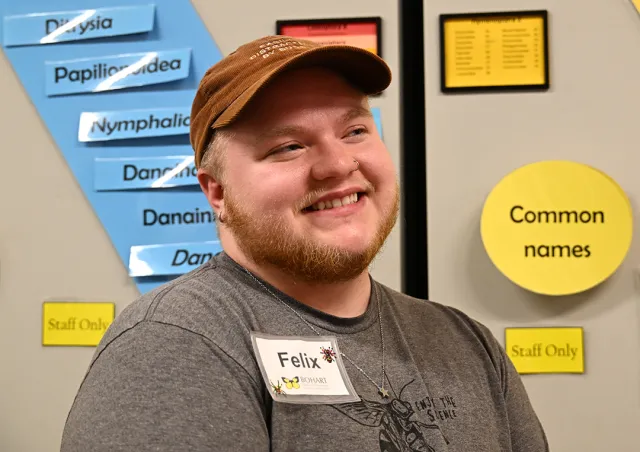
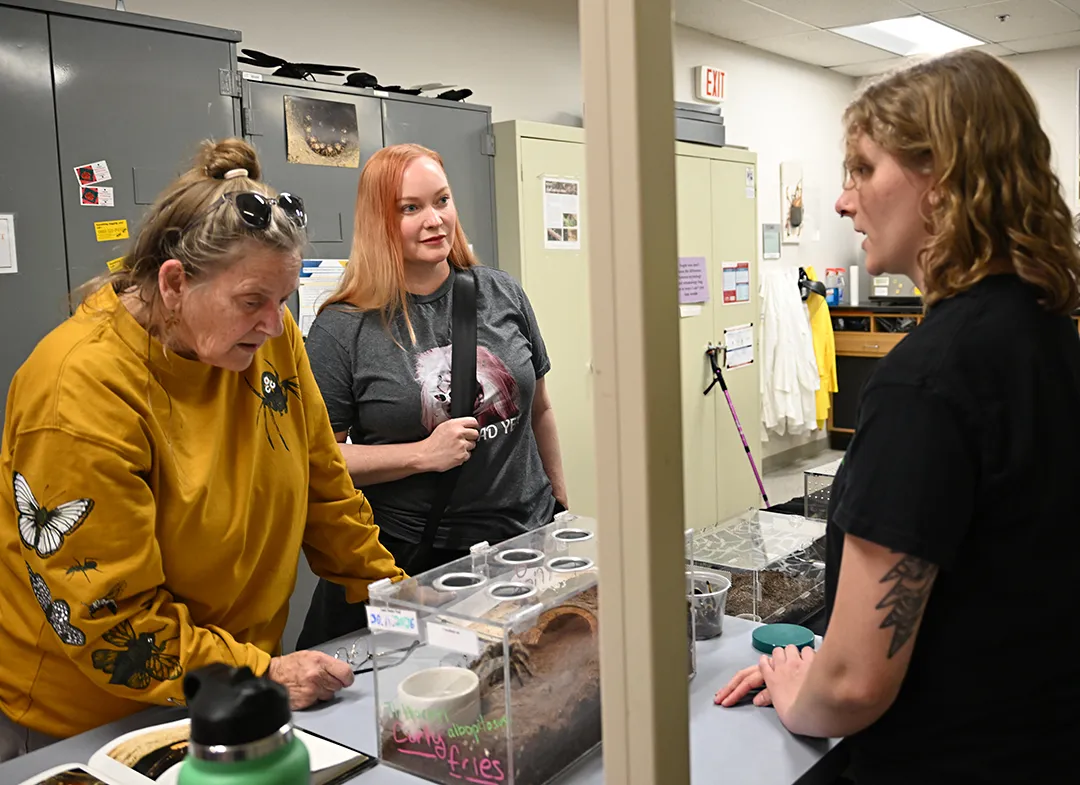
His mother, Nancy Duley of Fairfield, was among the visitors. "She's definitely gotten more comfortable with arachnids and has been a great sport in letting me house tons of spiders over the years when I still lived at home," Felix said. "Now it's my fiance's problem."
Jochim said some of the most asked questions included "the classics" such as "Are there brown recluses in California?"
There are no established populations of brown recluse spiders, Loxoceles reclusa in California, she said. (See information by UC Riverside spider researcher Rick Vetter at" https://spiders.ucr.edu/myth-brown-recluse-fact-fear-and-loathing)
"Another question was 'How dangerous are black widows?' and "someone asked why tarantulas are so hairy," she commented.
Jochim displayed several arachnids from her own "petting zoo"--a vinegaroon (Mastigoproctus tohono), two tarantulas (Aphonopelma iodius and A. paloma), and the whip spider/amblypygi (Phrynus whitei).
The Bohart Museum of Entomology is located in Room 1124 of the Academic Surge Building, 455 Crocker Lane. It houses a global collection of eight million insect specimens, plus a live petting zoo and an insect-themed gift shop.
Cover image: A Mastigoproctus tohono, also known as the Tohono whipscorpion or Tohono vinegaroon, eating a cricket at the Bohart Museum of Entomology open house. (Photo by Kathy Keatley Garvey)