
Mosquito surveillance is a critical public health practice involving the trapping, identification, and testing of mosquito populations to monitor species distribution, abundance, and disease presence.
What should you know about mosquito surveillance, and how best to establish it?
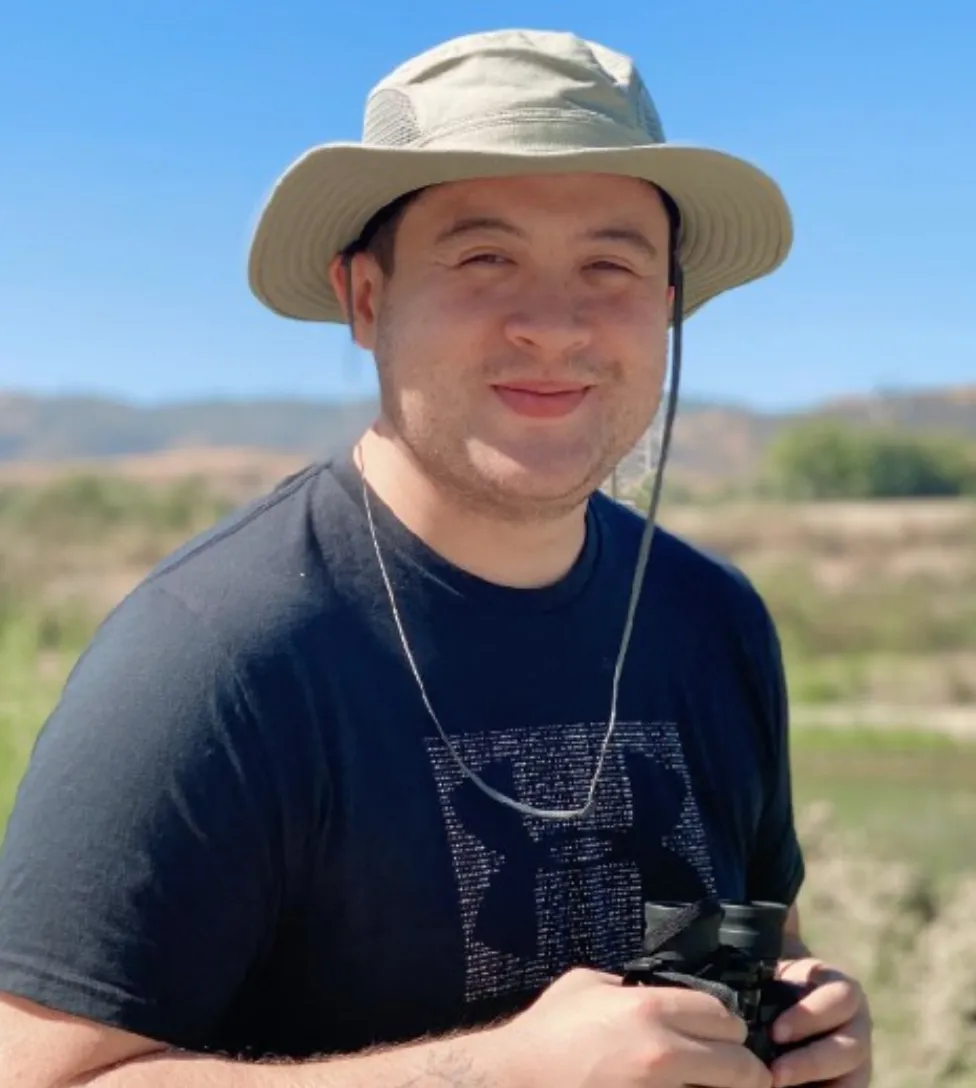
"Our results demonstrate that surveillance design influences both ecological inference and model reliability," says postdoctoral scholar and mosquito ecologist Benjamin Nyman of the UC Riverside Department of Entomology, who will speak on "Ecological Explorations in the Mosquito Surveillance Landscape" at a seminar hosted by the UC Davis Department of Entomology and Nematology at 12:10 p.m., Wednesday, Feb. 18 in 122 Briggs Hall.
His seminar also will be on Zoom at https://ucdavis.zoom.us/j/95882849672.
"We recently received approval for continuing education units (CEUs) from the California Department of Public Health for this seminar," said UC Davis doctoral candidate and mosquito researcher Carla-Cristina "CC" Edwards (ccedwards@ucdavis.edu), who will introduce him. "This is a great opportunity for vector professionals who may benefit from the CEUs."
“The global disease burden of mosquito vectored pathogens is projected to expand under climate and land-use change conditions, creating a growing need for research into the interactions between these vectors and the environments they occupy,” Nyman says in his abstract. “During my doctoral research, I investigated the role of water-holding plants like bromeliads in facilitating the expansion of invasive Aedes aegypti and Aedes albopictus in California. This spanned questions about habitat suitability, competition, and control, concluding with an exploration into plant use across a district. Limited local surveillance data collected for this work was then used to examine methods of modeling spatial and environmental partitioning of mosquito species. After graduating, I became more interested in how surveillance data shapes our understanding of mosquito ecology, particularly how operational characteristics interact with analytical frameworks to influence downstream decision-making. Because of this variability, effective public health agencies need generalized and objective methods of evaluating surveillance data and its products to improve integrated vector management programs."
Accessibility, Cost and Logistics
"The establishment of mosquito surveillance sites is often driven by accessibility, cost, and logistics rather than ecological representativeness," Nyman continued. "As a result, surveillance networks may provide limited inference about mosquito communities and their environmental contexts. To evaluate this, we compared two concurrent surveillance networks: a traditional hotspot-based arboviral network targeting Culex quinquefasciatus, and a centroid-based grid network designed for unbiased spatial coverage. Focal comparisons included community detection, environmental representativeness, and predictive model performance under contrasting trap placement strategies. Results demonstrate that surveillance design influences both ecological inference and model reliability. Reallocating a portion of arboviral surveillance effort toward spatially structured, unbiased trapping can enhance environmental representativeness, strengthen predictive capacity, and expand the ecological and operational value of mosquito surveillance networks."

Nyman holds a bachelor of science degree from UC Berkeley (2017) in molecular environmental biology, and a doctorate in entomology from UC Riverside, awarded in 2022. He has served as a full-time postdoctoral researcher at UC Riverside since 2024.
Edwards, a member of the lab of medical entomologist-geneticist Geoffrey Attardo, UC Davis Department of Entomology and Nematology, met Nyman at an American Mosquito Control Association (AMCA) meeting. "He was a committee member of the YP (Young Professionals) Committee that I currently chair," she said.
"We helped organize symposiums, workshop, and other aspects of AMCA YP’s together," Edwards commented. "Although Ben is no longer considered a young professional, his mentorship still carries out within the mosquito control and many other young professionals."
They co-moderated a symposium at the 2024 American Mosquito Control Association meeting in Dallas, Texas, on "Adult Control II," focusing on advanced techniques for controlling adult mosquito populations.
For any seminar technical issues, contact seminar coordinator Marshal McMunn, assistant professor, at msmcmunn@ucdavis.edu.
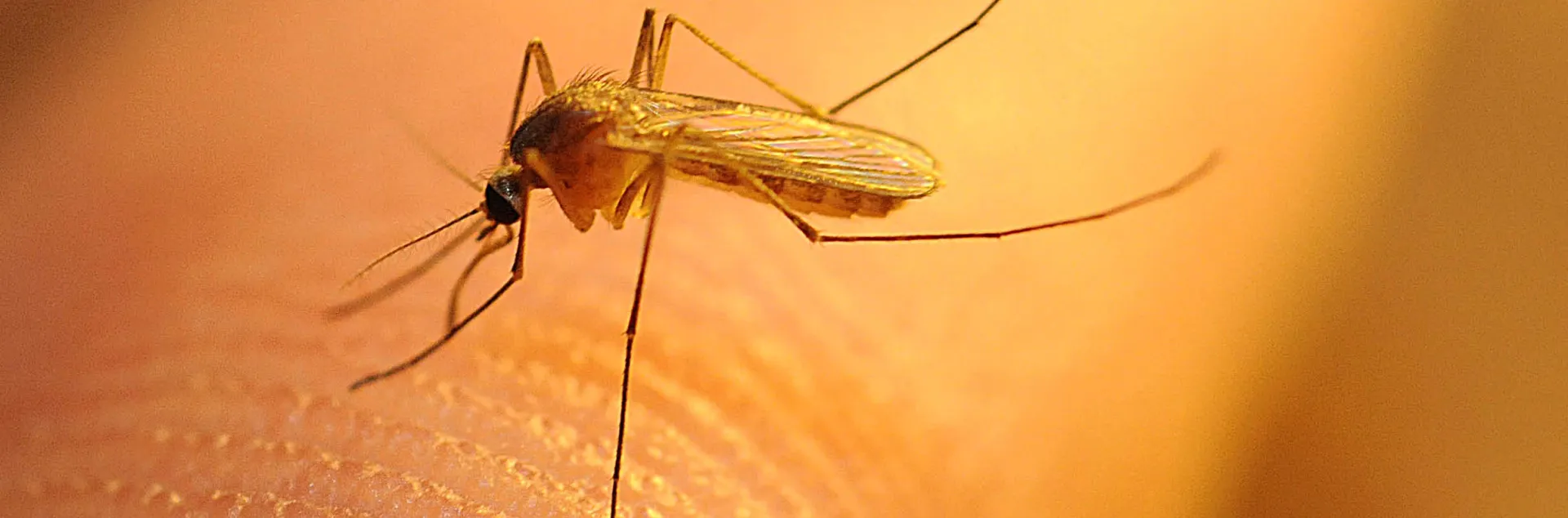
Cover image: Culex quinquefasciatus (Photo by Kathy Keatley Garvey)