
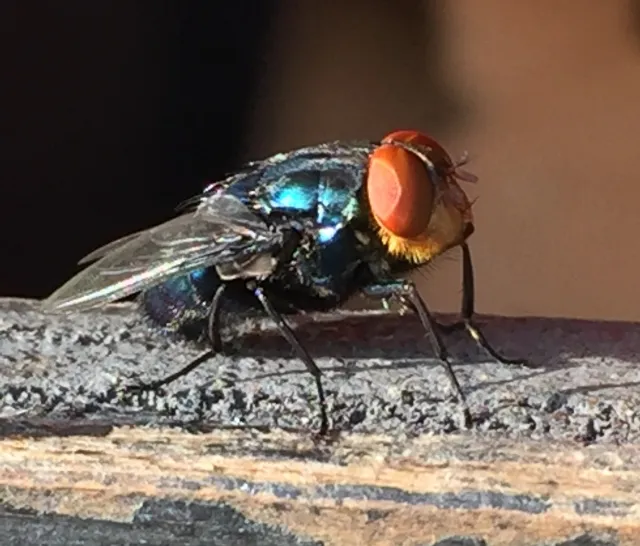
UC ANR scientists share crucial resources on devastating New World screwworm
Earlier this fall, the New World screwworm – the flesh-burrowing larva of a blowfly (Cochliomyia hominivorax) – was detected in cattle in Mexico just 70 miles from the U.S. border. Most recently, in late November, another case was confirmed in Nuevo León, a state of Mexico adjacent to Texas.
While the screwworm is not currently present in the U.S., Mexico and Central American countries have been reeling due to the resurgent parasite. There have been more than 144,000 cases in animals and over 1,100 in humans during this outbreak dating to 2023 – and the cases continue to track northward.
Members of the California agriculture community are just as worried as their counterparts in Texas, where an outbreak could cost livestock producers $732 million per year and cause up to $1.8 billion in losses for the Texas economy, according to U.S. Department of Agriculture estimates.
Among California’s top gross-value commodities in 2024, dairy products/milk are number one ($8.61 billion) and cattle and calves are number four ($4.98 billion) – both categories that could be most affected by the screwworm.
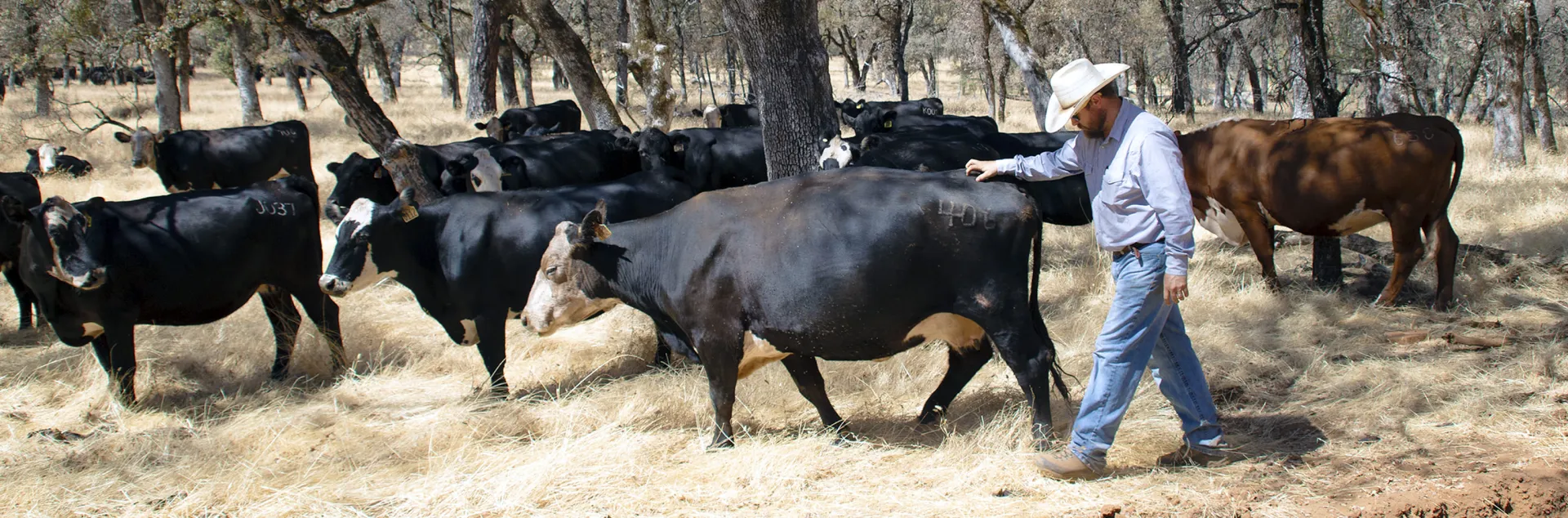
“Controlling for and preventing impact from the New World screwworm are the majority of the questions I’m receiving now,” said Brooke Latack, University of California Cooperative Extension livestock advisor for Imperial, Riverside and San Bernardino counties. Imperial County, adjacent to Mexico, houses about 329,000 head of cattle.
“There is definitely concern about the screwworm down here for producers, industry members and the veterinarians that serve the area,” Latack said.
For dairy, the risk is especially severe, as even small disruptions can lead to major financial losses, said Daniela Bruno, UCCE dairy advisor for Fresno, Madera and Kings counties.
“Unlike beef cattle, which can be held back from market during a quarantine, dairy cows produce milk every day that must be processed immediately – if a farm is quarantined or a plant shuts down, milk spoils quickly and has to be dumped,” Bruno explained.
She said that producers should look into diversifying processing options, reviewing their insurance coverage and bolstering biosecurity against threats like screwworm and avian flu, which has reemerged in California dairies.
Burrowing fly larvae cause ‘horror movie’ damage to animals
It’s not just the economic impact that is particularly unnerving about New World screwworm. While mortality rates vary based on the species and other factors, it can be up to 100% in newborn calves.
“It can affect and kill any warm-blooded animal – any bird, any mammal, including humans,” said Gaby Maier, Cooperative Extension specialist for beef cattle herd health and production at the UC Davis School of Veterinary Medicine. “But we are particularly concerned about our cattle here.”
Maier pointed to recent data from the outbreak in Panama, which indicated that 83% of screwworm cases were in bovines, with all other animals trailing far behind (human cases are relatively rare).
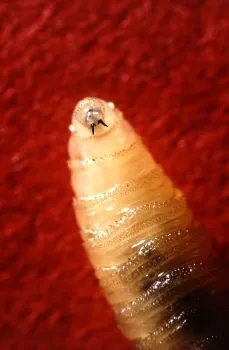
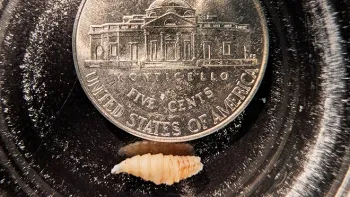
The progression of an infestation is especially alarming. After finding an opening on the host (which can be wounds as small as a tick bite, or body openings like the eyes or nose), the fly lays several hundred eggs in the animal’s body. The larvae then use their strong mouth hooks to burrow or “screw” head-first into the flesh.
As the larvae feed on the tissue, the wound enlarges and invites infestation by other fly species, accelerating cell death and eventually leading to secondary bacterial infection, sepsis and death within seven to 14 days.
“I have talked to people who have seen these infestations in person, and they remember it from when they were young,” Maier said. “They say it was horrible – the smell of decomposing flesh in a live animal.”
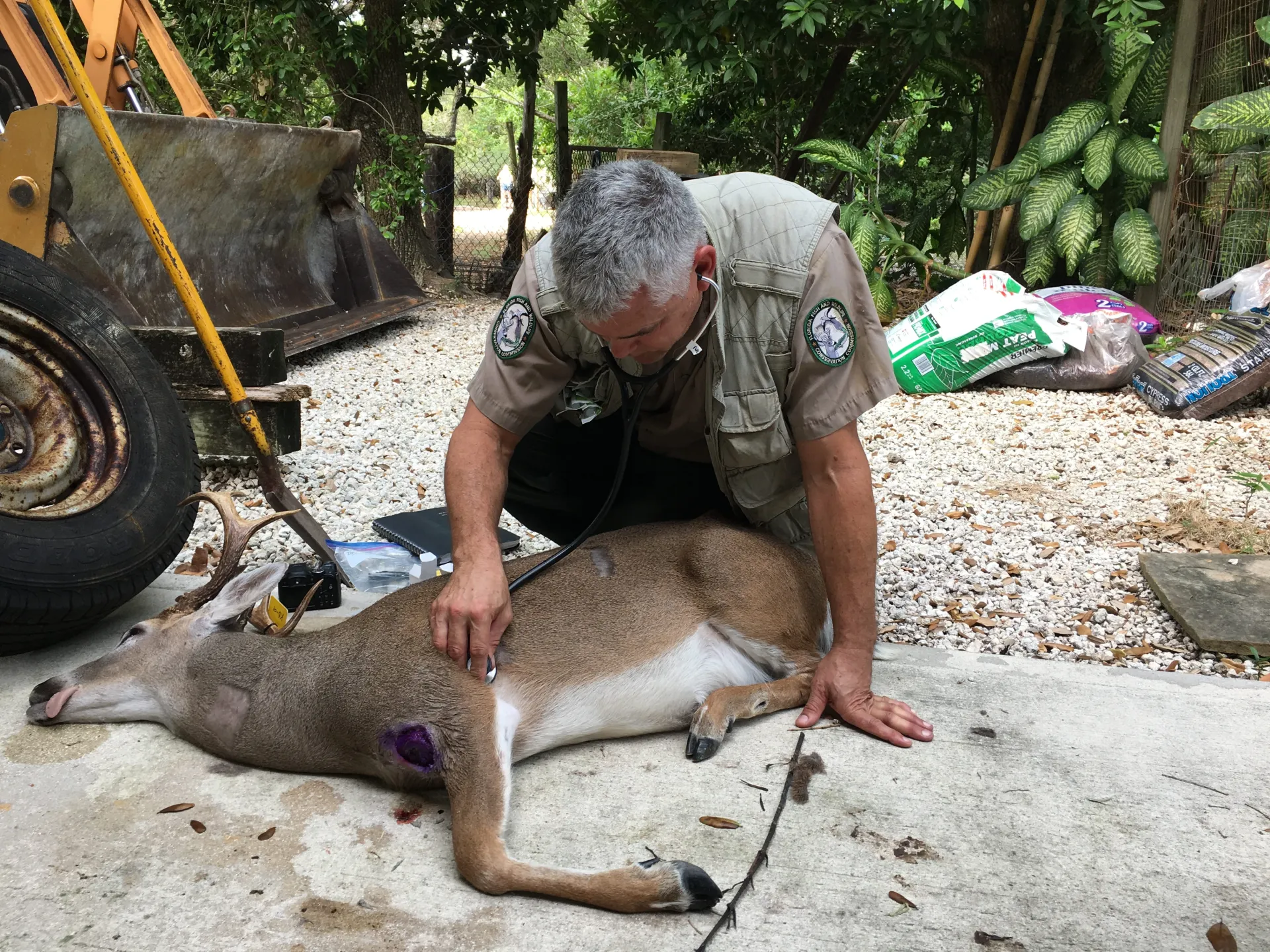
There have been documented cases – such as in deer in the wild – where the larvae obliterate the entire brain of the animal.
“They just keep digging; they just keep eating away at the tissue,” Maier said. “It’s really out of a horror movie.”
Scientists point to multiple factors in resurgence of New World screwworm
Although it was endemic to California and the southern U.S., the New World screwworm was eradicated in the U.S. in the 1960s through the release of sterile male flies that produce no viable offspring.
A USDA facility in Panama – COPEG (Panama-United States Commission for the Eradication and Prevention of Screwworm) – produces about 110 million sterilized screwworm flies every week, of which about 50% are males. Sterile flies are strategically released to contain spread of New World screwworm, and for the past 60 years the screwworm was largely contained to Central and South America.
Theories abound as to why it has breached the eradication zone – from illegal cattle trading across borders to fewer inspections during COVID to deforestation of the Darién Gap, a treacherous natural barrier between Colombia and Panama.
But the screwworm again has the full attention of the USDA and state and local agencies. In response, the U.S. southern land border has been closed to the movement of cattle and horses. Surveillance efforts have ramped up. Confirmed cases are met with highly effective sterile fly releases. New drugs for the prevention and treatment have been conditionally authorized.
And a new website was recently launched to provide updates for producers and the broader public: screwworm.gov.
UC Cooperative Extension experts: Stay informed, stay alert
For people in the beef and dairy industries (as well as producers with small ruminants like sheep and goats), keeping informed is the most important thing to do, according to Maier and Latack.
“Monitor the situation and stay up-to-date – if the screwworm is detected, it will be widely publicized so just watch out for those announcements,” said Maier, who recommended checking the USDA website and the California Department of Food and Agriculture screwworm page.

She also cautioned producers to avoid unnecessary use of dewormers or other medications – before a confirmed detection in California or neighboring states – to slow the parasite from developing resistance to those products.
During a screwworm webinar on Nov. 19, Maier; Rosie Busch, UCCE specialist in small ruminant herd health and production at UC Davis; Amy Murillo, a veterinary entomologist at UC Riverside; and veterinarian/rancher Tom Talbot presented. Murillo and Alec Gerry, a UCCE specialist at UC Riverside, are leading a project to monitor the state for signs of the fly’s return.
More than 100 people attended the webinar, organized by UCCE livestock and natural resources advisor Morgan Doran in partnership with the California Cattlemen’s Association and California Wool Growers Association. Watch the recording.
Producers should immediately report suspected cases
Maier also urged producers to keep a close eye on their herd for distressed animals – cattle, for example, that exhibit droopy ears or are lagging behind or not eating. The rotting flesh odor is another telltale sign of a possible screwworm infestation.
“They say you smell it before you see it,” Maier said.
UC Cooperative Extension livestock advisors across the state have been actively sharing key resources with their clientele. Latack, who has been working with UCCE entomology advisor Arun Babu to update communities in Southern California, said producers should try to prevent wounds to their animals to the greatest extent possible.

Potential entry sites for the parasite also open during the production cycle – the results of dehorning, castration or ear tagging, for example – and should be scrutinized closely. The newborn umbilicus (navel) is a favorite target of the screwworm, Maier said, and producers might consider moving their calving season outside the time of highest fly burden in their area as the screwworm does not thrive in extreme cold or heat.
If New World screwworm infestation is suspected, Maier and Latack said the producer should immediately contact their veterinarian for treatment options and notify CDFA.
“This is definitely something we want to keep out at all cost,” Maier emphasized. “It’s an animal welfare problem, it’s an animal movement problem, and it will probably be a trade problem – overall, there is nothing good about it.”