UC Master Food Preserver

Monthly Articles To-date

Primary Image
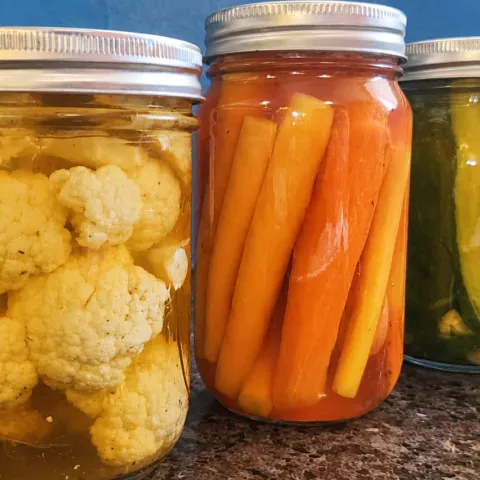
three jars containing pickled vegetables
UC Master Food Preserver: Article

Not a Bushel: Small-Batch Canning for the Rest of Us (June 2026)

June 11, 2026
Paige Weisskirch, Monterey County, Online Delivery Program Not everyone has, wants, or needs to preserve a bushel of anything. In my house, that's probably for the best. I have a small family and a garden that prefers to produce a little bit of lots of things instead of a lot of any one thing. I…
View Article
UC Master Food Preserver: Article

Guacamole, Bruschetta and More! (June 2026)

June 11, 2026
Monica Gross, UC Master Food Preserver Online Program Volunteer How do you know an avocado is ripe? It avocadon’t stay on the shelf for long!What did the avocado say to the toast? “You’re the best thing since sliced bread!” My love affair with avocados began when I was a teen and tasted guacamole…
View Article
Primary Image
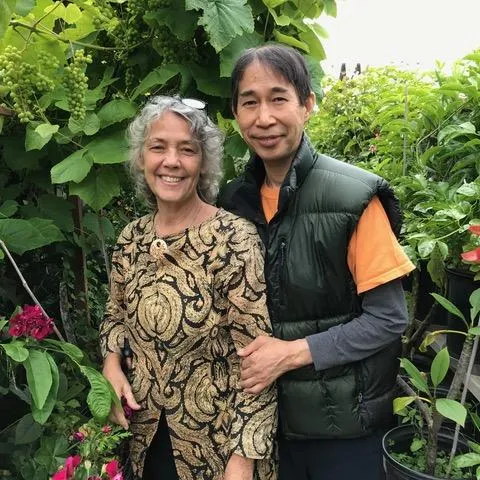
a man and a woman stand in a garden
UC Master Food Preserver: Article

Spotlight: Marlene Suzuki, Los Angeles County, 2025 MFP Volunteer (June 2026)

June 11, 2026
 My name is Marlene Suzuki. I became a Master Food Preserver in 2025. I grew up in Pennsylvania and watched my grandma can jars of tomatoes and other vegetables from her garden. We always went to grandma’s house to get something tasty from her pantry and garden.I just visited back east for my 50-year…
View Article
Primary Image
Debra is a smiling woman in a red hat
UC Master Food Preserver: Article

Spotlight: Debra Barger, Butte County, 2025 MFP Volunteer (May 2026)

May 12, 2026
 I learned how to can fruits and vegetables from my grandmother while growing up mostly in the Midwest. I loved the cool, earthy smell of a root cellar and took delight in perusing the many rows of colorful jars, especially when it was 95°F outside with 90% humidity.  Wherever the family moved, we…
View Article

Learning Through Experience: Pickling Asparagus for the First Time (May 2026)

Primary Image
raw asparagus stuffed into a jar with flat end down
Body

Four valuable lessons that will take the stress out of canning pickled asparagus.

My first time making pickled asparagus at home, by myself, with a borrowed steam canner, was a lot of fun, a fair amount of work, and produced what I would call mixed results, but I have no regrets.  

asparagus, cut to fit in a pint jar, sits on a cutting board ready to be processed
Fig. 1. R. Martin, used with permission

The recipe I used came from The National Center for Home Food Preservation website and says it will make “six wide-mouth pint jars” and starts with a whopping 10 pounds of asparagus. I can’t imagine ever having that much asparagus! I had two-and-a-half pounds to start, and after I trimmed it had just about two pounds ready for processing (Fig. 1). I scaled the recipe by dividing each ingredient by five, which curiously left me with too little brine. I solved this problem by making more brine and wound up throwing some down the sink after filling the jars, but it was just salty vinegar, so no real tragedy there.  

After making my first batch of brine and heating the jars, I stuffed my two pounds of asparagus into three straight-sided wide-mouth pint jars, (Fig. 2) which is a many more jars than one would expect based on the recipe, which says 10 pounds will give you six pints (the math would say I should get 1.2 pint jars). I only had enough brine to fill one of the jars.

raw asparagus stuffed into a jar with flat end down
Fig 2. R. Martin, used with permission

 Reflecting, I believe I should have measured the asparagus I had by volume rather than weight; by pre-stuffing the jars with spears, I could have determined that I had three jars full of spears, then simply halved the original brine recipe. 

I quickly made a second batch of brine, and when it boiled, filled all the jars with the brine to ½ inch from the rim of the jar, removed bubbles, wiped the edge, added the two-piece lid, and placed the jars in the canner. Waiting to get a steady stream of steam and a temperature reading of 212°F in the dome, I set the timer and processed the jars for 10 minutes. At the end of the time, I turned off the heat and let it sit undisturbed for an additional five minutes before removing the jars from the steam canner.  

Everything sealed, but everything floated, and I can tell the asparagus shrank quite significantly because it twisted around in the jar (Fig. 3). The lessons I learned from my first asparagus canning adventure are that the pickles won’t be ruined if you have to pause to make more brine, the translation of pounds of vegetables into jars of product is at best an estimate, some things can only be learned through experience, and ugly can still be delicious.  

I won’t be entering this into any contests at the county fair, that’s for sure. But for a summer picnic, I’ll be ready with some delicious home-canned asparagus on my antipasto platter.  

Pickled Asparagus Recipe 

For six wide-mouth pint jars 

10 pounds asparagus 

6 large garlic cloves 

4 ½ cups water 

4 ½ cups white distilled vinegar (5% acidity) 

6 small hot peppers (optional) 

½ cup canning salt 

3 teaspoons dill seed 

Instructions

  1. Wash and rinse canning jars; keep hot until ready to use. Prepare lids according to manufacturer's directions. 

  1. Wash asparagus well, but gently, under running water. Cut stems from the bottom to leave spears with tips that fit into the canning jar with a little less than ½-inch headspace. Peel and wash garlic cloves. Place a garlic clove at the bottom of each jar and tightly pack asparagus into jars with the blunt ends down. This is known as a raw pack.  

  1. In an 8-quart Dutch oven or saucepot, combine water, vinegar, hot peppers (optional), salt and dill seed. Bring to a boil. Place one hot pepper (if used) in each jar over asparagus spears. Pour boiling hot pickling brine over spears, leaving ½-inch headspace. 

  1. Remove air bubbles and adjust headspace if needed. Wipe rims of jars with a dampened, clean paper towel; apply two-piece metal canning lids. 

  1. Process in a boiling water (or steam) canner according to the processing time below. Let cool, undisturbed, for 12 to 24 hours and check for seals. 

Allow pickled asparagus to sit in processed jars for 3 to 5 days before consumption for best flavor development. 

Recommended process time for Pickled Asparagus in a boiling-water canner:  

processed jar of asparagus, with about one inch of brine at the bottom of the jar
Fig. 3 R. Martin, used with permission

For 12-ounce or pint jars at 0-1,000 ft elevation, process for 10 minutes; 1,001-6,000 ft elevation process for 15 minutes; and above 6,000 feet, process for 20 minutes.  


If you have questions about this, or any food preservation activity, reach out to the UC Master Food Preservers Statewide Helpline

Ask a Master Food Preserver 

UC Master Food Preserver
Primary Image
three groups of dried adobo peppers look alike
UC Master Food Preserver: Article

An Adobo Pepper Dehydration Experiment (April 2026)

April 11, 2026
Monica Gross, Los Angeles Co., Online Delivery Program VolunteerDehydration is one of the earliest preservation methods developed by humankind. There is evidence from Middle Eastern and Asian cultures that dehydration was used as a method of preservation as far back as 12,000 BCE. The hot sun was harnessed…
View Article

Spotlight: Robyn Barker, 2025 MFP Volunteer (April 2026)

Primary Image
Headshot of Robyn Barker
Body
Headshot of Robyn Barker
Photo credit: Robyn Barker, used with permission.

Living in California has given me a deep appreciation for food, gardening, and seasonality. Fresh produce is available year-round, from winter citrus to summer berries and the abundance of warm-season vegetables that follows. Gardening here makes it possible to experience food not just as sustenance, but as a reflection of place and climate. 

I did not begin my life in California. I grew up in Ohio, where hot, humid summers produce exceptionally sweet corn and where preserving food for the winter months evolved as a practical necessity rather than a hobby. That contrast between regions—between scarcity and abundance—shaped my early interest in food and preservation. 

Like many Californians, I arrived here later in life. I came to fulfill my father’s dream of earning a law degree from the University of California. After completing that goal and practicing law for ten years, my path shifted. For the next two decades, I followed my husband’s career in the oil industry, living in Thailand, Texas, Indonesia, and England. Each location offered its own culinary traditions and agricultural specialties, from tropical fruits in Southeast Asia to pecans in Texas and root vegetables in England. 

During those years, I earned a library degree and worked at an American university in Thailand. In Indonesia, I volunteered as a docent at the National Museum, and in England, I devoted my time to visiting museums, gardens, and historic houses while participating in multiple book clubs. These experiences reinforced my interest in education, public engagement, and cultural exchange. 

When we returned to our home in Moraga in 2016, we faced a neglected landscape dominated by invasive plants. Determined to restore it, I became a UC Master Gardener with Contra Costa County. Through that program, I both educate the public on research-based, sustainable gardening practices and apply those principles at home. I developed a small home orchard and a container vegetable garden, which naturally led to an interest in preserving the harvest when produce arrives all at once. 

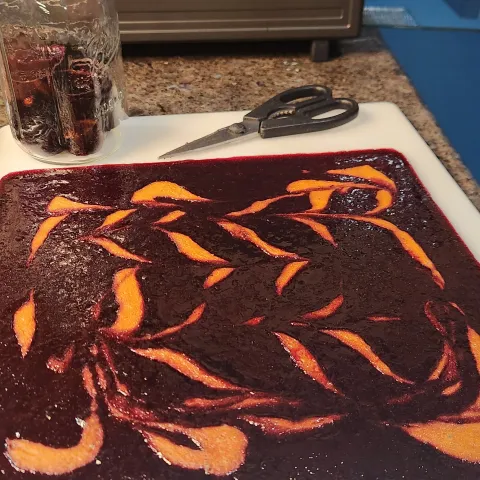
That interest brought me to the UC Master Food Preserver Online Delivery Program. Although Contra Costa County does not yet have a county-based, in-person program, I was able to participate in this science-based training and collaborate with other Master Food Preservers Program to share safe and reliable preservation methods online with the public. Over the past year, I have been a presenter in programs on fruit leather, pickled mushrooms, apple chutney, and public food-preservation education. I’ve also developed new friendships with fellow Master Food Preservers in the online program. 

Returning to California has allowed me to bring together my experiences in education, gardening, and food preservation in a meaningful way. I value the opportunity to continue learning while helping others make informed, safe, and sustainable choices about the food they grow and preserve. 

UC Master Food Preserver
UC Master Food Preserver: Article

What is Dehydrating for Food Preservation? (March 2026)

March 9, 2026
Tim Long, UC Master Food Preserver Online Program Volunteer    Dehydration preserves food by removing 80–95% of its moisture, which inhibits the growth of bacteria, yeasts, and molds that require water to grow. It is one of the oldest preservation methods, dating back to 12,000 BCE.  This…
View Article

Preserved Lemons: A Powerhouse Ingredient in the Kitchen (March 2026)

Body

Kirsten Hansen, UC Master Food Preserver Online Delivery Program Volunteer  
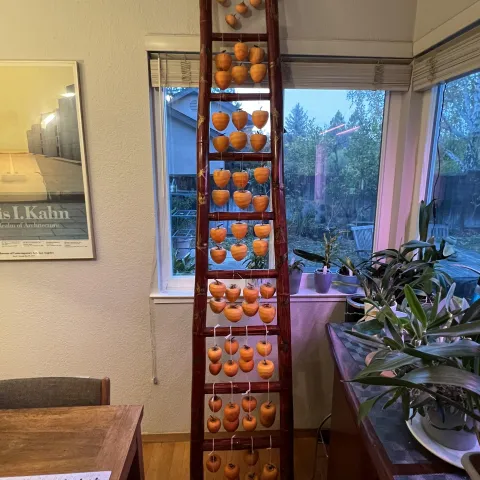
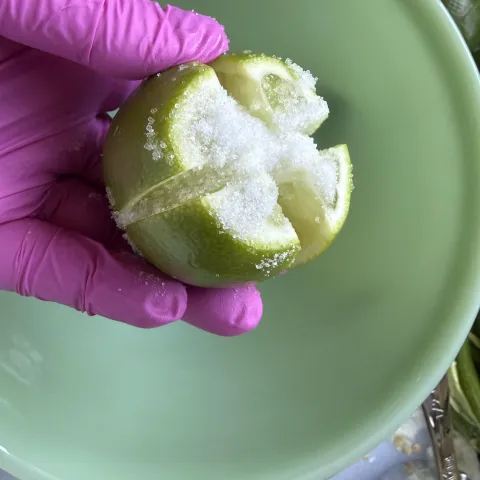
The Master Food Preserve Online Delivery Program volunteers loved making preserved lemons this winter! Our Citrus 1: Citrus Without Canning class and Garden to Glass: Winter Mocktails classes featured two different methods for making preserved lemons, and many of us made preserved lemons for our own use. If you missed either class, the recordings for all Online Delivery Programs classes are available on the UC Master Food Preserver website. 

If you made a jar of preserved lemons this winter, you may be wondering how to use them. Traditionally, salt-preserved lemons are used in Moroccan cuisine and other food traditions across the Mediterranean, perhaps most famously as an essential part of taginesMoroccan stews served with couscous. But preserved lemons are powerhouse ingredients that are useful far beyond traditional tagines. In the Citrus I class, we suggested using them in grain salads and pilafs, soups and stews, and dips. The Garden to Glass: Winter Mocktails class featured a delicious “dirty mocktini” that uses preserved lemon brine. 

two slices of lemon cake on a dish alongside a cup of coffee

Preserved lemon cake slices (photo K. Hansen, used with permission)

One of my favorite ways to use preserved lemons is in a simple Preserved Lemon Tea Cake. As sunny in looks as it is in taste, it was originally published by recipe developer Zaynab Issa in the March 2022 issue of Bon Appétit magazine. Here, the preserved lemon packs lots of citrus flavor in a small package and helps create a not-too-sweet anytime treat. As a bonus, this recipe uses the whole lemon, whereas many other recipes use just the skin and discard the flesh - zero waste! I’ve made a few adjustments to the original recipe, swapping an equal amount yogurt for the original sour cream because I always have yogurt in the refrigerator but only sometimes have sour cream. I decreased the number of dishes I have to wash by chopping the lemon into a paste by hand rather than using a food processor and mixing the batter in a bowl rather than a stand mixer. But really, the original recipe is basically perfect as written.

Preserved Lemon Tea Cake Recipe

Yield: Makes one 8½ x 4½" loaf

Ingredients

Cake Batter

  • ½ cup extra-virgin olive oil, plus more for parchment
  • 1 preserved lemon (about 55 g)
  • 1½ cups (188 g) all-purpose flour
  • 2 tsp. baking powder
  • ½ tsp. ground turmeric
  • 3 large eggs
  • 1 cup plus 2 Tbsp. (225 g) granulated sugar
  • ½ cup yogurt OR sour cream
  • 1 Tbsp. finely grated lemon zest
  • 3 Tbsp. fresh lemon juice

Glaze

  • ¾ cup (83 g) powdered sugar
  • 1 Tbsp. whole milk
  • Flaky sea salt

Instructions

  1. Place a rack in middle of oven; preheat to 350°F. Line an 8½ x 4½" loaf pan, preferably metal, with parchment paper, leaving generous overhang on the long sides, and brush with oil. Cut preserved lemon into quarters; remove any seeds. Chop and smash the lemon with your knife until it forms a rough paste.
  2. Whisk flour, baking powder, and turmeric in a medium bowl to combine. Beat eggs, granulated sugar, and remaining ½ cup oil in the bowl of a stand mixer fitted with the paddle attachment on medium speed until smooth and incorporated, about 1 minute. Add yogurt or sour cream and mix to combine. Add preserved-lemon paste, lemon zest, and lemon juice and mix to combine. Reduce speed to low, add dry ingredients, and mix until just combined, about 15 seconds. (Batter can also be mixed in a large bowl with an electric hand mixer or whisk.) Scrape batter into prepared pan and smooth the top.
  3. Bake cake until top is golden brown and a tester inserted into the center comes out clean, 50–60 minutes. Transfer pan to a wire rack and let cake cool for 15 minutes. Run a knife around sides of pan to loosen and, using parchment paper overhang, lift cake out of pan and onto rack. Peel away parchment paper and discard. Let cake cool completely.
  4. While cake is cooling, whisk powdered sugar and milk in a medium bowl until smooth.
  5. Transfer cake to a platter or large plate. Using a rubber spatula to help guide glaze, spoon glaze over cake, letting it drip down the sides (you should have a fairly thick coating). Sprinkle sea salt over glaze and let cake sit until glaze is set, about 30 minutes.

Do ahead: Cake can be made 3 days ahead. Store in an airtight container at room temperature.

UC Master Food Preserver