

Congrats to Rithica!
It's so great to see young scientists excel!
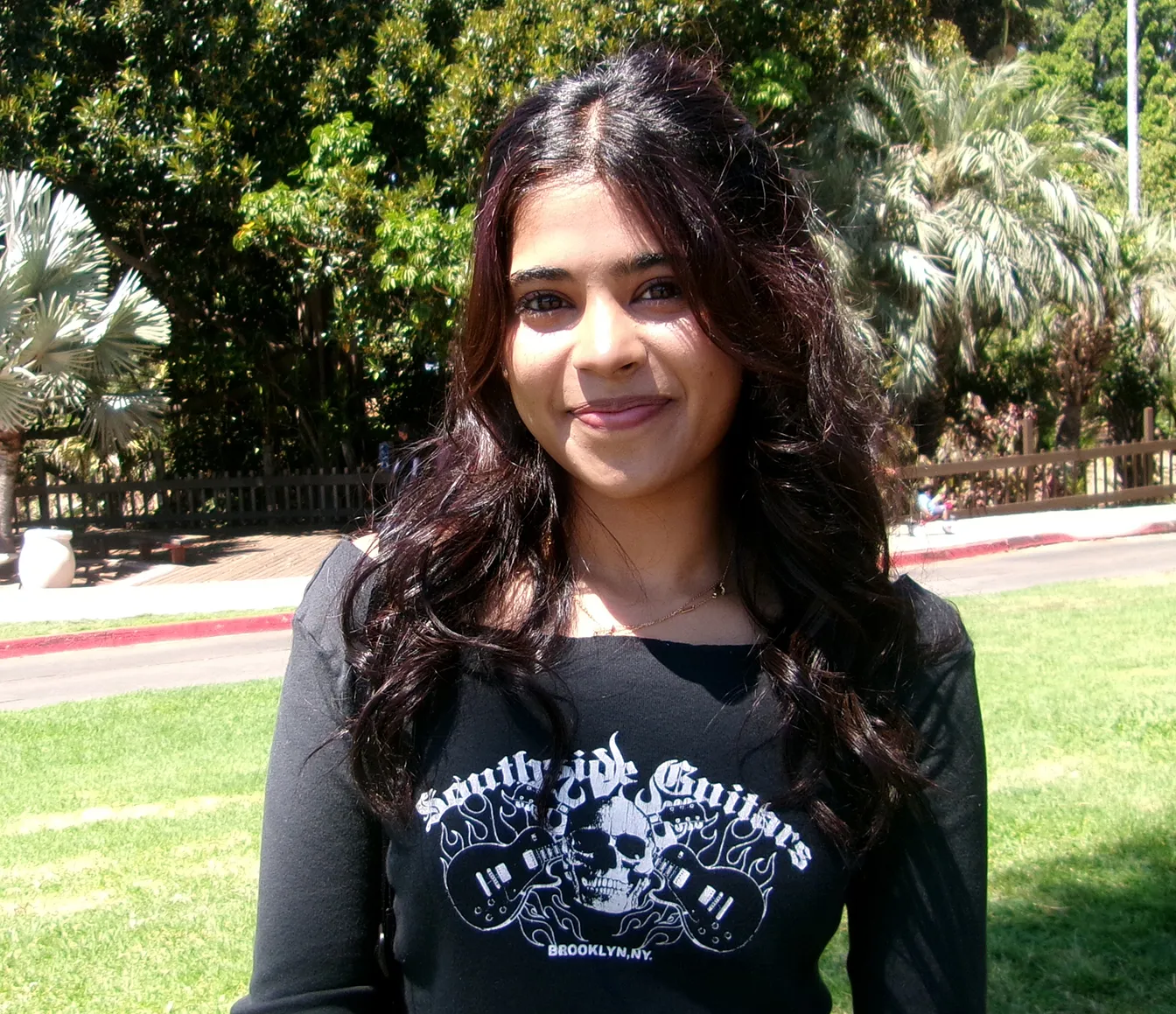
Rithika Senthilkumar, an undergraduate research scholar in the UC Davis Vector Genetics Laboratory (VGL), School of Veterinary Medicine, has been awarded a highly competitive 2025 Promega D.O.O.R.S. (Development of Our Research Scientists) Scholarship.
D.O.O.R.S., launched in 2020, is a mentorship and scholarship program. The award includes a $5000 scholarship and participation in both a mentorship program and the D.O.O.R.S. Scholars’ Day, an in-person-event at the BTCI (BioPharmaceutical Technology Center Institute) and Promega campus in Madison, Wis.
“Rithika is conducting research under the mentorship of Dr. Hester Weaving, postdoctoral scholar in the VGL, on a study utilizing invertebrate-derived DNA (iDNA) recovered from the gut contents of species that prey on malaria-transmitting mosquitoes in Africa,” said VGL chief Gregory Lanzaro, a professor in the Department of Pathology, Microbiology and Immunology, and a member of the Graduate Group Affiliated Faculty, UC Davis Department of Entomology and Nematology.
“Identifying predator species is essential for understanding the ecological role of these mosquitoes in local food webs and for assessing the potential environmental impacts of malaria control programs involving the release of genetically engineered mosquitoes,” Lanzaro said. “Her recognition through this scholarship highlights both her dedication to research and the strength of undergraduate contributions to the VGL’s mission.”
Rithika, a second-year student pursuing a bachelor of science in genetics and genomics, is one of 10 recipients of the undergraduate scholarships. They are selected on the basis of their academic excellence, professional promise, and a commitment to research or industry engagement.
This year’s recipients include two others from California (UCLA and Pomona College, Claremont). Others attend colleges in Maryland, Texas, Michigan, Florida, New Hampshire and Massachusetts.
Rithika, who grew up in San Ramon, graduated from Dougherty Valley High School, San Ramon. She anticipates receiving her UC Davis degree in 2027.
“I’ve been passionate about research for a long time and getting to work in molecular biology is when I discovered how much I love the pace, challenge, and creativity of the field," she said. In her work, using "invertebrate-derived DNA (iDNA) from the gut contents of aquatic predators to study their interactions with malaria-transmitting mosquitoes in Africa, I develop qPCR assays to detect mosquito DNA in these samples, generating ecological baseline data needed to understand predator-prey interactions and to evaluate the potential environmental impacts of releasing genetically engineered mosquitoes for malaria control.”
“What I enjoy most about this work is how it connects genetics with global health and applies molecular tools to answer questions that matter for real communities and real lives," Rithika said. "I’m most inspired by my parents, who taught me the value of discipline and consistency, the foundations for how I approach my work and education. I carry that with me every day in the lab, especially when I’m faced with challenges.”
“Being selected as a 2025 Promega D.O.O.R.S. Scholar for my research at the VGL is something I’m deeply proud of," she added. "It motivates me to keep growing as a scientist and pursuing work that can make a real impact in our world. My goal is to become a research scientist and every step I take brings me closer to that future.”
VGL, per its website, is "dedicated to advancing research and training in population and molecular genetics, genomics, and bioinformatics of insect vectors that transmit human and animal diseases. "Our mission is to expand scientific knowledge that can be applied to improving vector control strategies, while also addressing fundamental questions in evolutionary genetics. Currently, our major research focus is on the vectors of malaria in Africa, though we pursue a wide range of projects across vector biology and genetics."
Lanzaro leads VGL with medical entomologist-researcher Anthony "Anton" Cornel of the Kearney Agricultural Research and Extension Center, and the UC Davis Department of Entomology and Nematology faculty.
Cover image: A malaria mosquito, Anopheles gambiae. (Photo by Anton Cornel, UC Davis Department of Entomology and Nematology)