
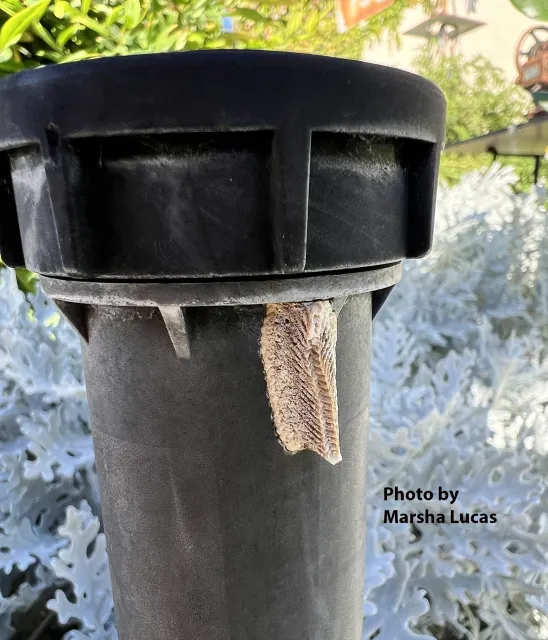
Picture this: A praying mantis egg case beneath the lip of a water sprinkler.
"Hey, Mama, your nymphs are in for a surprise if the sprinkler's on. Got a better think--or drink--coming?"
Marsha Lucas was working in her Vacaville backyard this week when she spotted her water sprinkler's new occupant.
That's something you don't see every day!
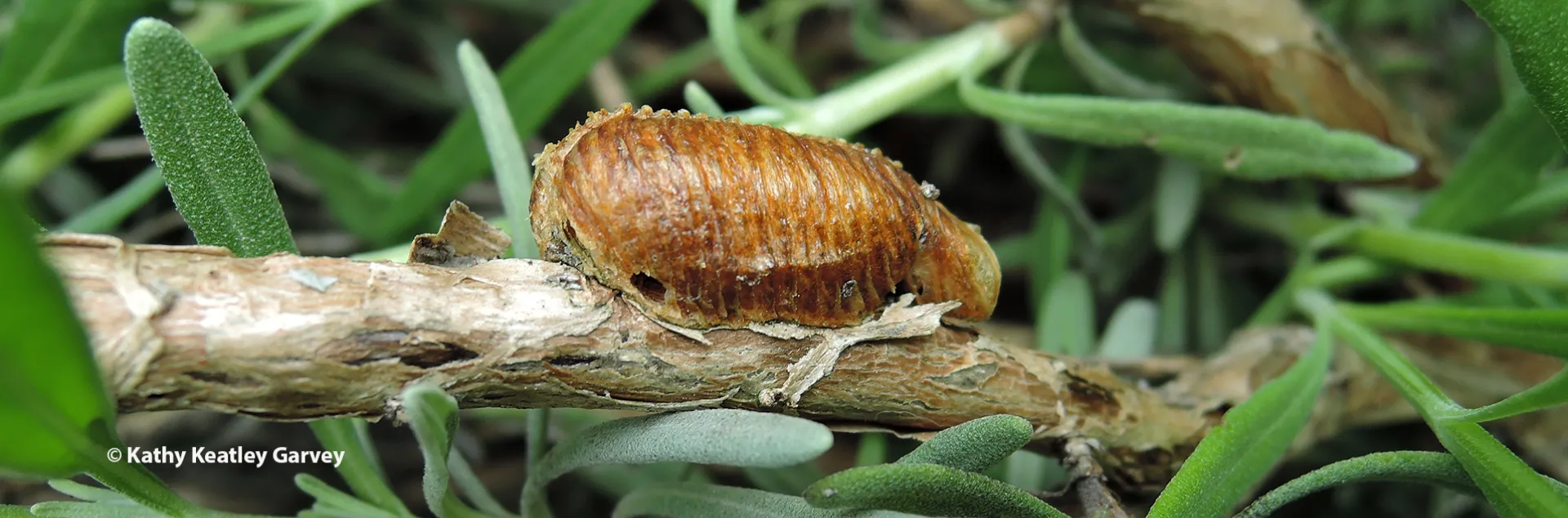
UC Davis alumnus and praying mantis expert Lohit Garikipati, now a doctoral student at the Richard Glider Graduate School at the American Museum of Natural History, took one look at the ootheca and identified it as from the invasve Iris oratoria, the Mediterranean mantis, "the one that has big eye spots on the hindwings."
According to Wikipedia, it's named the Mediterranean mantis because...humans first studied the insect in the Mediterranean. "Its range is expanding in the Middle East, Western Asia and the United States," Wikipedia relates. It's non-native to the Southwestern United States (Arizona, California, Nevada and Texas).
And the adult "is very pale when young but matures to grass green, and grows to about 6.5 cm (2.6 in) long," according to Wikipedia.
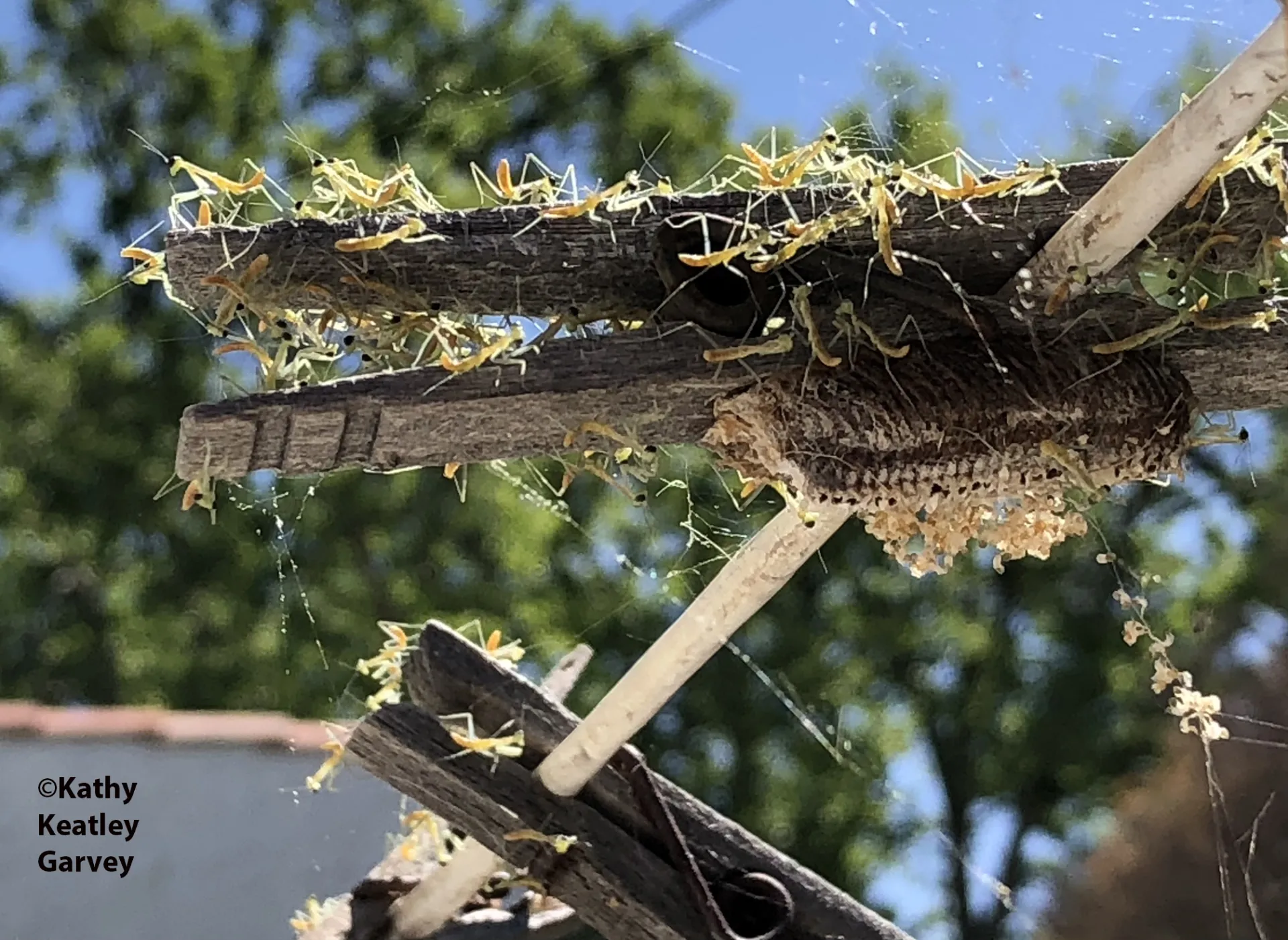
Another species, Stagmomantis limbata, the Arizona mantis, is quite common in our Vacaville pollinator garden. We've seen as many as seven mantids in one day in our patch of African blue basil. A few years ago, one limbata deposited her egg case on a clothespin hanging from our clothesline. What a nymph explosion! Another time we saw--and videoed--a limbata in the process of depositing her ootheca on a stake in our yard. (See YouTube video)
Garikipati has seen egg cases on human-made structures "like the braces for newly planted trees and under or on bridges. I’ve seen images of others finding them on luggage or car tires."
Here an ootheca, there an ootheca. Keep your eyes out for them. (And be sure to look under the lip of your water sprinkler!)