
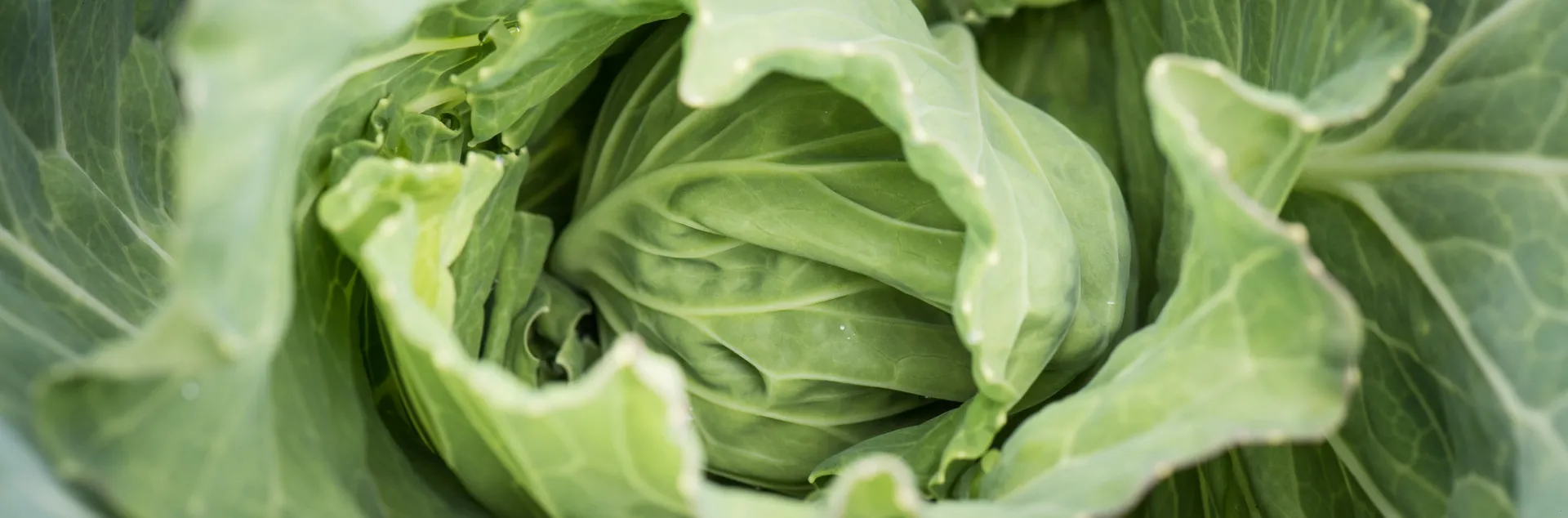

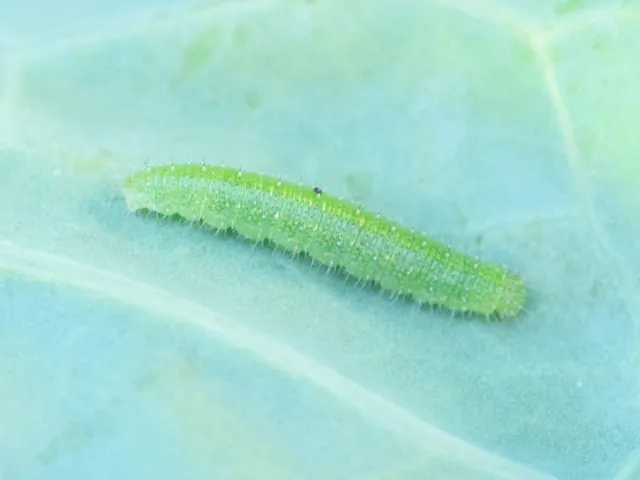
Now is the time to begin scouting your fall-planted garden for cabbage worms. The pest targets many vegetables that do well in Fresno this time of year, including cabbage, broccoli, cauliflower, kale and radishes. Cabbageworms chew large, irregular holes in leaves and may tunnel into cabbage heads. They also leave behind greenish-brown fecal pellets on edible portions of the plant.
If you find the tiny, velvety green half-inch caterpillars or their tiny yellow eggs, squish them between your fingers and throw them away. For severe infestations, there are other organic treatments. Consider using Bacillus thuringiensis, a natural bacterium available as a spray or powder. Bt was first isolated from the soil by a Japanese scientist in 1901 as an enemy of silkworms. It was later found to be effective for controlling agricultural pests, such as corn earworm and bollworm.
Spinosad, another effective biological insecticide, can be used on cabbageworms. The material is produced by the bacterium Saccharopolyspora spinosa. It works by overstimulating the insect's nervous system, causing paralysis and death.
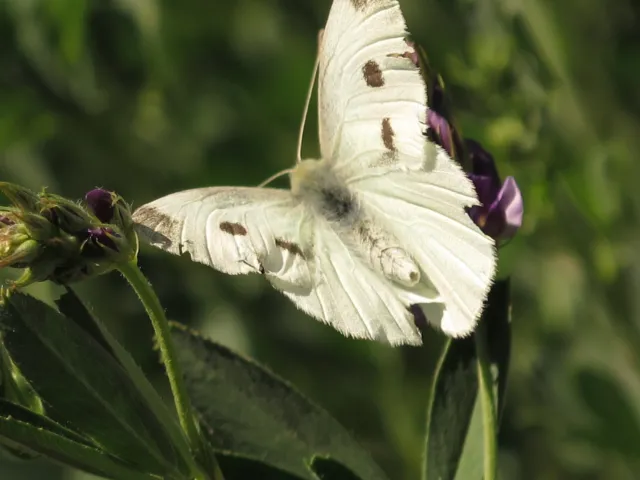
To control cabbageworms before the eggs are laid, cut off access to the plants of the worms’ adult form – graceful white butterflies with one to four black spots on their wings. They can be excluded with floating row covers, a cloudy fabric that can be placed directly on the crop or raised with garden hoops. The fabric allows air, moisture and light through while warming the crop slightly, providing protection in case of a light frost.
Cabbage worms can also be foiled by their natural enemies, such as tachinid flies. Attract tachinid flies by growing a variety of small flowers and herbs, such as cilantro, parsley, aster, chamomile and clover. Watch for and protect caterpillars with white eggs on their backs. The caterpillar will not survive and the tachinid fly eggs will hatch into adult tachinid flies.
Source:
_______________________________
Written by UC Master Gardener Jeannette Warnert