
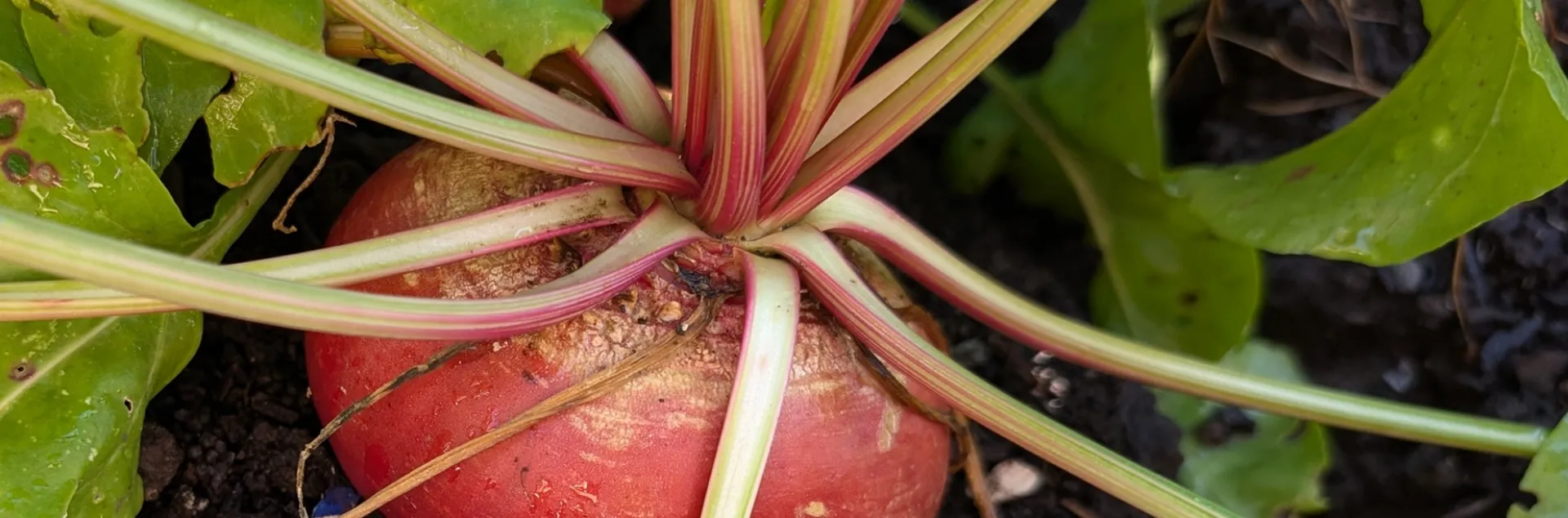

Like few other vegetables, nearly the entire beet plant can be eaten—below-ground bulbs and above-ground foliage. Bumpy, brown seeds are actually a cluster of several seeds that germinate in a clump. A good crop depends on careful thinning and transplanting crowded seedlings into fertile, amended soil.
Types of Beets
- Select beet seeds for color of the mature bulb: red, golden or yellow, or red & white striped (Chioggia), all available in many named varieties.
- Check seed packets for length of time to maturity. Some varieties mature faster than others.
Sowing and Thinning
- Amend clay or sandy soil with compost; opt for raised beds in excessively heavy clay.
- Follow package directions when sowing, in furrows ½ in. deep, 1-2 in. apart and rows 12-18 in. apart.
- Thin 2-in. tall seedlings to 1-2 in. spacing, then 3-4 in. as they grow. Transplant all seedlings for a large crop or snip thinnings to use in salads.
- Plant from March-August, although some gardeners have success as early as January and as late as September for harvest in 2 or more months. Bulbs will not form in cold weather.
- Avoid succession plantings in the high heat of summer inland, but continue in moderate microclimates.
- Keep in mind that beets are considered a cool-weather crop even though they may be grown in the warm-season.
Care and Harvesting
- Monitor air temperatures. Long cool spells (below 50 degrees) may cause seed stalks to develop before beets mature. Floating fabric row covers may offer protection from cold.
- Keep beds weed-free with a 2-4 in. layer of compost or mulch.
- Irrigate when soil is dry about 1-2 in. below the surface.
- Pull young beets before they reach full size for baby beets.
- Pull beets 2 in. in diameter for best quality.
- Leave 1-2 in. of stems when cutting tops off beets to prevent bleeding or loss of moisture.
- Beets may be left in the ground after they mature and harvested as needed if they are not overwatered.
June 2026