Blog by Karen Metz
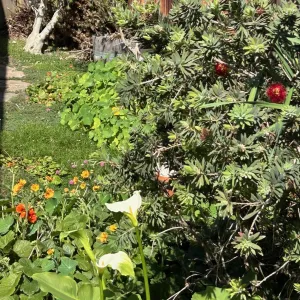
At several talks on gardening for pollinators, the speakers have stressed the importance of having blossoms across the seasons to provide sustenance for our pollinators. Over the years, I have tried to design my landscaping so there is year-round color and interest. But for some months, that interest was leaf color, bark, or branch form and texture. Living in California, in our area, we are fortunate that our winters are mild and conducive to a year-round growing season.
So, I decided to try to record what was blooming in my yard on a monthly basis. My old garden journals were already bursting at the seams, so I just started a simple monthly handwritten list. At the end of the year, the plan is to try to compile this information into some sort of spreadsheet and chart that would give me a visual representation of what’s blooming for the year. This would help point out gaps that I might need to fill with other plants.
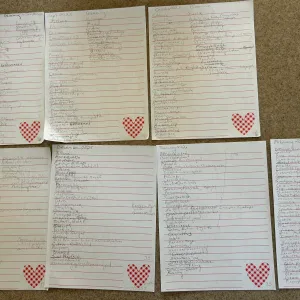
Once I decided to start this project, I was faced with decisions. Do I include the plants in pots on my patio and front porch? Yes, if a pollinator could get to it, I counted it. I decided to separate roses by form. I counted my climbers, my shrub roses, and my miniatures, since they had somewhat different blooming times. I counted other plants by species but didn’t count separate varieties or colors. Once I started the process, I realized I had forgotten to count groundcover blossoms. At first, I spent way too much time agonizing over these choices, then I realized this project was for me, so I could make the choices I liked. I could see how things went and adjust down the road.
I started recording blooms in August. If it bloomed anytime in that month, it went on the list. This process made me pay a lot more attention to all my plants, even the smallest ones, especially over the winter months when it was cold. Being out and being aware gave me the added benefit of catching more of the action with our local wildlife. It also alerted me to some early signs of problems or diseases with my plants, that might otherwise not have been noted till spring.
In August, I counted 53 species in bloom, September 47, October 56, November 47, December 35, January 35, and February 47. I live in a suburban tract home with a small yard, but I do have many plants in pots on my patio and front porch. It will be interesting to see how this plays out for the rest of the year and how it will all look in visual form.
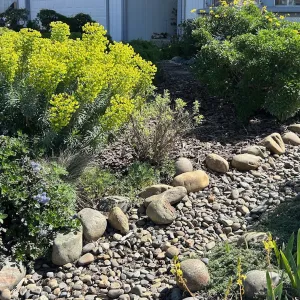
If I decide to continue this project beyond a year, I could compare what happens from one year to the next. I have noted that this year we were not considered to be in drought conditions, so I was a little more liberal with watering. Many of my plants are low-water-use, but not all. I noted that we had an exceedingly foggy December and that we did not have many freezes. I wonder what would happen to the bloom patterns when there is less water available, or more winter freezes, or the anticipated hotter overall temperatures. So many questions. I suspect I may keep this up for a while.