Blog by Karen Metz
Sago Palm, Cycas revoluta, reproduces in 2 ways. The first is vegetatively, they produce little offshoots called pups. These pups are identical to the parent plant. Some succulents and cacti can reproduce this way. Sagos can also produce seed and pollen in separate male and female plants that, when combined, form viable seeds. These seeds have genetic characteristics from each parent.
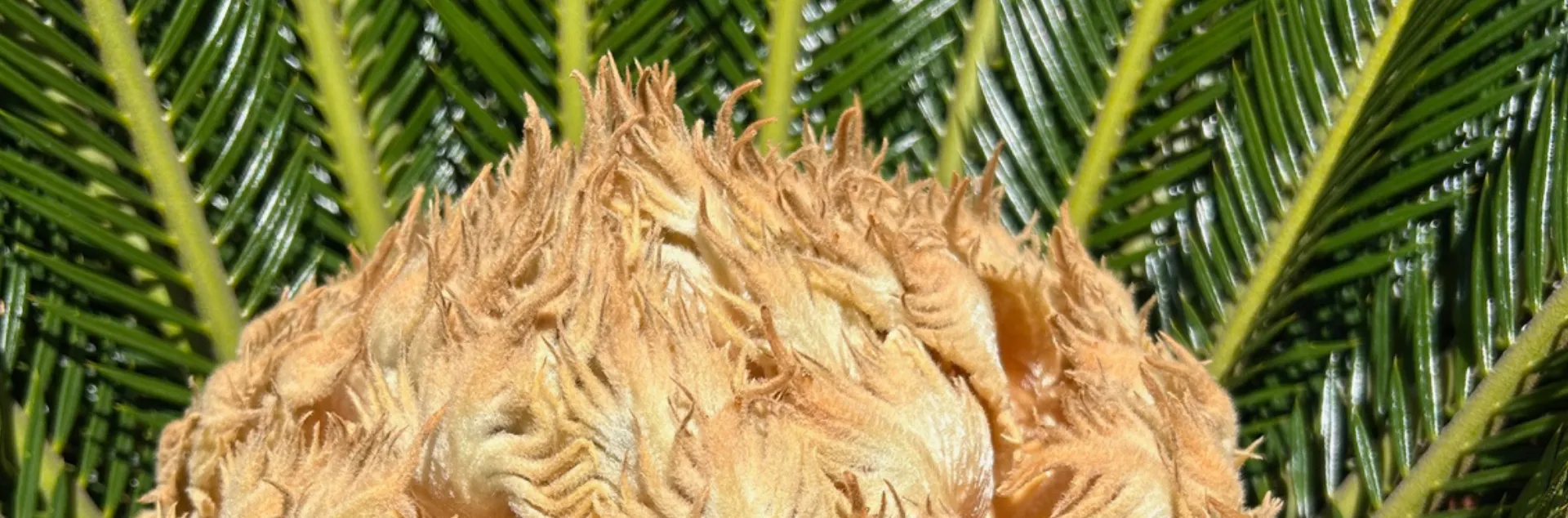
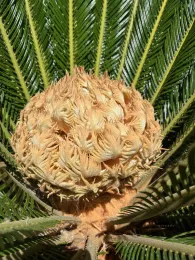
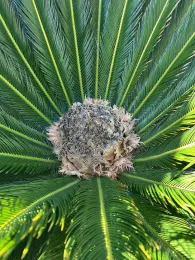
Cycads are from an ancient lineage that predates flowering plants. So, their reproductive structures are not flowers but cones. In July 2025, I noticed something had appeared in the center of my sago palm. It reminded me of a gold furry, feathery small basketball. I realized that the plant had formed a cone. After researching, I found that this shape meant the plant was a female. Male cones are taller, thinner, and described as pineapple-shaped. I didn’t know if the sago had bloomed before, and I just hadn’t noticed. It is in a side yard, and the sago fronds didn’t make it easy to spot. Or it might have been the first time the palm had formed a cone.
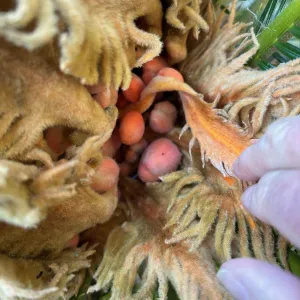
I next checked them in November 2025. The golden color was gone, and the cone had a drier appearance. When I loosened the structure, I could see some orangey-red seeds, and it looked like there were a lot of them. (see below)
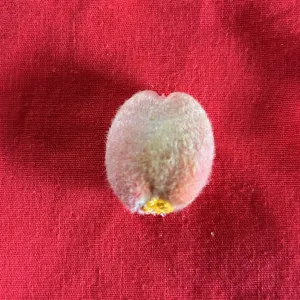
By February 2026, the cone was 17 inches in diameter, and the seeds had enlarged to 1.25 inches. The seed had a downy appearance, and it reminded me of a small apricot. I toyed with the idea of collecting and planting up the seeds. Apparently, it can take over 9 months to germinate and years to grow after that. I had already spent much of 2024 and part of 2025 caring for multiple sago palm pups, which my husband and I had removed from our sago. It took over 9-12 months for the pups to root and leaf out.
I don’t want any more sago palms. They are beautiful, but they are poisonous. We have a small yard. I decided to just be grateful to have watched this process unfold. Sago can form cones every other year, so I can look for them in the future as well. For more information on Sago Palms, the following website was very helpful https://plants.ces.ncsu.edu/plants/cycas.revoluta