
Blog by Cindy Yee
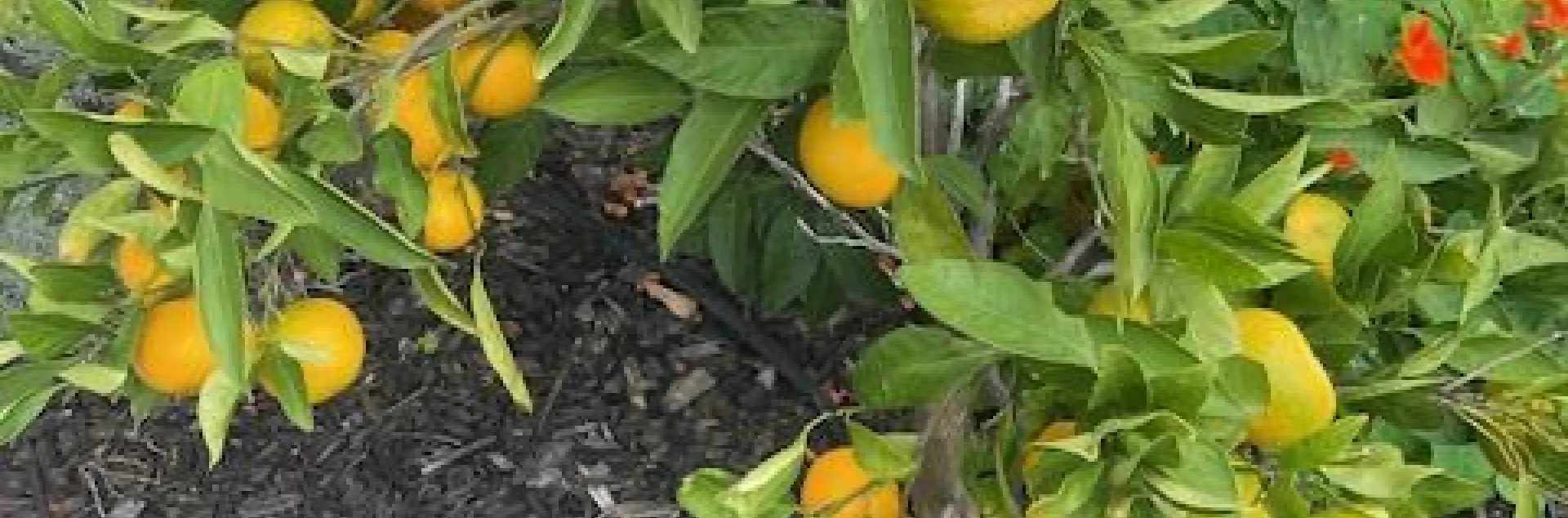
We have a 9-year-old dwarf Owari Satsuma mandarin tree in our front yard. This is the first year the tree has finally produced well. I purchased it from a local nursery and paid for it and others to be planted by the employees who delivered the trees. To my surprise, they preferred not to use any of the expensive premium soil I offered, opting instead for the hard clay/rock native soil. When they saw my doubtful look, they sprinkled maybe 2 tablespoons of the mix in.
The tree took a long 6 years to produce even one orange. I did wonder if the problem was the way they planted it (no, it wasn't). By then, I was seriously thinking this must be a dud tree. Just like with our persimmon tree, I second-guessed everything I had done or not done. Maybe this is normal for an inexperienced gardener. As always, the conclusion was my fault; apparently, the tree needed to be fed more.
Starting the 7th year, the citrus fertilizer was doubled. Compost is added every 3-4 months and diluted fish fertilizer monthly. Finally, on this, the 9th year, my tiny satsuma has rewarded attention with abundance. It is not even 3 feet tall, yet it has 40+ regular-sized fruit on it. When fully ripe in approximately one month, they will have turned a beautiful orange color. Last year's crop was half the quantity, very easy to peel, and sweet with barely any seeds. I'm really looking forward to trying this year's fruit.
Owari satsuma mandarins were first recorded in the Owari province of Japan 700 years ago, and introduced to North America in 1876. The trees are cold-hardy and can tolerate temperatures down to 28°F. Standard trees can grow 10-15 ft tall. The taste is sweet, sometimes with a hint of tartness.
I do wish that I had chosen a semi-dwarf instead, as beautiful as the tree has become. My dwarf grows only 3-4 inches a year at best. So glad to have waited and given it the love it deserves. Patience finally paid off.

Cheers and Happy Gardening!