UC Master Gardeners of San Mateo & San Francisco Counties Logo

UC Master Gardeners of San Mateo & San Francisco Counties

Primary Image
Screen Shot 2020-10-17 at 3.17.57 PM
UC Master Gardeners of San Mateo & San Francisco Counties: Article

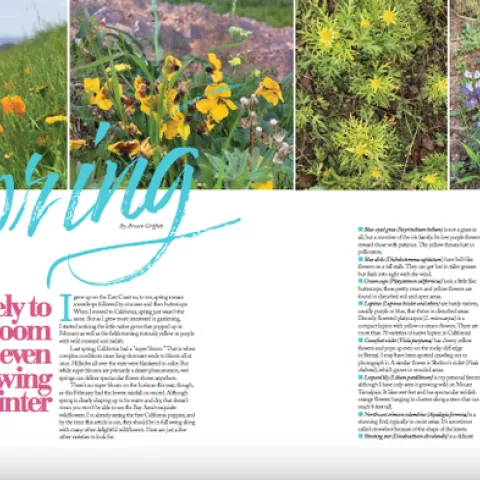
Five Sure-Fire Native Plants for the Coastal Garden

October 1, 2020
Finding plants for coastal gardens can be challenging. While many California natives do well, others need the inland heat to look their best, but whether inland or coastal, natives need at least two years of summer water to get established before you cut their water off.
View Article
Primary Image
ss august2020 griffith
UC Master Gardeners of San Mateo & San Francisco Counties: Article

Gardening Books for Children

August 1, 2020
Many of us in the UC Master Gardener program fell in love with gardening as children, introduced by an older friend or family member who was a passionate gardener.
View Article
Primary Image
ss july2020 nations kornfeld
UC Master Gardeners of San Mateo & San Francisco Counties: Article

Beware, the Invaders!

July 1, 2020
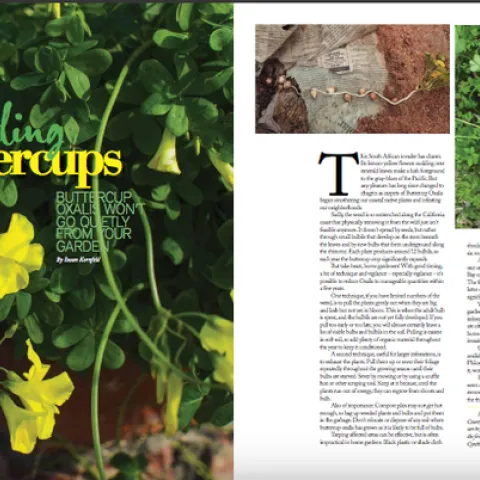
I see garden escapees whenever I go for a walk: canna lilies at Quarry Park, Mexican Feather Grass infiltrating coastal bluffs, and Agapanthus above Montara beach. When such escapees are not native to the area but are able to survive and reproduce on their own, they are considered naturalized.
View Article
Primary Image
ss june2020 mah
UC Master Gardeners of San Mateo & San Francisco Counties: Article

Gardens in the Mist: Challenges and Opportunities for Cloudy Coastal Summers

June 1, 2020
Do you green up with envy when your inland-dwelling friends brag about their summer gardens? If so, consider this: lots of sun and not much wind may make growing things a lot simpler, but summer conditions on the coast require higher levels of skill and creativity.
View Article
Primary Image
ss may 2020 kornfeld
UC Master Gardeners of San Mateo & San Francisco Counties: Article

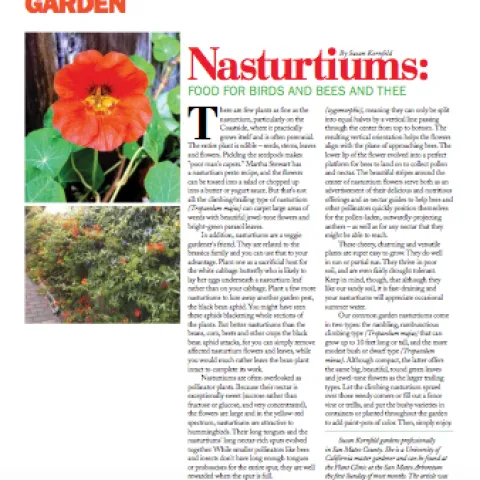
Nasturtiums: Food for Birds and Bees and Thee

May 1, 2020
There are few plants as fine as the nasturtium, particularly coastside, where it practically grows itself and is often perennial. The entire plant is edible seeds, stems, leaves, and flowers. Pickling the seedpods makes "poor man's capers.
View Article