
Introduction
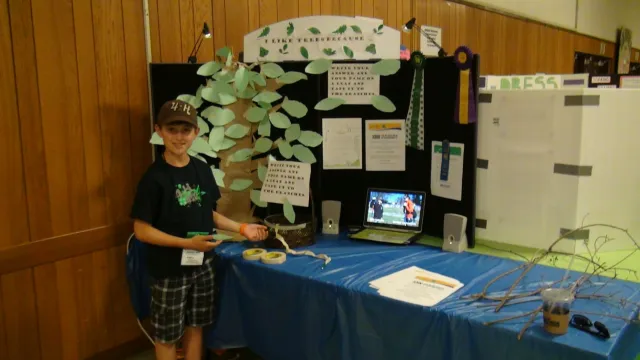
4-H has a long history of using competition as a method of providing feedback on skill mastery and continued task improvement. Preparing young people to show their animals, photographs, rockets and other 4-H projects at county fairs is a critical step in helping them grow. 4-H adult volunteers provide countless hours mentoring and supporting our young people on a variety of 4-H projects, such as animal science, fashion design, and plant sciences, but often the emotional aspects of losing, selling an animal, or making a public mistake are overlooked.
Preparing for a fair, show or competition can take a considerable amount of time, money, and mentorship. Coordinating schedules, paying for supplies, and balancing 4-H project requirements with other commitments can be challenging to keep up. This work can quickly become stressful economically, socially, mentally, and emotionally.
Youth Development and Types of Competition
In 4-H, there are different age groups and competition types. There are four traditional 4-H age groups:
- Primaries, sometimes called Cloverbuds (ages 5-8)
- Juniors (ages 9-10)
- Intermediates (ages 11-13)
- Seniors (ages 14-19)
These age groupings are helpful in determining that, generally speaking, Juniors and above are ready developmentally to compete in activities. Competition rivals should be evenly matched, so it would not be fair for a Senior to compete with a Junior. Competitions run by outside organizations, such as a county fair, may have different age categories.
There are three types of competitions: 1) Goal-identified, 2) Standardized, and 3) Affiliative (Wallace, 2016). Goal-identified competitions measure one’s performance against their own best records (personal best, where you judge your own success). Standardized competitions measure one’s performance against a standard of excellence (rubric, where everyone can win). Affiliative competitions measure one’s performance against other people’s performances (ranking, where there always has to be winners and losers).
The National 4-H Headquarters discourages Primaries (ages 5-8) from participating in affiliative competitions due to a child’s inability to separate self-worth from the tasks they are learning and the approval from their parents (Wallace, 2016). At this stage of development, youth should be exploring interests, learning new skills, and developing passions. Failure can hinder this aspect of youth development, and thus is delayed. While Cloverbuds may not be permitted to compete, they should be included in the county fair experience and supported for the learning they are achieving. Positive feedback and reinforcement on their effort, persistence, attention to detail, creativity and other growth mindset oriented facets is encouraged. As youth develop emotionally and cognitively, they become more developmentally ready to engage in competitive activities.
Reasons for Competition Stress
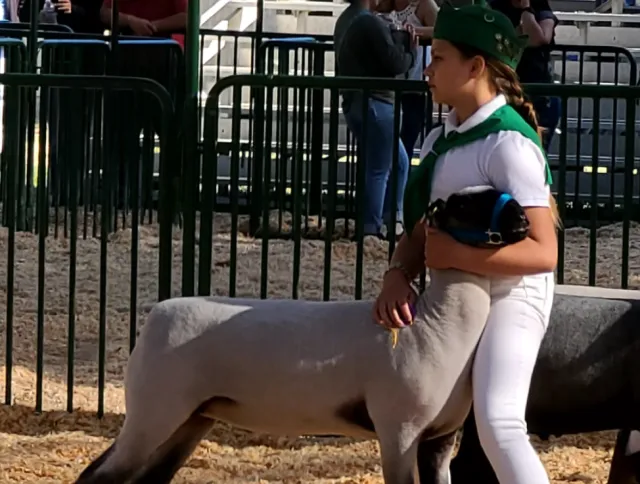
Youth who participate in competitions may experience stress due to a variety of factors. They may have performance anxiety whereby they feel stressed about answering questions that the judges may ask them. Youth may feel stress with not wanting to disappoint their parents or 4-H project leaders by not receiving an award. They may feel economic stress with not knowing whether their animal will receive an auction amount that will cover the expenses they have already invested in their project. Selling an animal can be sad or confusing. It can also cause stress if youth participate in too many competitions consecutively and are not able to focus.
Lack of sleep can occur as 4-H youth members and their parents prepare for the competition. Leaders may schedule meetings too early or late, or youth may not yet have the time management skills to space out their tasks, procrastinating until the end. Youth who work late into the evenings and get up early in the morning may not receive enough quality sleep, which can also increase their ability to manage their emotions, leading to more tears or angry outbursts. To support, adults should model and create routines around bedtimes to help youth get a good night’s rest, especially ahead of a competition. Youth perform better when rested and have better memory recall for verbal or knowledge tests. To learn about protecting the sleep of youth, please read our previous blog post here.
These stressful emotions are normal and part of our daily human experience. Having stress does not mean that we are unhealthy or sick. Healthy people experience stressful conditions in their normal lives. We live in a world full of stress and learning how to manage feelings is a crucial step to increasing our emotional IQ, which has a significant impact on future success. This is a critical component of youth development; the ability to fail and get back up, the ability to feel nervous and perform anyway, the ability to be sad or angry and not respond inappropriately, the ability to learn how to improve next time by preparing sooner.
Ways Adults Can Support Youth Emotional Wellbeing
Validate Feelings and Listen Nonjudgmentally
When our young people experience stress, we have an opportunity to recognize and validate their feelings. In a previous blog post, we describe the importance of:
- Empathy. Whereas sympathy describes feeling sorry for another person, empathy describes feeling with another person. Empathy seeks to feel what another person feels.
- Acceptance. Refers to withholding judgment and criticism for what another person is feeling. All emotions are a normal part of the human experience. Accepting sad feelings sends the message there is nothing wrong with feeling sad.
- Compassion. Describes having a genuine concern for another person’s suffering and being motivated to help. Compassion focuses on actively supporting another person’s feelings.
One powerful way to support youth who are experiencing stress is to listen empathetically and nonjudgmentally. How can we listen nonjudgmentally?
- Put away our cell phones so we can give the young person our undivided attention
- Be fully present
- Don’t interrupt
- Be curious and ask open-ended questions
- Don’t judge
- Validate their emotions and feelings
- Tell them that you care about them
- Instead of trying to “solve” the issue at hand, consider asking follow-up questions to understand how a youth may be feeling
- Provide a listening ear instead of trying to provide a quick solution to resolve their feelings
Encourage Problem-Solving and Set Expectations
Additionally, allowing children the space to try to solve their own problems builds resiliency and improves self confidence. Instead of providing advice or “I told you so’s,” consider asking what they think might help. What have they tried? What might they do differently next time? What did they learn?
Preparing youth for upcoming conflicts is a very under-utilized strategy. Discuss ahead of time what to expect. Some questions for them to consider can include the following:
- What will the event look like? Will there be a busy arena or a quiet meeting room?
- What do they anticipate doing? Will they be standing next to their quilt to answer questions? What might people ask?
- What could go wrong and how will they handle it? What can they do to help reduce the chance they drop their cake when bringing it to the judge? What will they do if it happens?
- What will you say to the winner if someone beats you?
- What tools can you use to help you feel calm?
- Your animal will be taken away directly from the auction ring and you won't see them again. How can we prepare for this? Is there a way you want to say goodbye?
Adults can help young people role play scenarios to let the youth practice. Rehearse coping skills together. Adults can help youth practice their deep breathing so they can do that if they get nervous before their presentation. Much of worry and stress is fear of the unknown and not knowing how to handle things.
Encourage Skill Development and A Growth Mindset
For 4-H’ers who are preparing for a competition, adult volunteers and parents can remind young people about the importance of skill development and having a growth mindset, which is “the belief that a person’s intelligence and abilities can grow and improve with practice” (See American Psychological Association episode). Beyond having discussions with youth, modeling appropriate strategies when coping with stress or demonstrating a growth mindset goes a long way. Getting an award is out of our control, but what is within our control is studying, preparing, and having a good attitude about learning. As such, adults can praise the effort the youth are investing in their project and how much they are learning. The emphasis should be on the learning process and not on ribbons, rankings, or rewards. Cheating is never acceptable. Poor sportsmanship is disrespectful. Personal pride and learning are the most important aspects.
Adults can nurture young people who experience unmet expectations. A youth who was expecting to win best of show may feel devastated. In these moments, adults can comfort the young person and show them that they feel the hurt that the young person is feeling in the present moment. The focus is on trying to validate the emotions that the young person is feeling. Rather than criticizing the youth for not placing in the competition, the caring adult can tell the young person how proud they are of them and the amount of learning that the young person has gained. Oftentimes, simply listening is most helpful during these stressful times.
Focus on Internal Motivations
Research also shows that intrinsic motivation (internal feelings) is more powerful than external. Internal motivation are things like: a feeling of pride, acknowledgement of growth, feeling helpful, personal satisfaction from hard work. External factors such as belt buckles and ribbons can actually have a negative impact on the willingness of youth to try new things. For example, a youth may think, “I am really good at X, but I could be terrible at Y and get embarrassed!” 4-H is one of the only places where it is okay to fail! In 4-H, youth can try something new and not feel embarrassed! Therefore, encourage youth to find internal reasons to feel good. Instead of saying you are proud, ask if they are proud of themselves. We may say, “You must be so proud for the way you handled that incident with the rabbit.”
Focus on Character Development
Encouraging character traits, instead of outcomes, has a tremendous impact. Do you want your child to win at this singular event? Or to learn how to handle criticism, manage their time, and develop a work ethic? The former is a single event… the latter a lifetime of success. Some key things to look for and encourage:
- Switching gears when a tactic doesn't work = flexibility
- Shaking the hand of the winner = good social skills
- Starting on a project early= good time management skills
- Lending a tool to someone else = helpfulness
- Managing when something breaks = resourcefulness
- Double checking an item before submission = conscientiousness
- Going above and beyond the minimum requirement = work ethic
- Asking questions ahead of time = preparedness
- Doing something a new way = creativity
- Cleaning up an area = forethought
Conclusion
4-H is a wonderful experience that allows youth to grow and develop emotionally and experientially. For some young people, participating in competitions can provide a rewarding and sometimes stressful experience. During these stressful situations, 4-H adult volunteers and parents can nurture young people through validating their feelings and listening non-judgmentally. In doing so, adults can play a significant role in the young person’s life.
Reference
Wallace, M. (2016). A developmental framework of 4-H competition for volunteers. Read the article here.