
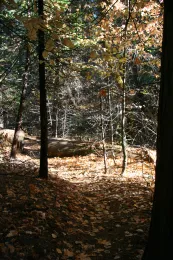
I love to walk among the colorful layers of leaves in foothill forests during the autumn months. Have you ever wondered what might be under those leaves? Insects! Some insects like the Monarch butterfly travel vast distances to their overwintering sites. However, the vast majority don’t go very far, riding out the cold winter months in the same areas where they spend the summer, often silently concealed under the layers of autumn leaves.
A Web of Life in Leaf Litter
Leaf litter provides natural mulch and slow-release fertilizer for plants as it breaks down. It also provides food and shelter for a wide variety of living things including spiders, snails, worms, beetles, millipedes, mites, toads, frogs, microorganisms, and more - these in turn support mammals, birds, reptiles, and amphibians that rely on these creatures for food. While some of these creatures may not be considered beneficial, the leaf layers also provide protection from cold weather and predators for valuable pollinating and pest control insects during the winter including:
Butterflies

Many butterflies and moths overwinter in leaf litter as eggs, caterpillars, chrysalises, or adults. Fritillaries and wooly bear caterpillars will tuck themselves into a pile of leaves. Some Hairstreaks lay their eggs on fallen oak leaves, which become the first food of the caterpillars when they emerge. Swallowtail butterflies disguise their cocoons and chrysalises as dried leaves, blending in with the real leaves.
Bees
Approximately 70% of native bees are tunnel nesters or burrowers, including leafcutter, mason, sweat, carpenter, and queen bumble bees. Though they are underground, a thick layer of leaves is added protection from the elements while hibernating for the winter.
Lady Bugs
Leaf and mulch piles can also attract lady beetles, who snuggle in groups while hibernating, so they’ll already be perfectly situated to attack aphids in your garden when the warmer days of spring arrives!
Leaving the “Yard Waste” Leaves

In 2021, according to the California Department of Resources Recycling and Recovery (CalRecycle), the state disposed of 11.3 tons of organic material, including yard waste, which represented about 29% of the state’s total waste stream. (https://calrecycle.ca.gov/wcs/dbstudy/)
By raking leaves and placing them in the trash, in addition to adding to the waste stream, we may be tossing out the very butterflies, moths, bees and other beneficial insects we try to attract to our gardens the rest of the year with flowers and other plants.
However, leaving the leaves isn’t always practical for some home gardeners. If you
have lawn, you can mulch the leaves with your mower, rake them up, and place them back in the garden around trees, shrubs, and plants. Spreading some of the shredded leaves around on your lawn will help nourish it during the winter months. Be aware that by shredding leaves you may be destroying eggs, caterpillars and chrysalises.
Ideally, if you can, leave leaves undisturbed in garden beds and lawn edges. If space allows, you could create a leaf pile, allowing it to break down naturally, or add the leaves gradually to a compost pile over time. Such efforts will keep leaf litter organisms safe during the winter months and allow your soil to benefit from the rich gift that falls from the trees above.
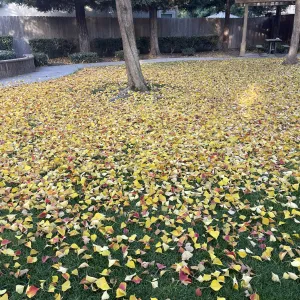
Some gardeners leave the leaves year-round to continue to break down. However, you may want to clean them up when spring arrives. If you do, try to wait for a few weeks to give the critters that have been protected by fallen leaves during wintertime to emerge and depart.
While we can’t perfectly emulate a forest’s piles of leaves in our gardens, by letting leaves stay during the winter will make your garden more diversified and healthier, you’ll help support a vast array of wildlife, and you’ll reduce the strain on landfills. So, leave the leaves!
Resources
Xerces Society, https://xerces.org/blog/where-do-pollinators-go-in-winter
Virginia Cooperative Extension, Piedmont Master Gardeners https://piedmontmastergardeners.org/leave-the-leaves/
UC Master Gardeners, San Diego https://www.mastergardenersd.org/should-i-clean-up-all-the-fallen-leaves-in-my-yard/

UC Master Gardeners, Napa County https://ucanr.edu/blog/napa-master-gardener-column/article/leave-those-leaves-alone
Denise Godbout-Avant has been a Stanislaus County Master Gardener since 2020.