
I love winter gardens. While most gardeners think of spring as the season for flowers, November in Stanislaus County offers an excellent climate for vibrant and colorful blooms. Cooling weather and shorter days are ideal for a variety of annuals, perennials, and shrubs that provide much-needed color to the landscape. Choose the right plants to ensure your garden remains a beautiful and active space for pollinators throughout the late fall and early winter. In my garden I planted both annuals and perennials to bring bright pops of color to brighten the short winter days.
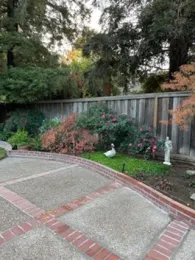
Annuals - A plant in which the entire life cycle is normally completed in a single growing season.
Pansies and Violas (Viola species)

Pansies and violas, both members of the genus Viola, are celebrated for their charming, “smiling” faces and their resilience in cool weather. Pansies are the larger-flowered variety; violas are known for their smaller, more numerous blooms. In Central California, these versatile plants can be grown as winter annuals, providing continuous color from fall through spring. Colors range from deep purples and yellows to brilliant oranges and whites. This year I planted bright yellow pansies and pale violet-tinged white violas.
Plant pansies and violas in full sun to partial shade; violas tolerate more shade than pansies. They prefer moist, well-drained soil. To prolong their blooming period, regularly pinch off faded flowers. If you have problems with snails and slugs, you may want to use traps or bait to protect your new flowers.
Sweet Alyssum (Lobularia maritima)
Sweet alyssum is a low growing, spreading annual that produces a carpet of tiny, fragrant flowers. Its honey-scented blossoms are a powerful attractant for beneficial insects. Plant sweet alyssum as a companion plant around the base of citrus trees to attract beneficial insects.

Alyssum thrives in full sun to partial shade and prefers moist, well-drained soil. In warmer climates, it may benefit from afternoon shade. If you had it in your garden over the summer, it is faded and can be removed. Since it is a prolific re-seeder, it will return year after year. It’s the gift that keeps on giving.
Snapdragons (Antirrhinum majus)
Snapdragons are beloved for their tall, spiked flower stalks and unique, hinged florets that attract bumblebees. While often grown as annuals, they are perennials in milder parts of California and can provide a stunning display of color well into fall and winter. The 'University of California Mix' is a well-balanced heirloom variety that offers a wide range of colors. Taller varieties are excellent for the back of borders and as cut flowers for arrangements. I planted the medium-tall ‘Rocket’ variety which are excellent as cut flowers.
For best growth, plant snapdragons in full sun to partial shade in well-drained soil. In Stanislaus County they do best in the cooler weather of fall and early spring, although sometime they may overwinter. To encourage bushy growth and more blooms, pinch the plant when it's young and deadhead spent flower spikes.
Perennials - A woody or herbaceous plant that lives from year to year and does not die after flowering once.
Camellias are a true gem of the winter garden, providing a source of nectar for pollinators like bees and hummingbirds when few other plants are in bloom. Various species and cultivars offer a range of bloom times. Sasanqua camellias are early bloomers, with small, often fragrant blossoms appearing as early as late October through December. Other varieties such as Camellia japonica offer blooms from December through mid-spring. I have bright pink in both my front and backyard and have blooms from early October through January.
Camelias prefer acidic soil, which means they thrive in soils with a pH of 5.5-6.5 or low pH. In the Central Valley, our soil pH is usually in the 7.0 - 8.0 range, which is considered alkaline or basic. If your camellia leaves turn yellow or look unhealthy, adding amendments won’t affect the pH of the soil enough to make a difference, unless you are growing them in a pot. Purchase an acid-based plant food and fertilize according to directions.
Plant camellias in areas with bright, indirect light or early morning sun with afternoon shade.
Pick up dropped blooms to prevent fungal diseases like camellia blossom rot.
Cyclamen (Cyclamen coum and Cyclamen hederifolium)
Cyclamen are excellent for adding splashes of color to shady areas of the November garden. These plants grow from tubers and feature heart-shaped leaves with beautiful, marbled patterns. Their delicate, "butterfly-like" flowers are produced on long, elegant stems.
Plant hardy cyclamen in well-drained, humus-rich soil in partial to full shade. They are dormant in summer, so reduce watering during this time, but don't let the tubers dry out completely. When new leaves appear in the fall, resume regular watering.
California Fuchsia (Epilobium canum)
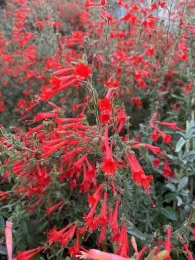
There are several varieties of this beautiful California native available, and they are putting on a beautiful show in gardens right now. This shrubby perennial has lance-shaped, 0.5-1.5 inch gray-green leaves; flowers are tubular and mostly scarlet to orange, although a few varieties have pink or white blossoms. California fuchsias bloom late summer to fall and offer a spot of bright color and nectar for hummingbirds. Once established, this plant is a low water user. CA natives prefer soil that
has not been amended and is as close to a natural state as possible.
Plant in full sun to part shade, in well-watered native soil.
Mexican Bush Sage (Salvia leucanthemum)
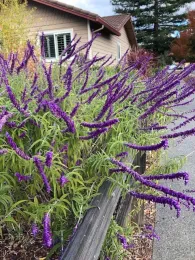
This late-blooming sage is loved for velvety purple or purple and white blossoms in late summer through much of the winter atop 3-6 ft. upright, slightly arching stems that rise individually from the ground. Underground rhizomes slowly spread, increasing clumps. Evergreen, grayish, blue green leaves are lance-shaped, 6-in. long, deeply textured, and somewhat fuzzy.
Plant in a sunny spot with full sun in rich well-drained soil. Work in compost if drainage is poor.
Water Requirements
All plants need regular water until established. You can tell a plant is getting established when it starts making new leaves and growing. Remember that even low water use plants need at least a year or two or regular water.
By incorporating a variety of cool season plants in your landscape, you can defy the notion of a barren November garden. Pansies, violas, and snapdragons offer a brilliant array of colors, while the elegant camellia and the versatile Ceanothus provide structure and attract pollinators. The sweet fragrance of alyssum and the delicate blooms of cyclamen add delightful touches to both sunny and shady spots. With a little planning and the right plant choices, your garden can flourish with color and life well into the cooler months.
Additional information and resources:
California Fuchsia California Fuchsia | UC Master Gardeners- Diggin' it in SLO
Camelias https://ucanr.edu/blog/uc-master-gardeners-diggin-it-slo/article/camellia
Cyclamen: https://ucanr.edu/blog/uc-master-gardeners-diggin-it-slo/article/cyclamen
Nutrient Deficiencies. UC IPM: https://ipm.ucanr.edu/PMG/GARDEN/ENVIRON/mineraldef.html
pH Problems, UC IPM:
https://ipm.ucanr.edu/PMG/GARDEN/PLANTS/DISORDERS/phproblems.html
Snails and Slugs, UC IPM: https://ipm.ucanr.edu/QT/snailsslugscard.html
Snapdragon: https://ucanr.edu/sites/default/files/2011-03/80154.pdf
Viola https://ucanr.edu/blog/uc-master-gardeners-diggin-it-slo/article/violas
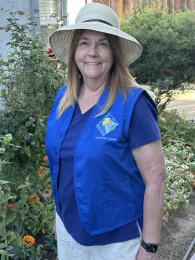
Barbara Kissinger Santos has been a Stanislaus County Master Gardener since 2024