
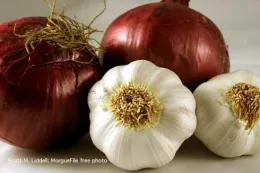
Fall gardening has always been a passion of mine. So many wonderful veggies and herbs love the cooler weather. By far my favorite things to plant in the fall are garlic and onions.
Preparing your garden for your garlic and onions is relatively easy. Pick a nice level, sunny location in your garden or use a dedicated raised bed. Both onions and garlic take quite a while until harvest, so be certain you will not need the space for your spring veggies. Remove any weeds and rocks. Loosen the soil to allow the bulbs to have room to grow both down and out. Amend the soil if necessary. Both onions and garlic need consistent watering, so place near a convenient water source or use drip irrigation.
Once your beds are ready it’s time to choose your bulbs and starts. Both garlic bulbs and onion transplants, or starts, can be found in your local nursery beginning in late October, early November. There are many varieties of both garlic and onions, each with their own distinctive flavors. Here in the Central Valley, we are lucky enough to be able to grow several varieties successfully. The following list, while not all-inclusive, reflects the varieties most often available here.
Garlic Varieties:
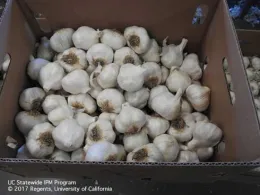
California Late: This variety has a robust flavor, stores well, and is great for creating the classic garlic braid.
California Early: Has a milder flavor than the Late variety but similar other characteristics.
Elephant Garlic: As the name implies, this variety has huge bulbs with a very mild taste. This is not used like other garlic varieties as it is related more to the leek and doesn’t impart the same garlic flavor when cooked. However, they are great raw in salads.
Spanish Roja (red): Known for its strong, spice flavor with a hint of sweetness, this variety enhances the flavor of your favorite foods without overpowering. Great for garlic bread and raw salads.
Onion Varieties:
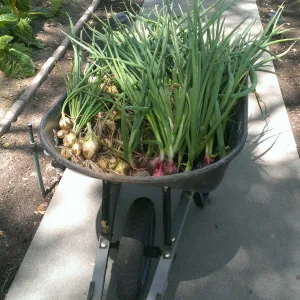
Early Red Burger: This onion has a sweet, mild flavor, making it a favorite for eating raw in salads and, of course, on burgers.
Yellow: The most commonly used onion for cooking. They are usually larger than their white counterparts and have a strong flavor due to their high sulfur content.
Walla Walla: A very large, sweet onion with a remarkably mild flavor. First grown in Walla Walla, Washington, this onion is fabulous for cooking and because of its mild, sweet taste are great raw.
White: This variety has a high sugar and low sulfur content, giving them a milder flavor than the yellow variety. However, they do have a shorter shelf life than the yellow onion.
Planting:
To plant your garlic, separate the cloves from the starter bulb, choosing the largest cloves to plant as this encourages larger bulbs later. Plant the clove, pointy side up, into the soil 2 inches deep spaced 4 inches apart. Rows should be 12 inches apart to give the growing bulb and above ground greenery plenty of space. Since garlic is shallow rooted, wetting your soil to a depth of 2 feet with drip irrigation on a regular basis will be sufficient.
Onions are planted by separating your starts carefully so the individual plants can be placed in the soil. Place starts into the ground with just enough soil to cover the bulb and 4 to 5 inches apart. Since onions have a fairly high-water requirement, you will need to keep the soil evenly moist throughout the growing season.
Harvesting:
Garlic and onions take a long time to mature, especially when planted in fall. If you plant in early November, you can expect to harvest your crop in mid-April to early May.
Both onions and garlic are ready to harvest when the tops flop over, become dry. With garlic, you may notice the cloves begin to separate in the bulb. As the tops bend over, stop watering your plants to stop the root growth and to allow the outer skin of the bulbs to start drying.
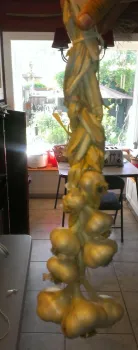
Garlic and onions need to be cured before storage. Dig them up and place them in a protected, well-ventilated place to dry. Onions should cure for 2 to 4 weeks and garlic 2 – 3 weeks. Once the outer skin is and stems are dry then they are ready for use. A fun way to cure garlic is to create a garlic braid to hang. One benefit of this method is once it is cured, you can hang the braid in your kitchen and cut bulbs off as you need them for cooking.

Garlic and onions are, for me, one of the most rewarding fall plants to grow. We may have to wait until spring to reap the benefits, but, when cured and stored properly, they will be a part of your meals until you are ready to plant them the next fall.
Resources:
Cultural Tips for Growing Onions and Garlic / Home and Landscape / UC Statewide IPM Program (UC IPM)
Terry Pellegrini has been a UC Stanislaus Master Gardener since 2020.