

Citrus season is here! And some citrus pests may be too. Perhaps you’ve encountered a few ant problems with your citrus trees, but did you know there are other pests you should be on the lookout for such as psyllids, leafminers, cottony cushion scale, and mealybugs? Read more below for tips on how to identify these pests, their damage, and links to resources on how to manage them.
Citrus Leafminer
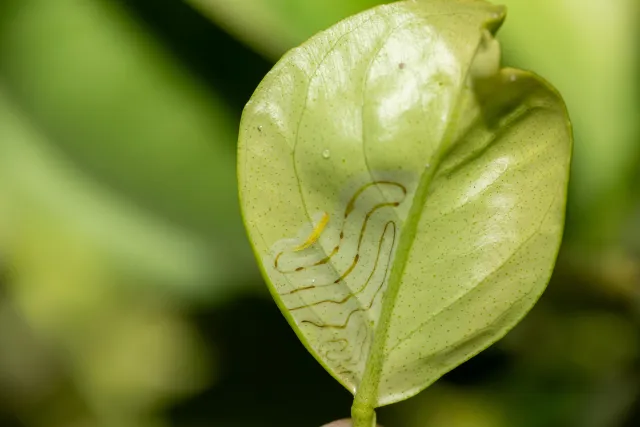
You may not spot this pest in action, but you’ll see damage signs of shallow meandering tunnels, or mines. The damage is caused by the citrus leafminer, a moth that lays its eggs on new, succulent citrus leaves. Feeding by the larval (immature) stage is done by their burrowing through the soft leaf tissue, leaving behind the visible tunnels and sometimes causing the leaf to curl and distort. Mature citrus trees are less frequently attacked since most of their tough leaves are resistant to the leafminer, but very young trees with their higher proportion of young, tender leaves, are more susceptible. Leafminers can slow growth of young trees, but even trees with heavy leafminer damage are unlikely to die.
For more information about identification and management, see the Pest Notes: Citrus Leafminer.
Mealybugs
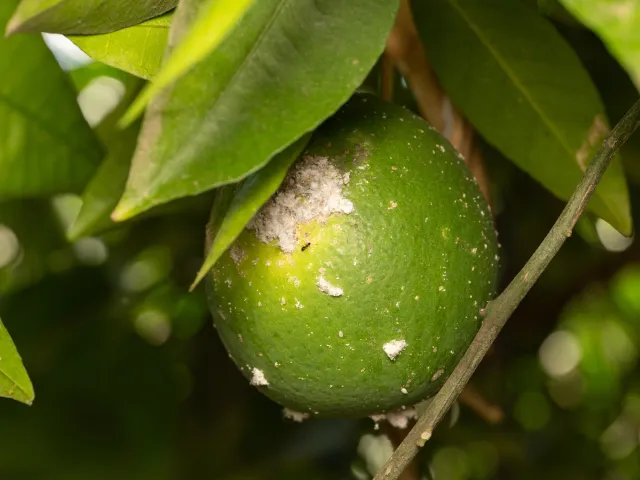
Mealybugs are soft, oval, wax-covered insects that feed on many plants in garden, landscape, and indoor settings. These insects suck plant juices as they feed and can produce abundant honeydew which can, in turn, lead to the development of sooty mold. Mealybug feeding can also reduce tree vigor and damage fruit.
For more information about identification and management, see the Pest Notes: Mealybugs.
Cottony Cushion Scale
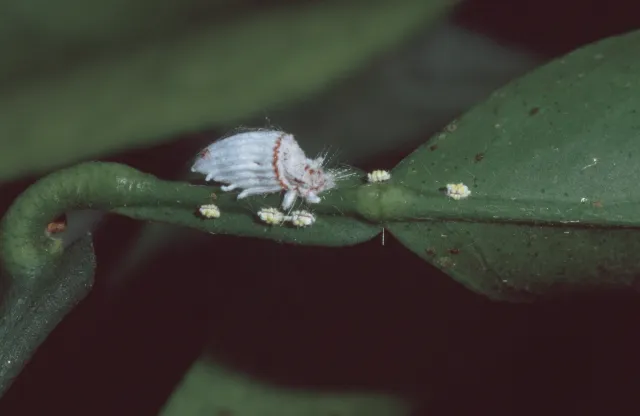
Cottony cushion scale is most easily recognized by the female's elongated, fluted white cottony egg sac which can be about ½ inch long. Like mealybugs, they suck plant juices and produce profuse amounts of honeydew which attracts ants and allows growth of sooty mold. Cottony cushion scale decreases the plant's health by sucking sap, and heavy infestations can cause branches to die.
For more information about identification and management, see the Pest Notes: Cottony Cushion Scale.
Asian Citrus Psyllid (ACP)
The Asian citrus psyllid, Diaphorina citri, is an invasive tiny, mottled brown insect about the size of an aphid. It damages citrus leaves by feeding on new leaf growth, causing the leaves to twist or notch as they mature. Most importantly, ACP can also infect citrus trees with the deadly disease huanglongbing (HLB). Huanglongbing can kill a citrus tree in as little as 5 years. There is no known cure, and all commonly grown citrus varieties are susceptible to the disease.
Anyone growing citrus trees must watch for HLB symptoms and if you suspect that a tree is infected, it's important to report it to your county agricultural commissioner's office or call the CDFA Exotic Pest Hotline at 1-800-491-1899.
For more information about identification and management, see the Pest Notes: Asian Citrus Psyllid and Huanglongbing Disease.

For more details about these and many other citrus pests, visit the Citrus page on the UC IPM home and garden website.