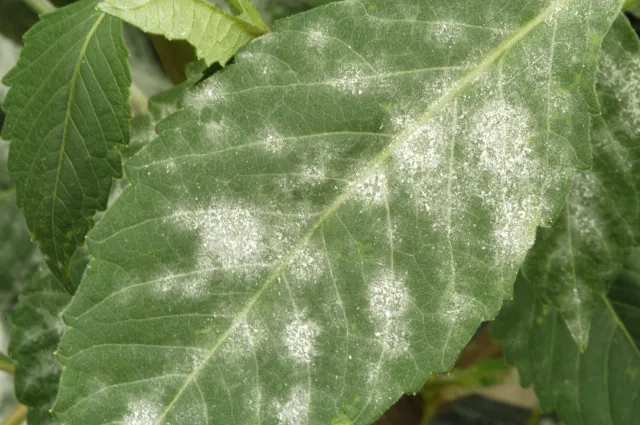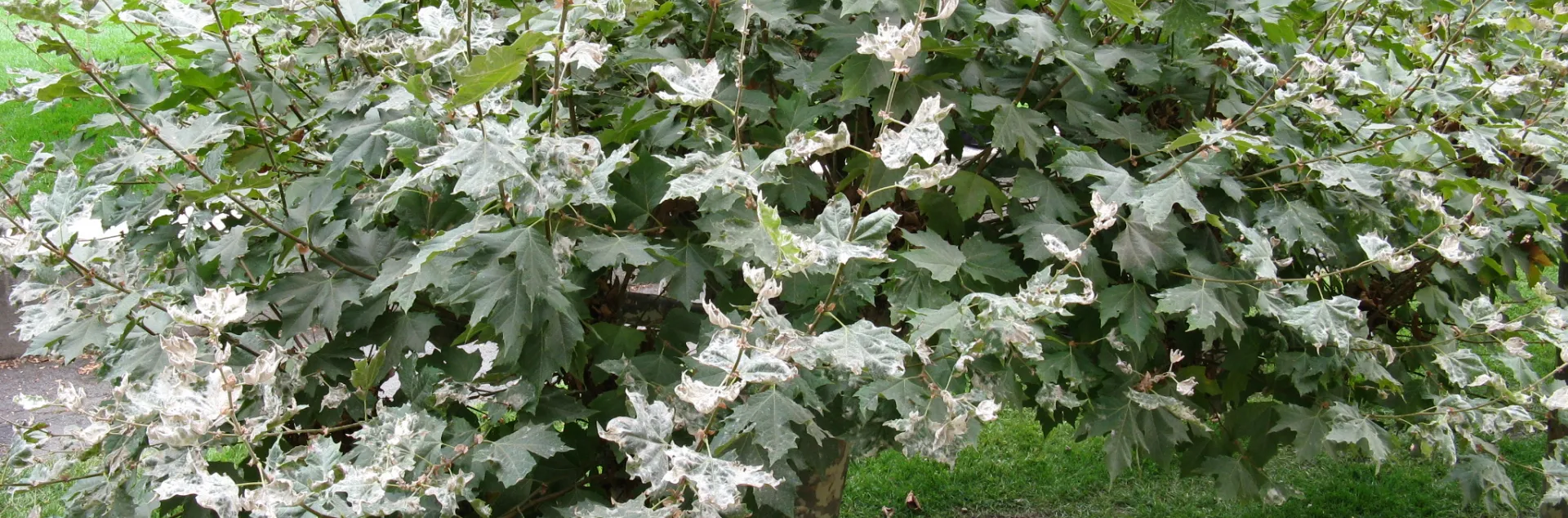
Have you seen white powdery-looking patches appearing on the leaves of your roses or sycamore trees? While home gardeners may be familiar with this sign of the plant disease powdery mildew on their veggies, ornamental plants and landscape trees can also be infected. In addition to those powdery spots, the disease can cause shriveled leaves and distorted shoots.
Powdery mildew is common in warm, dry conditions. Shady conditions like an overgrown canopy can make it worse. The best way to keep powdery mildew under control is through prevention. Choose resistant cultivars when you plant. Grow plants in sunny locations so they're less susceptible. Don't overfertilize your plants since too much lush foliage can encourage growth of powdery mildew.
For more details, see the newly revised Pest Notes: Powdery Mildew on Ornamentals. This publication, authored by UCCE advisors Jim Downer and Maria de la Fuente, and Belinda Messenger-Sikes from UC IPM, contains cultural control tactics to help you manage powdery mildew on your ornamental plants. If your powdery mildew problem is severe, the Pest Notes lists fungicides available for both home gardeners and landscape professionals.