
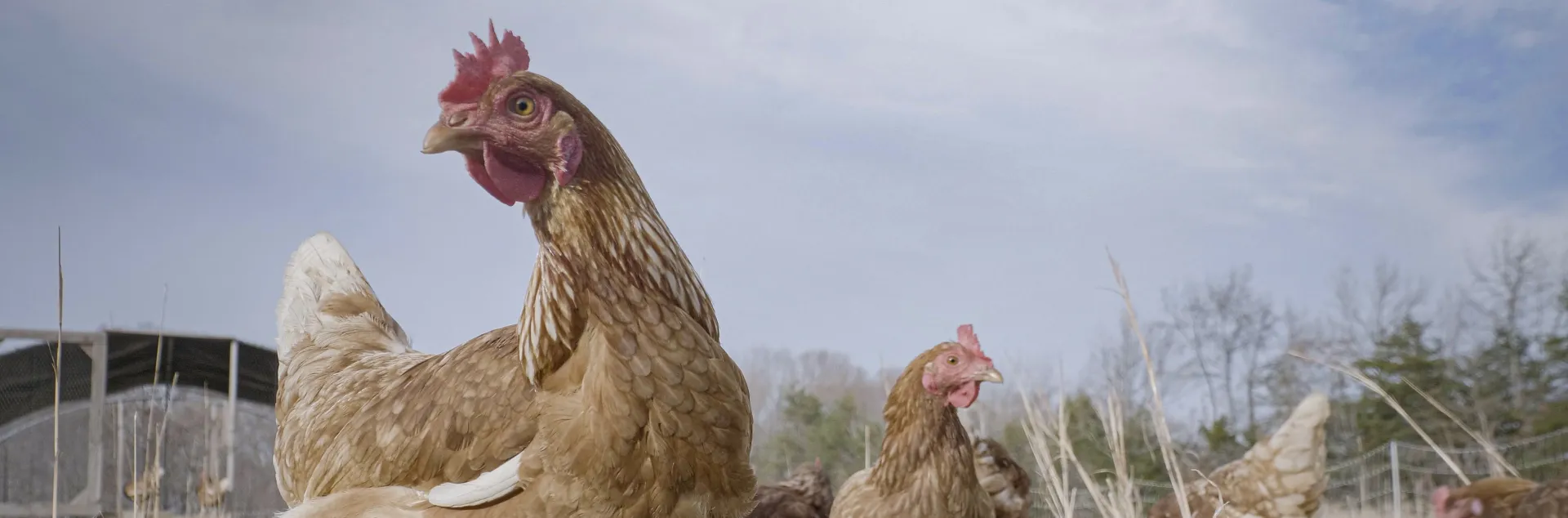
UC IPM recently hosted a webinar about pests of backyard chickens. During the presentation, our speaker Dr. Amy Murillo an Assistant Professor at the University of California Riverside specializing in veterinary entomology, answered live questions from attendees. Below are some of those questions and answers.
If you missed the webinar, you can watch a recording on our YouTube channel. This video provides an excellent overview of identification, prevention, and management of common ectoparasites found in backyard chicken flocks.
Impacts of Ectoparasites on Chickens
Q: Can any of these parasites transmit disease?
A: None of the pests covered in this webinar are important vectors. Pests covered were lice (general louse), mite (northern fowl mite, poultry red mite, scaly leg mite), and flea (sticktight flea).
Q: Does egg production decrease from ectoparasites?
A: Egg production can be negatively impacted by ectoparasite infestation.
Q: Do ectoparasites stay on a chicken after it has gone through a catastrophic molt?
A: It depends on the ectoparasite species. Most lice and northern fowl mites will be shed during the molting process, reducing overall infestation levels. Sticktight fleas and parasites that live off the host are unlikely to be affected by molting.
Mite Biology & Behavior
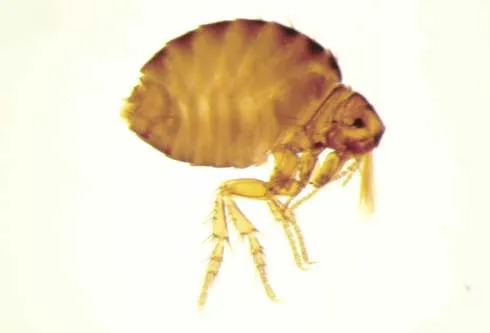
Q: How long does an adult mite live?
A: An adult northern mite will live a couple weeks off host. An adult poultry red mite is likely to live weeks to months off host.
Q: Do outside temperatures affect mites’ activity?
A: Yes, but it does depend on which species you're talking about. We find that northern fowl mites, the mites that are on the chicken, are negatively impacted by hot weather; their populations crash in the summer. And the opposite is true for poultry red mites which are more active in the summer and less active in the wintertime.
Prevention and Sanitation Practices
Q: You mentioned “same day visits” as a way to minimize contagion. What exactly does that mean?
A: Visiting multiple flocks on the same day could potentially move ectoparasites from infected to uninfected flocks.
Q: How do you fill cracks and crevices in a nesting box?
A: Cracks and crevices can be filled with something like caulking, if you have gaps where you think there are mites hiding.
Q: Is there an ideal bedding to use in a coop to minimize pest issues?
A: We have not tested different types of bedding, and do not have any specific recommendations for bedding.
Q: Should you bathe your chickens on a regular basis? And if so how often?
A: Bathing chickens with water should be used sparingly to remove ectoparasites. It is a good way to knock down ectoparasite infestations but won’t completely eliminate mites and lice. It should only be done if the weather is warm or hot so the birds can dry quickly.
Dust Bathing and Diatomaceous Earth (D.E.)
Q: Can you use non–food grade D.E. for bathing? What is the purpose of using food grade?
A: No, only food-grade should be used around animals and people. Food grade D.E. contains < 1% crystalline silica. Other types (sometime called pool or filter grade) can contain high amounts of crystalline silica, a mineral that is classified as a human lung carcinogen.
Q: Does the dust from D.E. harm the birds?
A: When we were testing it, we mixed it away from the birds and then brought it to them, and we didn't see any negative signs or anything indicating that it was harmful to them, but it may be dependent on the amount of exposure. I have heard conflicting things so you should check with your veterinarian. Diatomaceous earth should be applied in well-ventilated areas only, and the applicator should wear a dust mask.
Q: What is the ratio of diatomaceous earth (D.E.) to sand used in the dust boxes?
A: 50 pound bag of sand mixed with 6 cups of D.E.
Q: Why use washed play sand for the dust boxes?
A: Play sand is not rough like concrete sand, with bigger and smaller chunks. It’s a nice texture, prerinsed and was wet when we bought the supplies, which didn't add more dust to the environment. We got all of our supplies at Home Depot and the sand was nice quality and not very expensive.
Q: How long is the D.E. good for before you need to change it?
A: Average 4 to 6 weeks, but it depends on your flock. What I found is the D.E. doesn't go bad, the chickens kick it out of the box. Once it's in the environment, it is not as effective because it gets diluted in the litter and the dirt. Keep the box refreshed as needed, depending on the size of your flock and how aggressive the birds are.
Q: When D.E. gets wet is it still useful for this?
A: Yes, it is. The diatoms are still sharp and have the texture at a microscopic level, even if it's wet. The D.E. may not be as useful under rainy conditions or if the area becomes flooded.
Q: When sanitizing the coop, will emptying and washing the dust box with soap and water kill the ectoparasites?
A: Yes, if there are any ectoparasites alive after emptying the dust box.
Chemical & Alternative Pest Control Options
Q: Will using pyrethrins make it necessary for egg withdrawal time?
A: That's going to vary depending on the product that's being used. The product label will clearly state if there is a withdrawal period related with that chemical. You should always read the label when you are using any kind of pesticide product, because important information is on that label, and it will make its use as safe as possible. This is important not just for poultry pests, but for any pesticide that you are going to use.
Q: Can poultry red mite be somewhat controlled by diluted dish soap?
A: It is effective for treating the environment as a part of sanitation and biosecurity. For example; cleaning out the nest boxes with soapy water would decrease poultry red mites.
Q: Does the vet-prescribed medication, Exzolt, end up in the egg?
A: There is no egg withdrawal period for Exzolt, so I don’t think so, but check with your veterinarian.
For help managing pests, visit the UC IPM website at ipm.ucanr.edu.