
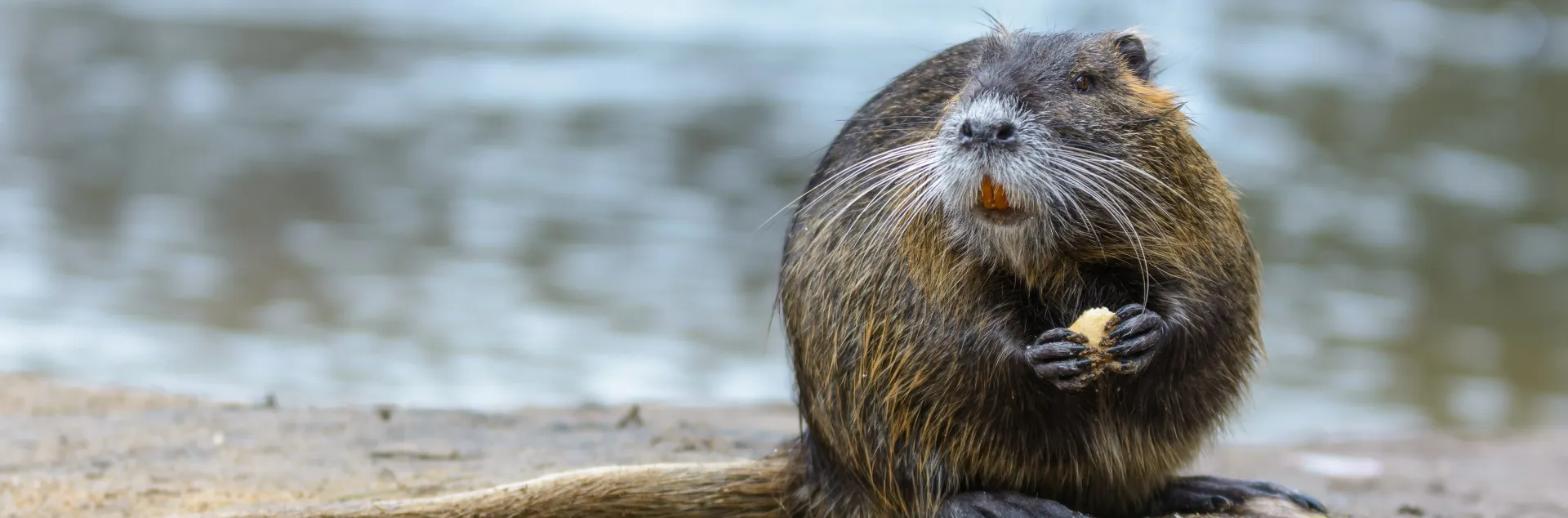
The invasive pest spotlight focuses on emerging or potential invasive pests in California. In this issue we are covering nutria.
Nutria Facts
The nutria is a large semi-aquatic rodent introduced to California in the early 1900s to be farmed for their fur. When the fur market collapsed, many nutria escaped or were set loose. Though eradicated from the wild in the 1970’s, a breeding population was discovered in Merced County in 2017. Nutria have since spread into waterways within the Sacramento-San Joaquin River Delta and the Central Valley. They prefer permanent fresh water sources like lakes and rivers but can also live in brackish coastal wetlands.
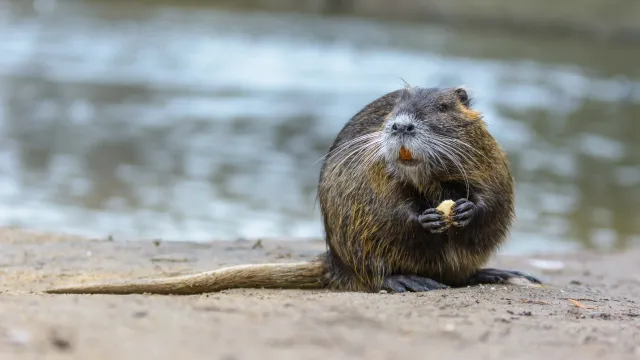
Nutria severely damage the environment, roads, levees, and crops. They burrow into banks of waterways, weakening or collapsing them. As they feed, they damage the native plant communities and soil structure of wetlands. Nutria feeding and burrowing damage both increase the risk of erosion and flooding. Nutria can also carry pathogens and parasites that can spread to humans, pets, and livestock. Adult nutria weigh roughly 15 to 20 pounds. Their bodies are two feet long, and their tails 1 to 1.5 feet long. Nutria are similar in appearance to beavers and muskrats, but can be distinguished by their hunched back, white whiskers and rat-like sparsely haired tails. For more information, see the California Department of Fish and Wildlife (CDFW) nutria identification guide.
What Can You Do?
Landowners and tenants in regions where nutria have been detected can help by allowing CDFW to search for and eradicate these pests on their properties (nutria distribution map). In addition, suspected observations or potential signs of nutria should be photographed and immediately reported through the CDFW online reporting system. If possible, photos should include the whiskers, front or hind foot, or tail. If you reside in a county where nutria are found, you can request free CDFW assistance at (866) 440-9530 or invasives@wildlife.ca.gov.
For more information, visit wildlife.ca.gov/nutria.
[Originally published in the Fall 2025 issue of the Home & Garden Pest Newsletter.]