

Why Winter is the Best Time to Prevent Fruit Tree Diseases.
In the Bay Area’s Mediterranean climate, our cool, wet winters and springs are perfect for many fungal and bacterial diseases of fruit trees. The good news: most of the effective control steps happen during the dormant season, long before you see symptoms on leaves or fruit.
Many disease organisms:
- Overwinter on twigs, buds, bark, and mummified fruit
- Infect new growth when buds swell and leaves emerge in cool, wet weather in late winter and spring.
Winter is the time to:
- Prune and improve air circulation.
- Remove diseased plant material and fallen fruit.
- Apply dormant fungicide sprays, if needed, following guidance from University of California Integrated Pest Management (UCIPM) on timing and label directions. UC Agriculture and Natural Resources - Fruit Tree Care
The most common winter fruit tree disease question we hear at the Help Desk is peach leaf curl, but other diseases like brown rot, shot hole, fire blight, and apple/pear scab are also tied to winter conditions. This article focuses on prevention strategies you can use now to reduce problems next season, using UC ANR (University of California Agricultural and Natural Resources (UCANR) and UC IPM guidance.
Peach Leaf Curl: Winter Is Your Only Control Window

What Is Peach Leaf Curl?
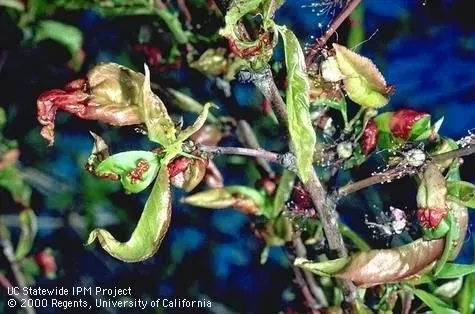
Peach leaf curl is a fungal disease caused by Taphrina deformans that affects peaches, nectarines, and to a lesser extent Apricots. It distorts and discolors leaves, and can also damage blossoms, shoots, and fruit. See: Peach Leaf Curl - What it is and How to Treat It
Typical spring symptoms:
- Leaves become thickened, puckered, and curled, often with red, pink, or yellow areas
- Severely affected leaves turn brown and drop early
- Over time, repeated defoliation can weaken trees and reduce fruit production..
Once you see these symptoms in spring, it is too late to treat them for that year; any sprays at that point will not cure infected leaves.
Disease Cycle and Why Timing Matters
The leaf curl fungus survives the dry summer as spores on bark, twigs, and in bud scales. With cool, wet weather in winter and early spring, the spores germinate and infect tissues as buds begin to swell and leaves emerge.
Because infection occurs between leaf drop and bud break, UC IPM emphasizes that control is only effective during the dormant period:
- Treat after leaves have fallen in late fall or early winter.
- A second application is recommended in late winter just before buds swell, this is important, especially if it has been a wet winter.
- More details on Peach Leaf Curl treatment in Winter are given here: Peach Leaf Curl - What it is and How to Treat it
Dormant Fungicide Sprays for Peach Leaf Curl
If you have a susceptible variety and a history of peach leaf curl, dormant sprays are usually necessary every year in the bay area. For information on dormant spraying see:
UC Integrated Pest Management - Peach Leaf Curl
Other Fruit Tree Diseases to Consider in Winter
While peach leaf curl is often the “headline” disease, several other important fruit tree diseases are also influenced by winter conditions and can be reduced with winter sanitation and pruning.
Brown Rot Blossom and Twig Blight (Stone Fruits)
Hosts:
Peach, nectarine, apricot, plum, almond, cherry, and other Prunus species.
Symptoms:
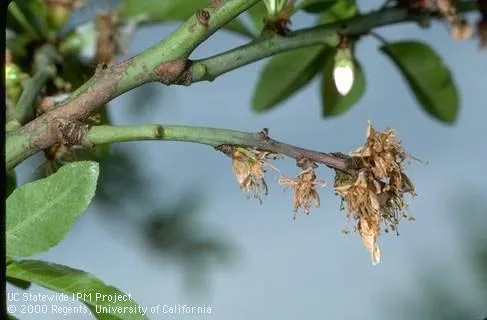
- Blossoms and young twigs blight and turn brown, often with tan/gray spore masses on dead blossoms in moist weather
- Gummy discharge may appear at the base of infected flowers
- Later in the season, fruit can develop soft, brown rot with grayish spore masses
Winter/early-spring management:
- Remove and discard mummified fruit left on trees or on the ground right after harvest and again in winter; these are a major source of spores.
- During winter pruning, remove blighted twigs and cankers (cut well below visible dead tissue) and dispose of them away from the tree.
- Open the canopy for good air circulation and faster drying after rain.
Fungicide sprays for brown rot are typically timed around bloom, but effective sanitation and pruning in winter substantially reduce disease pressure. UC IPM’s Brown Rot Blossom and Twig Blight pages and home garden Pest Notes provide specific timing and product options. See: UC Integrated Pest Management - Brown Rot Blossom and Twig Blight
Shot Hole Disease (Coryneum Blight)

Hosts:
Peaches, nectarines, apricots, almonds, and some ornamental Prunus species.
Symptoms:
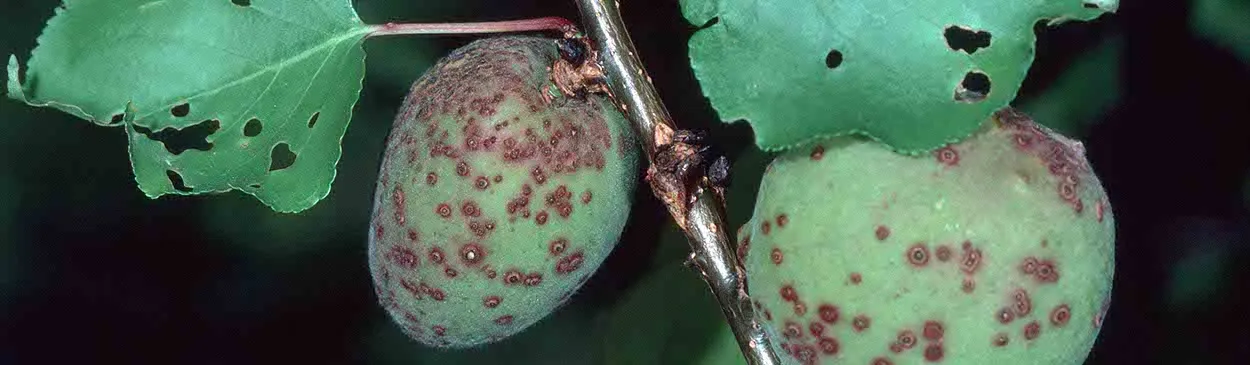
This fruit tree disease is caused by Wilsonomyces carpophilus. Shot hole symptoms on trees include:
- Small purple or brown spots on leaves that fall out, leaving small holes
- Rough, scabby spots on fruit and lesions on twigs
- Severe infections can lead to early leaf drop and poor tree vigor
Why winter matters:
- The fungus survives on infected twigs and buds; spores are produced in winter and spread by splashing rain.
- The disease is favored by prolonged wetness from fall through midwinter, especially in lower parts of the canopy where leaves and fruit stay wet longer.
Winter management:
- Remove and dispose of infected twigs and any fruit mummies.
- Avoid overhead irrigation that wets foliage during cool seasons.
- In orchards or yards with a history of serious shot hole, UC IPM notes that dormant or delayed-dormant fungicide sprays (often similar to those used for peach leaf curl) may be recommended; consult the Shot Hole Pest Notes and product labels. See: UC Integrated Pest Management - Shot Hole Disease
Fire Blight (Apples, Pears, and Other Rosaceous Plants)
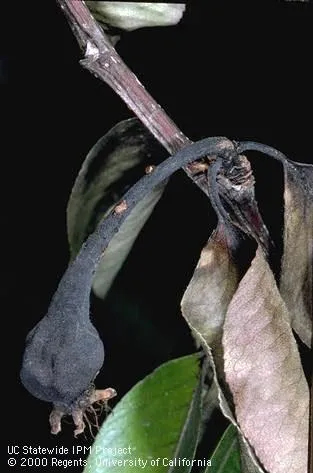
Fire blight is a bacterial fruit tree disease (not fungal) caused by Erwinia amylovora that affects pears, apples, crabapples, quince, Pyracantha, and related plants.
Symptoms:
- Blighted shoots that look “burned” or scorched, often with a characteristic shepherd’s-crook bend at the tips
- Cankers on branches and oozing bacterial exudate in warm, wet conditions
Management
Fire blight has no cure but with proper pruning and care, it can be managed. Most new infections occur during bloom and early shoot growth, but winter is the best time to remove old cankers:
- During dormant pruning (on a dry day), remove blighted twigs and branches by cutting 8–12 inches below the last visible symptom.
- Disinfect pruning tools between cuts if working within known infected areas. For information on disinfecting tools see: Disinfecting Garden Tools
Using resistant or less-susceptible varieties and careful irrigation and fertilization (avoiding lush, overly vigorous growth) are important long-term strategies. For more information see: UC Integrated Pest Management - Fire blight
Apple and Pear Scab
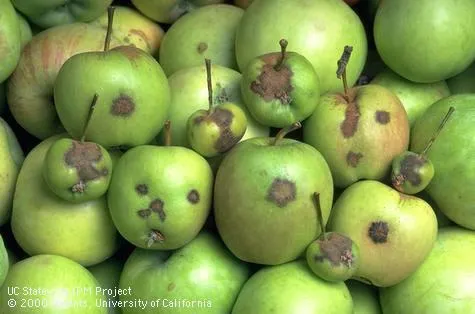
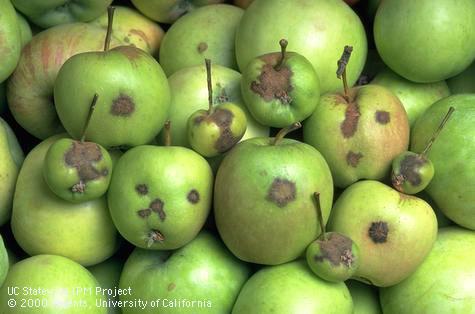
Apple and pear scab are caused by different fungi but look and behave similarly and are managed in similar ways.
Symptoms:
- Olive-green to dark, scabby spots on leaves and fruit
- Severe disease can cause early leaf drop and reduce fruit quality
Why winter matters:
- The fungi overwinter in fallen leaves and infected debris under the tree.
Winter management:
- Rake and remove fallen leaves under apple and pear trees, especially in yards with a history of scab.
- Shred and compost leaves hot enough to kill pathogens, or dispose of them in green waste where permitted. Note that to kill pathogens compost piles must be at least 131 F or higher. Be sure your home compost pile reaches this temperature.
- UC IPM notes that, when needed, fungicide sprays are timed to spring leaf emergence and infection periods, but good winter sanitation can greatly reduce the need for sprays. See: UC Integrated Pest Management - Apple and Pear Scab
Summary:
Winter is the most important—and most overlooked—season for preventing fruit tree diseases in Alameda County. By focusing on sanitation, dormant-season pruning, and well-timed fungicide applications (when appropriate), home gardeners can dramatically reduce the incidence of peach leaf curl, brown rot, shot hole, fire blight, and other common problems. Good cultural practices, dormant spraying when appropriate, improving air circulation, avoiding overhead irrigation and choosing resistant varieties, set the stage for a healthier, more productive orchard in the year ahead. With a few thoughtful winter tasks, gardeners can protect their trees before disease has a chance to take hold.
References:
- UC Agriculture and Natural Resources - Fruit Tree Care
- Peach Leaf Curl - What it is and How to Treat It
- UC Integrated Pest Management - Peach Leaf Curl
- UC Integrated Pest Management - Brown Rot Blossom and Twig Blight
- UC Integrated Pest Management - Shot Hole Disease
- UC Integrated Pest Management - Fire blight
- UC Integrated Pest Management - Apple and Pear Scab
- Disinfecting Garden Tools.
Want to learn more?
This blog post is brought to you by the Help Desk of the UC Master Gardeners of Alameda County. Subscribe to our blog!
Have a gardening question? We'll help.
Visit our Help Desk page to submit your question and see additional ways you can reach us.