
Note: this is a rerun of an article originally printed in the Contra Costa Times.
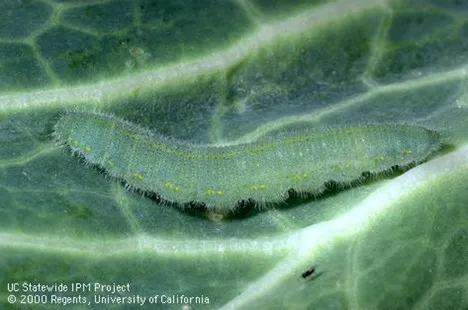
Q. I found some small green caterpillars crawling on my broccoli. They are chewing holes in the leaves. Where did they come from, and how can I get rid of them?
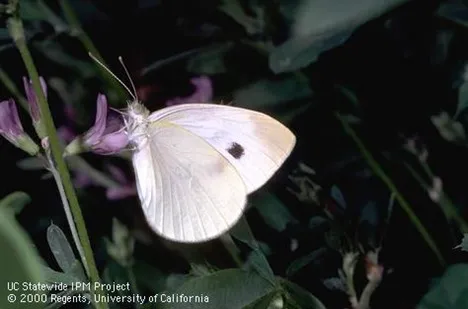
A. The green caterpillars likely are the larvae of the imported cabbageworm butterfly, a small white creature with one or two tiny black dots on each wing. Usually the butterflies target broccoli, cabbage, cauliflower, Brussels sprouts, collards, and kale. Occasionally they lay eggs on radish, turnip, and lettuce leaves.
Cabbageworm Life Cycle
The eggs hatch after five to seven days, and small velvety green larvae emerge and begin feeding on the leaves. The larvae can do a great deal of damage, and their dark green fecal droppings contaminate the developing vegetables.
When a larva is 2 or 3 weeks old, it attaches itself to a leaf with a silken thread and forms a pupa. A week or two later, a butterfly emerges, and the life cycle—only four or five weeks in duration—restarts.
Try Row Covers
The use of a floating row cover when the seedlings are planted in the garden can stop butterflies from reaching the plants. Use lightweight row covers that allow good light and water penetration. To support the covers, purchase wire hoops or make a frame from PVC irrigation pipe or lumber. Secure the edges of the cover to the ground with wire stakes or weight them with rocks or bricks. During cool fall and winter seasons, row covers can be left in place.
Handpicking
If you don’t use row covers, check regularly for signs of larvae—ragged holes chewed in leaves and dark green fecal droppings. If those signs are apparent, hunt for and remove the larvae. Be thorough and examine plants often to deal with newly hatched larvae. You will be aided in your efforts by natural enemies of cabbageworms.
For more information, see this site: https://ipm.ucanr.edu/home-and-landscape/imported-cabbageworm/#gsc.tab=0
Both photos from:
https://ipm.ucanr.edu/home-and-landscape/imported-cabbageworm/#gsc.tab=0
Help Desk of the UC Master Gardeners of Contra Costa County (TKL)