


UC ANR partners with CAL FIRE and community scientists to survey for goldspotted oak borers, stop the movement of infested firewood
Small beetles are chewing up Southern California’s beloved oak trees from the inside out.
Over the last 20 years, goldspotted oak borers, also known as GSOB, have injured and killed hundreds of thousands of oak trees throughout San Diego, Orange, Riverside, San Bernardino and Los Angeles counties, getting around by hitching rides on firewood moved by humans.
Now, those damaging beetles have been newly detected at multiple sites in Ventura County, a region known for its oaks. The discovery marks a significant expansion of the destructive pest’s presence in the state.
“A lot of people move to Ventura County to live in these oak-studded communities. It’s an iconic species for the county,” said Julie Clark, a community education specialist with UC Agriculture and Natural Resources who’s collaborating with scientists and land managers to squash this new outbreak. “The public can help protect and preserve the oaks from this devastating insect.”
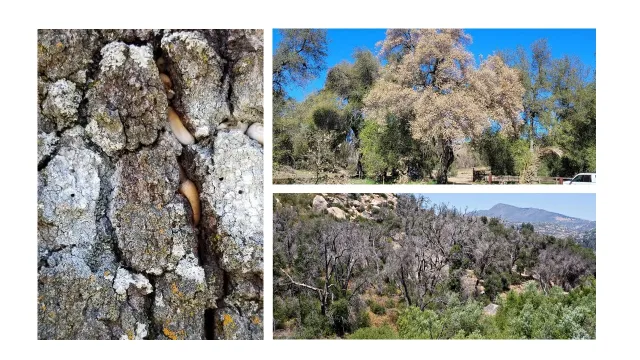
Clark remembers when she first learned GSOB was confirmed in her county. In summer 2024, she got the call from a local forester who was driving on a back road in an area called Box Canyon of the Simi Hills. Looking out the window, a coast live oak tree caught his eye.
“He saw die-back. He saw all the leaves on the crown were brown, which is one of the characteristic signs of a GSOB infestation,” Clark said.
Upon further inspection, the forester noticed the tree was dotted with D-shaped exit holes, the telltale mark that beetles had bored their way through the living tissue and emerged from the bark. That oak was considered an “amplifier tree,” an individual so riddled with beetles it posed an exceptionally high risk of spreading its infestation to the surrounding oak trees.
“That one tree was really dying fast,” Clark said.
A team of foresters including staff from CAL FIRE drove out to check the nearby oaks. Luckily, those trees were unharmed. But, according to Clark, that’s an ominous sign in itself.
The isolated nature of that infestation suggests the damaged tree was the victim of a human mistake. Clark believes someone unknowingly brought GSOB-infested firewood into Ventura County. That gave beetles an opportunity to flit from dead logs over to a promising new host – the nearby coast live oak.
“The beetles don’t fly very far. They spend most of their life inside the bark. So, infestations are almost always started by moving infested firewood,” Clark said.
Community urged to avoid moving firewood, stay vigilant for signs of beetle
California doesn’t penalize people who move firewood across distances, despite the risk of spreading GSOB and other invasive species. Biologists from UC ANR and other tree care professionals encourage lawmakers to implement quarantines on infested wood.
In the absence of government restrictions, responsibility rests on community members to be educated and cautious when handling firewood. For instance, campers planning a bonfire should buy wood at the campsite, rather than bring logs from home. Any unused wood should be left behind, a kindness to other campers and California’s oak trees.
Since GSOB were first detected in San Diego, far afield of their native range in Arizona, they’ve steadily expanded northward. Over the years, they've killed an estimated 200,000 oaks throughout affected counties in Southern California, according to research from UC Riverside. Unchecked, GSOB could expand their range all the way into Oregon.
In Ventura County, foresters removed that initially observed amplifier tree, debarking and chipping it to destroy the GSOB living inside. Despite the efforts to control the infestation at that site, GSOB has continued to spread, likely also related to the movement of infested firewood.
In 2025, another stand of infested oaks was observed in the Santa Susana Mountains of Ventura County, along Las Llajas Canyon Road. That outbreak, totaling at least five trees, is a known epicenter of GSOB activity in the region, but surveys have yet to be conducted in many other oak-dense areas of the county.
The lack of knowledge on the beetles’ latest whereabouts is concerning to forest managers and scientists, like those at UC ANR and CAL FIRE, the two agencies collaborating to lead GSOB education and management in Ventura County.
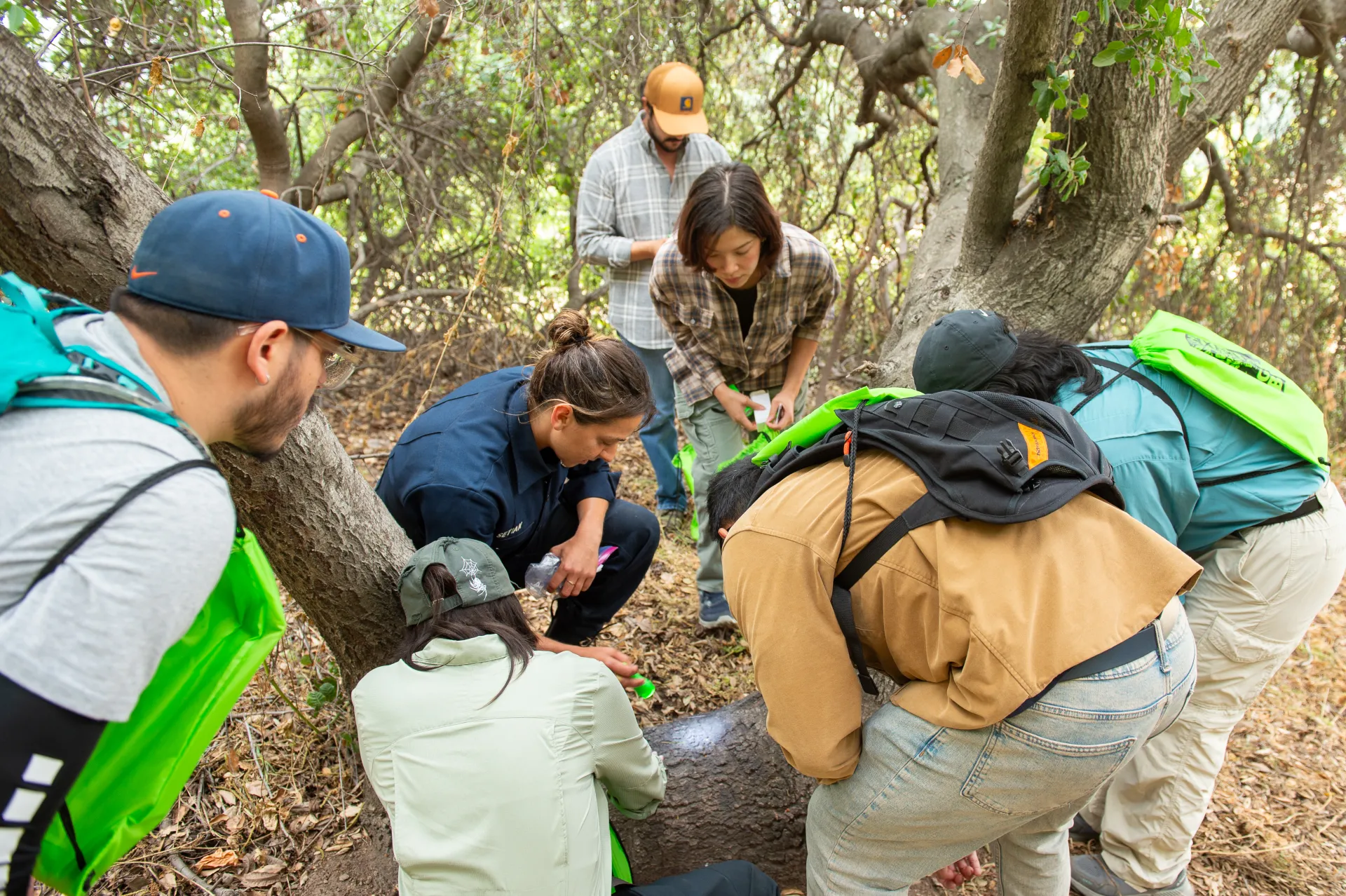
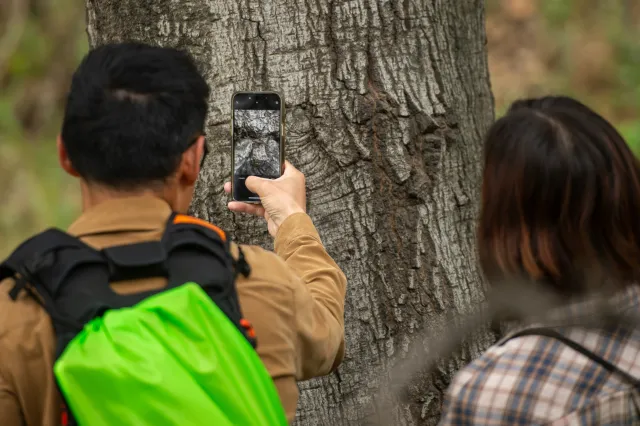
To identify new GSOB infestations, those collaborators are leading “GSOB Blitzes,” community science events where volunteers can survey for symptomatic trees and signs of infestation in parks and natural areas. The next GSOB Blitz is scheduled for Feb. 13, 2026 in Ventura County.
“We need the help of the public,” Clark said. “That’s why we want to get people trained to observe and report possible GSOB.”
Besides saving oak trees and raising awareness of the beetle, Clark says the event is an opportunity to get to know like-minded people.
“You're out in nature. You're with people that are curious like yourself,” Clark said. “It’s a great learning experience while protecting our local oaks. It’s also an exercise in true community.”
With Ventura now on the front line of the insect’s northward spread, surrounding counties need to be especially vigilant, according to Kim Corella, CAL FIRE forest pest specialist.
“By participating in a GSOB Blitz, residents become part of the solution – helping detect infestations early, addressing local hazards while preventing the spread to neighboring communities and counties like Santa Barbara and San Luis Obispo,” Corella said.
Ventura County GSOB Blitz 2026
Date: Feb. 13, 2026
Time: 10:30 AM - 2:00 PM
Location: Las Llajas Trailhead - Simi Valley: Las Llajas Canyon Trail-Google Map
Minimum age: Adults only
Contact: Julie Clark, jdclarkdeblasio@ucanr.edu, 805.645.1461
Learn More & Register: https://surveys.ucanr.edu/survey.cfm?surveynumber=47507
Those interested in receiving the latest general updates about GSOB can sign up at https://lp.constantcontactpages.com/sl/qT08FV0. More details about the fight against this destructive pest are available at www.GSOB.org.