

Constance Starner, UC Master Gardener
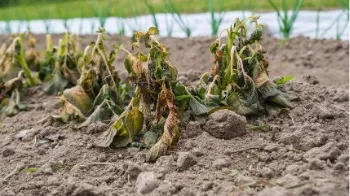
When you see leaves shriveling and turning black after a freeze, the plant is obviously damaged, but you may wonder exactly how that damage occurs. With a freeze, it’s the ice that forms in the plant cells when temperatures fall to 32°F or less, making water unavailable to the plant tissues and disrupting the flow of fluids. A short-lived freeze may not be enough to cause permanent damage, even to tender plants, but an extended period of 24 hours or more is dangerous.
Frost occurs when ice crystals form on the surface of the leaf, which can happen even when temperatures are above freezing, in the 33-36°F range. This may cause only minor damage to the plant, although the flowers and buds, which are more sensitive to cold, can be more severely damaged.
Most perennials, woody shrubs, roses, and small trees are adapted to cold, and in fact may need a period of cold temperatures to enter dormancy. The plants you should be most concerned about are annuals, vegetables, and subtopicals.
Right Plant, Right Place
It’s best to choose plants known to grow successfully in your climate zone. But even if you do, it is always possible we could experience unusual weather cold enough to damage even perennials and trees that have grown successfully in the area for years.
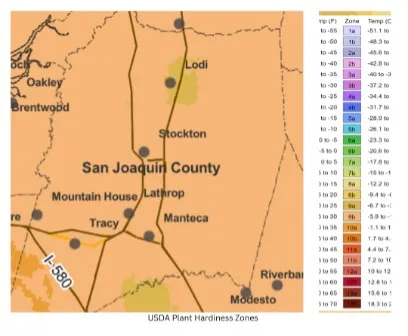
The USDA Plant Hardiness Zone Map is a resource for learning average annual extreme minimal temperatures in your area. The current version was modified in 2023 and was drawn from 30 years of data (1991-2020). Zone 1 is the coldest; zone 13 the warmest. This is just a guide; plants that aren’t expected to succumb to cold could be damaged, particularly if they are at the threshold of a zone. Conversely, plants that have adapted over the years to low temperatures may survive a cold snap that is outside the usual zone limits.
Stockton and most of San Joaquin County are in zone 9b, with average annual coldest temperatures from 20 to 25°F. This is slightly warmer than the 2012 map’s hardiness zone of 9a (20 to 25°F). The area around Lodi is slightly cooler than Stockton at zone 9a.
Sunset magazine’s climate zones consider not only average low temperatures, but also other important factors for choosing suitable plants: length of the growing season, timing and amount of rainfall, summer highs, and humidity.
Of course, knowing your plant’s hardiness zone alone is not sufficient—microclimates must also be considered. Cities tend to hold more heat in concrete and blacktop, as do houses and garden walls. Higher elevations tend to be cooler than lower ones, but cold spots can develop in low-lying valleys also. Within an area or even a backyard garden, these factors can make a significant difference in temperatures.
Moisture levels in the soil also affect a plant’s ability to withstand cold temperatures. If plants are too dry in late autumn, they are less resilient to cold as they enter dormancy.
Cold hardiness occurs gradually in the fall as the days shorten and temperatures cool. Thus, extremely cold weather early in the fall might do more damage than extreme cold later in the season. And unusually warm weather in winter followed by a cold snap is likely to injure plants that have started to put out new growth.
Preparing for Extreme Cold Weather
- Monitor the weather forecast and have a plan in place before cold weather strikes.
- If possible, bring potted plants indoors or to a sheltered place near the house. Cluster the pots close together.
- Prune dead or damaged branches before a freeze.
- Water your plants thoroughly before a freeze; keeping the soil moist around the base of the plant will help insulate it.
- Apply a thick layer of mulch to help insulate the roots, keeping it away from the trunk.
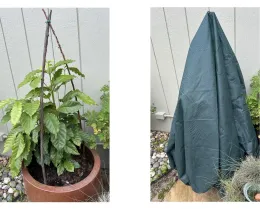
- Cover your vulnerable plants with blankets, bed sheets, or frost cloth. Plastic covers are not recommended—they can trap moisture and damage the plant. Be sure the cover reaches the ground to prevent cold air from seeping in. Remove the cover to allow air and sunlight to reach the plant once the temperature rises.
- Add warmth from an incandescent (not LED) light bulb, if necessary, particularly when temperatures drop to 28°F or less. 110–150-watt bulb holiday light at the base of a covered plant will help it stay warm.
- If frost damage does occur, do not rush to prune away the damaged areas. Wait several months to allow the plant to recover.
Sometimes gardeners choose a plant knowing it’s not in their climate zone but hoping they can make it thrive anyway (not recommended, but plant choices aren’t always entirely rational). For instance, USDA hardiness zones 10a-11b are recommended coffee trees (Coffea arabica). For someone who dreams of growing and roasting their own coffee beans in San Joaquin County, extra precautions will be needed in our hardiness zones of 9a and 9b, and even so, the plant may survive without fully thriving.
Additional Considerations
A few other thoughts, taken from the UC publication Frost Protection for Citrus and Other Subtropicals, include:
- When growing citrus or subtropical plants, choose varieties that are more resistant to cold. Satsuma mandarins and kumquats are citrus trees less sensitive to frost, lemons and limes are highly sensitive, and oranges and grapefruits fall in the middle of the scale. Within each type of tree, there are some varieties better able to handle cold temperatures. For avocados, Mexican varieties such as Bacon, Mexicola, and Duke are hardier than Guatemalan varieties such as Hass and Nabal.
- Young trees are more vulnerable, but as trees mature, they become less susceptible to frost.
- Avoid low areas when planting subtropical trees, as well as areas exposed to cold prevailing winds. Choose a site in full sun site near a structure or wall that will absorb and reflect heat.
- Do not fertilize or prune subtopicals after early summer, so that new foliage will have a chance to mature before a freeze. Fertilizing and pruning and will encourage tender new growth.
- If the temperature falls to 29°F or below for 30 minutes or longer, frost damage to tender citrus plants will likely occur, first to the fruits, then to other structures if the temperature continues to drop. Frost-damaged fruit can be used soon after the frost, but it will begin to deteriorate within a few days, depending on storage conditions.
Although excessive heat may be more of a concern than frost or freezes in our area, it is wise to plan how you will protect your tender plants if extremely cold weather strikes.
For Additional Information:
Freezing Temps Expected across California and How to Protect Your Plants
How to Protect Plants from Frost and Freeze