
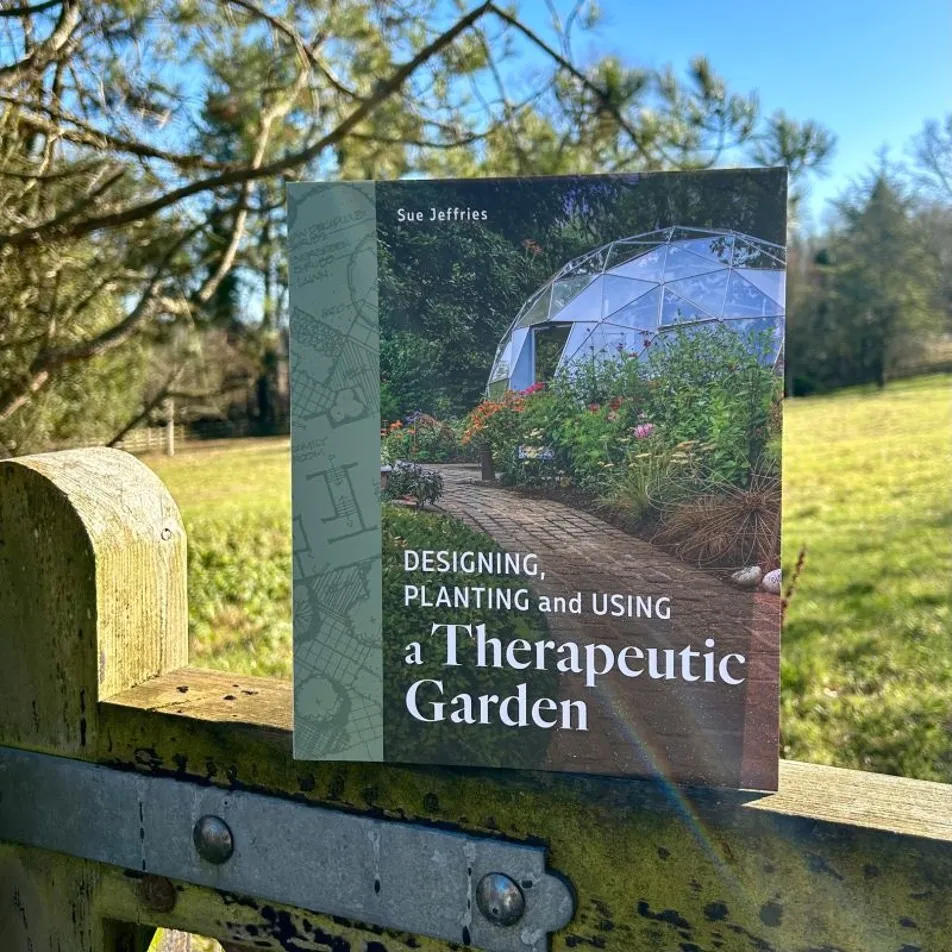
Designing, Planting, and Using a Therapeutic Garden
by Sue Jeffries
In the classic 1970 folk song, “Woodstock,” Joni Mitchell opined “…and we’ve got to get ourselves back to the garden.”
In fact, data suggest that 60% of us spend less than 30 minutes per day outdoors, 30% of us less than one hour per day, and just 10% of us spend an hour or more outdoors. It does seem that the post-modern lifestyle has swapped the great outdoors for the great indoors. While the literature suggests that direct exposure to or interaction with nature is essential for both physical and mental health, Richard Louv contends that we suffer increasingly from “nature deficit disorder” (NDD).
It is argued that horticulture therapy (healing through gardening) can help with cognitive, social/ emotional, spiritual, and physical health and well-being. It has been found to be especially instrumental in the functional health of clinical groups such as the elderly and disabled. Going way back to the Egyptians, Babylonians, and the founders of western monasticism, greenspace has proven a vehicle and venue for restoration. With a long history as hunters, gatherers, and farmers, we are perhaps genetically wired for spending some time in activity experiencing wind, sun, chirping birds, smell, touch, and other sensations conducive to mindfulness.
Sue Jeffries’ book, Designing, Planting, and Using a Therapeutic Garden, addresses these issues head on. She has 15 years of experience in developing and delivering garden projects to a wide range of people and organizations. Her book is a practical guide to evaluating garden sites and assessing user groups’ needs. It also includes detailed advice on designing and planting therapeutic gardens to meet specific requirements. In addition, there is a wealth of ideas for therapeutic gardening activities and interactions with plants throughout all seasons of the year.

The book’s 224 pages are neatly divided into four comprehensive parts: 1) getting started, 2) design considerations, 3) therapeutic activities, and 4) plant considerations. Its twelve chapters address such subjects as:
- The science behind therapeutic gardening
- Planning a survey
- Use of space to encourage interaction/movement
- Health and safety issues
- Suitable indoor/outdoor seasonal tasks, including a list of 40
- Means of attracting wildlife, focusing upon edible gardening
- Ways to encourage sensory stimulation
- A conceptual blueprint for features, structures, views, seating, paths etc.
- Key plant suggestions, including 100 different plants
- Design considerations
- Therapeutic activities
This book is enriched with many illustrations, pictures, sketches, graphs, charts, and tables. The writing style is, despite the inclusion of technical plant and horticulture terminology, quite readable.
Gardening invites opportunities for a variety of activities, each yielding benefit: physical, cognitive, social/ emotional, and/or spiritual:
- Physical. Digging, planting, weeding raking, watering, sweeping, turning compost, spreading mulch, pruning/trimming. These tasks involve gross motor, fine motor, and visual motor skills while bending, stooping, reaching, twisting, etc. Such a workout can help with strength building, stamina, balance, and coordination. These activities help with respiratory, cardiovascular, and skeletal/muscular development.
- Cognitive. Paying attention, remembering, decision making, problem solving, learning, planning, organizing, anticipating, and making notes and lists.
- Social/emotional. If we have physical limitations, we can make use of a partner/companion to help with tasks we are unable to do alone. Gardening allows for nurturance in helping others or making gifts of one’s own garden produce whether floral, vegetable, or herbal. Gardening activities contribute to the reduction of stress hormones (cortisol) and augmentation of feel-good chemicals (endorphins, serotonin). Achievement itself generates a positive mood, boosts self-esteem, and a sense of well-being.
- Spiritual. By connecting with nature and ourselves, gardening offers stillness, quietude, and solitude in a balance of action and contemplation. The experience of sunshine, clouds, wind, bird chirps, and the smell of foliage introduces us to gratitude, appreciation, awe, and wonder for all we have hitherto failed to notice and/ or taken for granted.
This excellent book also provides a chart of seasonal therapeutic activities. Check out Jeffries’ website for more information on her therapeutic gardening consultancy. She is in the UK, far from San Joaquin county, but the information is still fascinating.
Seasonal Therapeutic Activities | ||||||
Outdoor | Indoor | Standing | Seated | Gross Motor | Fine Motor | |
| AUTUMN | ||||||
| Collecting summer seeds | X |
| X | X |
| X |
| Leaf raking | X |
| X |
| X |
|
| Bulb planting | X |
| X |
| X |
|
| Seed sowing annuals | X | X | X | X |
| X |
| Seed sorting, storage |
| X | X | X |
| X |
| Drying seedheads | X | X | X | X |
| X |
| Selecting spring bulbs |
| X | X | X |
|
|
| WINTER |
|
|
|
|
|
|
| Compost turning | X |
| X |
| X |
|
| Hedge trimming | X |
| X |
| X |
|
| Mulching | X |
| X |
| X |
|
| Planting woody plants | X |
| X |
| X |
|
| Annual flower planning |
| X | X | X |
|
|
| Planting indoor bulbs |
| X | X | X | X |
|
| Wreath making | X | X | X | X |
| X |
| SPRING |
|
|
|
|
|
|
| Planting hardy plants | X |
| X | X | X |
|
| Sowing outdoor seeds | X |
| X | X |
| X |
| Container planting | X | X | X | X |
| X |
| Seed sowing indoors |
| X | X | X |
| X |
| Thinning out seedlings | X | X | X | X |
| X |
| Creating plant supports | X | X | X | X | X | X |
| Arranging flowers |
| X | X | X |
| X |
| SUMMER |
|
|
|
|
|
|
| Planting tender plants | X | X | X | X |
| X |
| Collecting spring seeds | X |
| X | X |
| X |
| Deadheading flowers | X |
| X | X |
| X |
| Succulent pot garden |
| X | X | X |
| X |
| Collecting, pressing flowers | X | X | X | X |
| X |
| Cuttings | X |
| X | X |
| X |
| Seed sowing biennials |
| X | X | X |
| X |
Author: John Giehl, UC Master Gardener