

April fertilizing and deadheading
After your roses have completed their first bloom, it will be time to deadhead and feed them. You should get a nice second bloom about six weeks after fertilizing. Remember, deadheading is not the same as pruning. There are two steps to deadheading. When the flower is “finished” blooming, pinch or cut it off at the base of the flower where it joins the stem. This will allow any remaining buds or blooms to continue flowering. When the roses on the stem are finished blooming, remove the flowering head by cutting the stem just above the first leaf with five leaflets. After you do this, cut any disproportionally tall stems back to the height of the rest of the plant, creating a nice round shape as you go.
Good and bad bugs
One of the benefits of growing California native plants near your roses is that they attract the beneficial insects that eat harmful insects. They create a nice balance in your garden so you don’t have to spray insecticides that can harm honeybees (and humans too!).
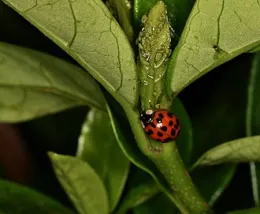
Check both the top and underside of your rose leaves for little unwanted critters. The weather we are having is perfect for aphids. I did see some on my roses the other day and blasted them off with a hose. I also saw a lady bird beetle (aka ladybug), so I don’t want to use any pesticides as the ladybugs are beneficial for the garden. Their favorite meal is aphids. If you want to learn more about aphids and how to manage them in the garden, here is a link to the UC page on aphids.
This is also the time of year (and weather) where you might spot some tiny webs on your rose leaves/stems. The likely culprits are spider mites. Don’t confuse them with garden spiders. Garden spiders are beneficial and will eat unwanted pests. Spider mites are not garden spiders, they are mites. If you see them, don’t ignore them. Again, hit them with a blast of water from your hose. They can kill a rose plant pretty quickly. Make sure you blast the undersides of the leaves and stems as well. Do this at least daily until they are gone. You can also use dormant horticultural oil (not cooking oil or mechanical oil) if the weather is not going to be over 80 degrees F. If the weather is hotter, the oil can burn your plants. As I said last month regarding pesticides, don’t spray if it is going to rain, wear protection, and don’t spray in the afternoon when bees and beneficial insects are in your yard
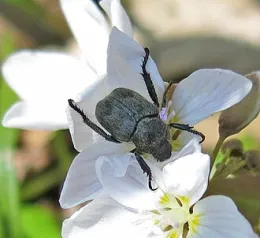
The third bug, which may come out this month are hoplia beetles. Some people freak out and think they are Japanese beetles. They aren’t. hoplia beetles love light colored roses (and some irises!). There is not much you can do for them other than squish them (wear gloves if squeamish like I am), or shake them into a bucket of soapy water to drown them. I have found that the soapy bucket method only works about 50% of the time. So, squishing them is my preferred method. Some people cut off all the blooms on their roses to get rid of them. I worked and waited so long for those flowers, I am not willing to do that, but those who do this claim it works. These little buggers usually arrive in late March and last until the beginning of June. At that point, they are gone until next spring. They will make lots of holes in your beautiful blooms and leave a mess.
Fungal diseases
OK, enough about bugs. I shall touch briefly on fungal issues. Check your roses for botrytis. If you see fuzzy brown or gray areas on your buds or leaves, chances are it is botrytis. Normally we don’t get fungal diseases here, but we have had unusual weather. I don’t use fungicides. If I see a rose bud or leaf with botrytis, I cut off the offending part (aka, leaf or bud) and dispose of it. I make sure I have air circulating around my rose bushes and that they get the necessary sun to grow. I am on a drip system, but if you use sprinklers, only run them in the morning so the leaves have time to dry. I make sure there are no dead rose leaves under my rose bushes as they can harbor fungal diseases. So, make sure the areas under your roses are clear of fallen rose leaves.
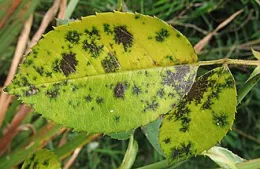
Another fungal disease you might see on your rose bushes is black spot. It looks just like the name says, black spots with sometimes feathery margins on your rose leaves. The spores of this fungal disease spread by splashing water, so don’t sprinkle your rose plants at night. There are also rose varieties that are black spot resistant. So, look for those if black spot is a problem in your garden.
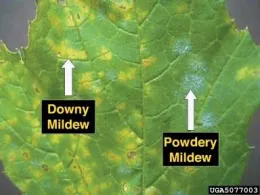
A more common fungal pest is powdery mildew. It shows up as a white patch of spores on your leaves. There is also downy mildew, which we don’t normally get here due to our weather. But I have had it occur in my garden in the past, during very rainy winters
The best way to control powdery and downy mildews is prevention. Have your roses in a sunny location. Don’t use sprinklers at night. Clean up dead leaves around your rose bush as the leaves can harbor the spores. Click on the hyperlinks to find out more.
Rose classes
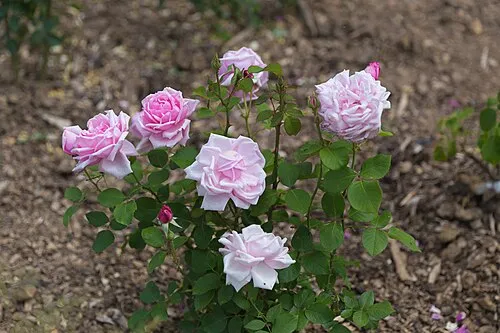
Did you know that roses are divided into different classes? A rose class is a grouping of similar characteristics that roses share such as parentage, bloom frequency, historical origin, etc. There are three main groupings: Species or wild roses; Old Garden Roses (classes in existence before 1867) and Modern Roses (classes in existence after 1867). Why is that date so important? That date was the first introduction of the hybrid tea rose, ‘La France.’ Hybrid tea roses are the ones that are generally sold by florists for special occasions like Valentine’s Day, etc. They are those roses on long stems with a single bud and flower.
I will cover (very briefly) the different rose classes over the next couple of months. Depending on your special garden conditions and/or interests, you might want to examine these types of roses and include them in your garden. They are worth it!
The European rose class is exceptionally fragrant, usually only blooms in the spring and are cold hardy. This class includes Damask and Cabbage roses.
China roses, which were introduced to Europe in the late 1700s, are roses that bloom repeatedly. They generally have few thorns and can handle high humidity.
Until next month
I hope all of you are enjoying your beautiful roses this month. “If I had a rose for every time I thought of you, I’d be picking roses for a lifetime.” - Swedish Proverb
_________________________
Written by UC Master Gardener Debbie D.