

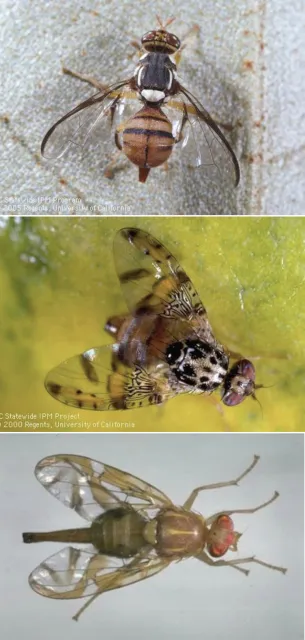
There are thousands of species of fruit flies in the world. Many aren't a threat to California, but a handful of fruit flies not native to the state have the potential to ruin our backyard fruit production and cause billions of dollars in damage to the agriculture industry.
“The most harmful fruit flies can develop in many types of fruit,” said entomologist Eric Middleton, UC Integrated Pest Management advisor. “And they do show up in California almost every year.”
Middleton spoke at a webinar hosted by UC Cooperative Extension to mark California Invasive Species Action Week, June 6 – 14. He said there are three areas in California with active fruit fly quarantines in place.
Oriental fruit fly
Reproducing Oriental fruit flies were found in Riverside County in 2023 and 2025. Following established protocols, CDFA immediately began aggressive management measures within a 200-meter radius of the finds. All fruit was stripped from residential trees. Protein-based bait traps laced with the organic pesticide Spinosad were deployed to attract and kill female flies. Males were lured into traps with the irresistible scent of methyl eugenol – a chemical related to the flies’ ability to attract mates – and then killed by the accompanying pesticide.
Within a 1.5-mile radius, farmers were required to treat their orchards and crops to be able to continue to provide fruit to the market.
Mexican fruit fly
Mexican fruit fly has appeared in California from time to time, Middleton said. Last April, CDFA established a quarantine for Mexican fruit fly in eastern San Diego County. Mexican fruit fly is larger than a housefly and will lay eggs in a wide array of fruit trees. Unlike Oriental fruit fly, it doesn’t lay eggs in vegetables and certain citrus and avocado varieties.
The quarantine and eradication protocol for Mexican fruit fly is like Oriental fruit fly, however rather than using the chemical attractant for males officials release hundreds of thousands of sterile male flies from airplanes to dramatically reduce successful breeding.
Mediterranean fruit fly
Last year CDFA established a quarantine in Santa Clara and Alameda counties after finding breeding Mediterranean fruit flies. Sterile male fruit flies are also used to control the Medfly in this Bay Area quarantine area. In Los Angeles and Orange counties, where aerial pesticide sprays for Medfly generated controversy in the 1990s – CDFA uses a preventative approach, releasing sterile males in large numbers in the area to prevent establishment.
What gardeners can do
Most of these fruit fly invasions start inside residential areas, Middleton said, emphasizing the important role home gardeners and residents play in preventing infestations and detecting them quickly. In general, he said, home gardeners can help by keeping their fruit and host plants at home and never transporting them to other areas.
“If you aren’t processing or eating your fruit, don’t leave it to rot in or under the tree. That’s fruit fly breeding habitat,” he said.
If fruit flies are detected, document the find. “Take a picture, then try to catch the insect,” Middleton advises.
Double bag any infested fruit specimen and put it in the trash, not a compost pile or green waste bin. Report sightings to CDFA by calling (800) 491-1899 or contact the local UC Cooperative Extension office.
For more information about invasive fruit flies, visit CDFA’s Invasive Fruit Fly Quarantines in California website.
_________________
Written by UC Master Gardener Jeannette Warnert