
Joint UC Davis, USDA research is evaluating calcium spray and wine chemistry
Smoke from wildfires can alter grapes and affect the taste and sensory experience of wine, threatening California’s $88 billion industry as it faces an increase in fires on the horizon.
Researchers from the University of California, Davis, and U.S. Department of Agriculture spent this summer applying a calcium spray to grapes to see if the treatment can protect the fruit from smoke exposure.
“Wildfire smoke exposure can lead to something called smoke taint in wines and this is an unfavorable sensory outcome in the wines themselves that relate to smoky, ashy flavors,” said Arran Rumbaugh, a USDA research chemist who works closely with the Department of Viticulture and Enology and helps mentor students. “We want to see how we can affect the absorption itself of smoke into the grapes by using a calcium spray.”
Vineyard research
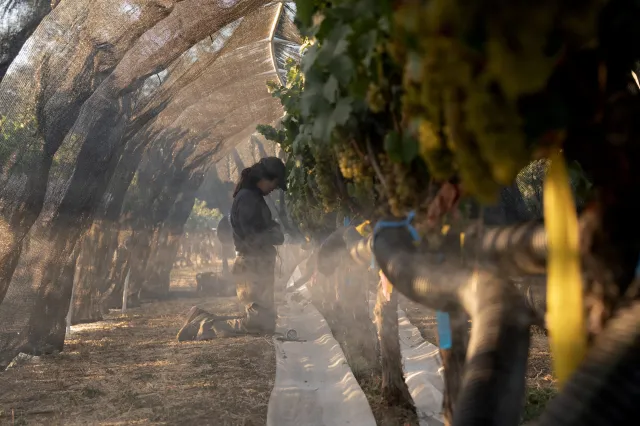
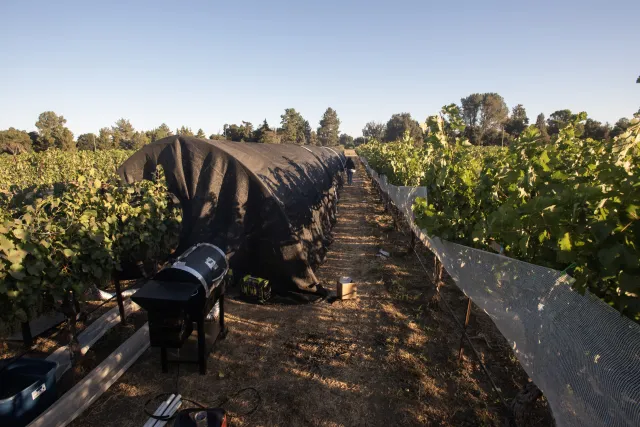
The experiment took place in the vineyard behind the Robert Mondavi Institute for Food and Wine Science where 10 cabernet sauvignon and chardonnay vines under hoop houses protected by shade screens were intentionally exposed to smoke produced from pellets made up of oak, grass, pine and other materials. A control group of vines were not exposed.
In grapes, calcium is known to support disease resistance, prevent cracking and strengthens skin and cell walls, said Arpa Boghozian, a doctoral student in the Department of Viticulture and Enology at UC Davis, who helped design and lead the research.
The calcium spray was applied twice during the growing season as the veraison stage, which is when berries begin to ripen and reach full size, and two weeks later, Boghozian said.
“Our hypothesis was that by applying calcium we could further thicken the grape skin cell wall and decreasing absorption of smoke into the grapes,” Boghozian said.
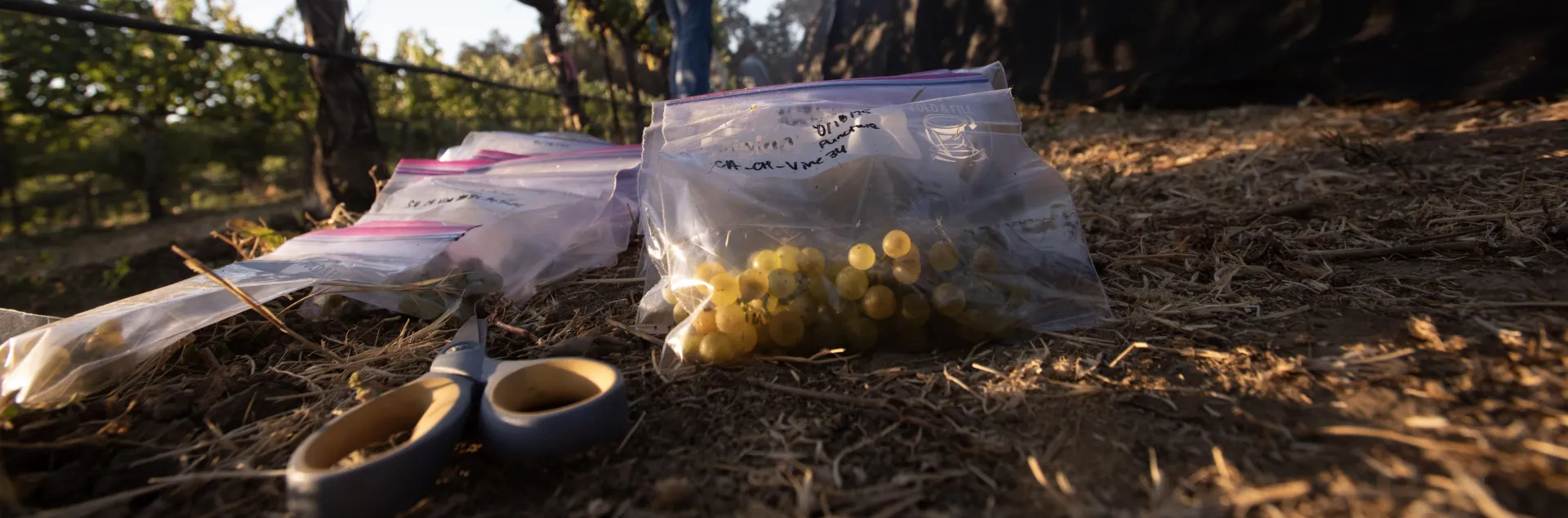
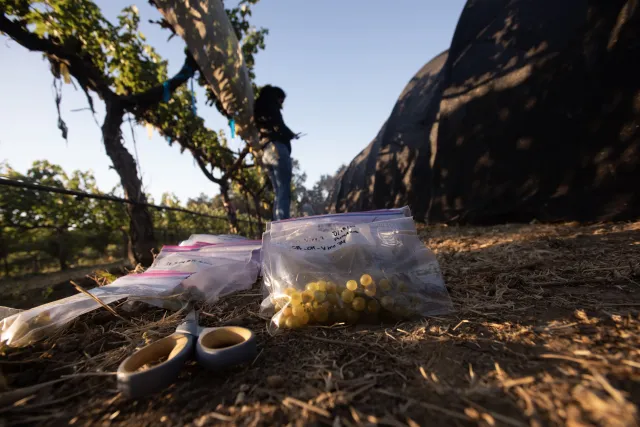
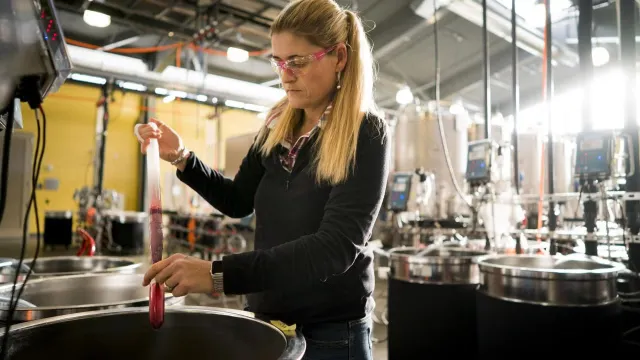
Samples of the exposed and control grapes were collected. Some were turned into wine for chemical analysis while hundreds of other grapes were peeled, punctured and tested.
“We’re trying to understand with a puncture test did it actually strengthen the integrity,” Boghozian said.
Chemical and texture analysis
This work carries on research by wine chemist Anita Oberholster, a Cooperative Extension speacialist who died last year. Oberholster was an early researcher in smoke taint and developed innovative methods to test grapes for exposure. Rumbaugh worked in her lab and Boghozian did as well, though she primarily studies red blotch disease.
“It’s been definitely really special to continue what Anita was passionate about and collaborate on research,” Boghozian said.
Analysis is ongoing and the research team hopes to publish findings later this year or early 2027.
This article was first published on the UC Davis News page.