

California Native Plant Foods Celebration and Symposium to be held at UC Davis on Feb. 10

For California’s Native people, plants are part of their extended family. For thousands of years, they have tended and gathered plants that provide food and other resources in a web of relationships that embrace the land on which the plants grow, the practices used to cultivate, harvest and prepare them, their nutritional value, the management of their larger environment and more.
This web of food-centered relationships will take center stage at the California Native Plant Foods Celebration and Symposium, a first-of-its-kind event at the University of California, Davis. It will be held from 7 a.m. to 7 p.m. Tuesday, Feb. 10, at the UC Davis Conference Center. (Editor's note: Event registration is currently full.)
“I’m delighted to have the opportunity to host this symposium on this very important topic,” said lead organizer Dan Potter, chair of the UC Davis Department of Plant Sciences. “Foods made from California’s native plants make all kinds of connections to issues of cultural sovereignty, food security and land management. This event is meant to inspire dialogue. We’ll share ideas, explore options and see what comes next.”
Tribal leaders will join with researchers, students, food professionals, business owners and members of the broader community. Their goal: Consider the role of Native food plants in reimagining how we can better manage our shared landscapes in the face of change and uncertainty.
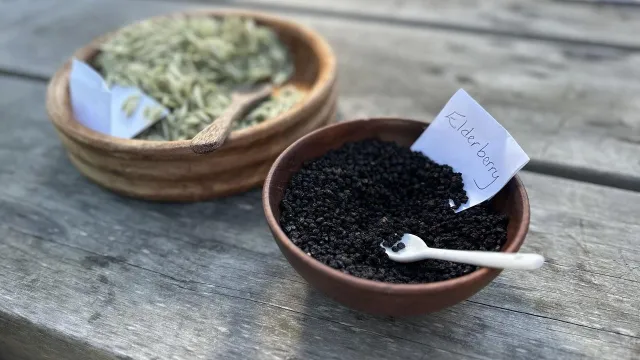
Participants can taste Native plant foods such as acorns, berries and black walnuts, and see how they are prepared. Meals will center on supporting local and Indigenous-led businesses, and on bringing ecological knowledge of traditional foods to the plate.
Panelists include Dirk Charley, Tribal liaison with the Dunlap Band of Mono Indians. Now retired from the U.S. Forest Service, he links Native plant foods to stewarding Tribal lands that have been impacted by fire.
“These food and cultural resources can ‘come back’ in a good way, if we work together with all people and entities involved in the post-fire restoration efforts,” Charley said.
Florence Dick will demonstrate using Native plants as non-food resources. She is a Tribal council member of the Dunlap Band of Mono Indians and an expert in gathering and weaving traditions.
“I will be showing how to make string, twine and rope from flannel bush,” Dick said. Also known as California flannelbush, the large, flowering shrub is native to diverse habitats in the American Southwest. “I’ll also be talking about different natural basket-making materials,” she added.
“This promises to be an educational, engaging and fun day!” Potter said.
Seeking partnerships to forge a healthy future for all

Potter and fellow organizers hope the event will lead to a framework for respectful and mutually beneficial cooperation between Tribes and academics across disciplines. Organizers also hope to bring Native participation and leadership into consideration of policy.
“We have an opportunity to shape policies that respect Tribal sovereignty and ecological knowledge,” wrote Michelle Villegas-Frazier. “Collaboration across disciplines and communities is key to creating sustainable food systems for future generations.” She is a member of the Pomo Pinoleville community and director of the UC Davis Native American Retention Initiative, among other positions.
The event comes amid a larger movement nationally to increase Native peoples’ access to food that is both healthier and culturally more meaningful than what is currently available to many communities. Native Americans are less likely to live near grocery stores and more likely to experience diet-related health problems than the national average, studies show. These efforts often involve Native people in land stewardship, with ecological benefits for everyone.
The path to get there includes opportunities for “exchanging mutually beneficial ideas” among “public agencies, private corporations, educational institutions, Tribal governments and tribal community partners,” Charley said. In addition, he hopes events like this would “increase our standing, as the original land stewards, with federal, state and local government agencies and private property owners."
By bringing people together, the symposium can work toward shared visions. “It provides the chance to share our cultural knowledge with the conference attendees, (and for them) to gain an appreciation and respect for our customs,” wrote Lois Conner Bohna. She is a member of the North Fork Mono community and will demonstrate traditional acorn processing.

“My hope is to see our food traditions and the accompanying stewardship thrive where we live, for the health of our Native communities and our lands,” Conner Bohna added. “Interested researchers, fire practitioners, government officials and the public can help us achieve these goals.”
Foodways: More about the Celebration and Symposium
The web of food-centered relationships traditionally lived by Native Californians is also called foodways. Aspects of Native foodways and how to revitalize them will be explored in panel discussions during the California Native Plant Foods Celebration and Symposium, including:
- Access to land and its stewardship;
- Nutrition and health;
- Bringing traditional foods to market and scaling production ethically; and
- Communicating traditional food knowledge to future generations.
See more information about the event.
Here’s a map locating the UC Davis Conference Center.
Supporters make this event possible
This event is made possible by the support of sponsors, donors and partners. Their generosity also makes this gathering accessible to students, Tribal community members and practitioners.
“I’m excited and inspired by the high levels of interest we’ve seen and deeply grateful for all of the support we’ve received in the form of sponsorships from campus units, Tribal and nonprofit organizations, and companies,” Potter said.
Supporters include: The Green Initiative Fund, UC Davis; the UC Davis College of Agricultural and Environmental Sciences; the California Native Plant Society, and the society’s Sacramento Valley Chapter; the Federated Indians of Graton Rancheria; the Shingle Springs Band of Miwok Indians; the Farmhand Foundation; the Watershed Nursery; and Seka Hills winery.
Additional supporters from UC Davis include: the Department of Plant Sciences; the Yocha Dehe Endowed Chair in the Department of Native American Studies; the Department of Nutrition; the School of Education; the School of Medicine, The Nest Native American Academic Retention Initiative; and Grand Challenges, an initiative seeking holistic solutions to global problems.
This article was first published on the UC Davis Plant Sciences news page.