
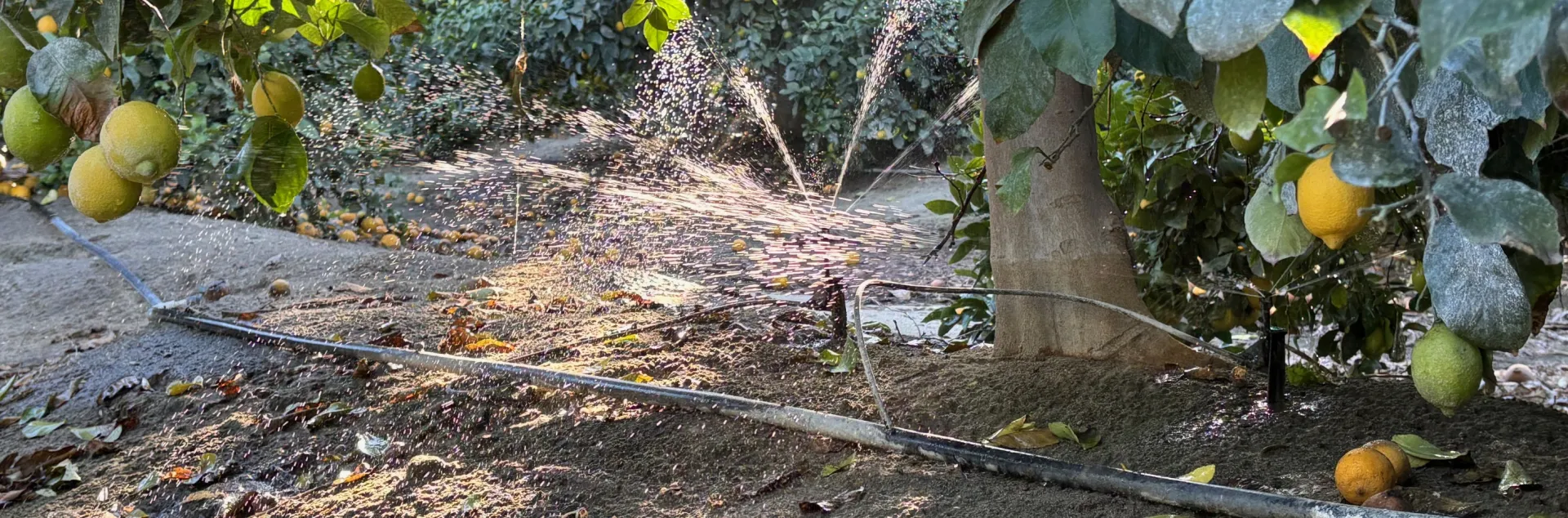
UC experts, partners, field visits to provide practical insights for optimizing irrigation
In a time of increasing water scarcity and regulatory complexity, enhancing irrigation efficiency and improving on-farm water management practices are critical for California agriculture. Microirrigation – using highly efficient, low-flow and low-pressure systems that deliver water and nutrients close to plants’ roots – is one key solution.
“Microirrigation is no longer optional in many agricultural production regions worldwide,” said Daniele Zaccaria, professor of agricultural water management for Cooperative Extension at University of California, Davis. “It is essential for producing more food per unit of water and for achieving higher fertilizer use efficiency, relying on greater application precision and pursuing improved environmental stewardship.”
Zaccaria is organizing the 2026 Advanced School on Microirrigation for Crop Production, offered in California for the first time, from March 30 to April 3 (register by March 25).
This comprehensive program combines three days of classroom instruction at UC Davis with two days of field visits, including fruit and nut production systems in the San Joaquin Valley and vegetable, berry and wine-grape systems along the Central Coast. There is also an online option for the first three days of the program.
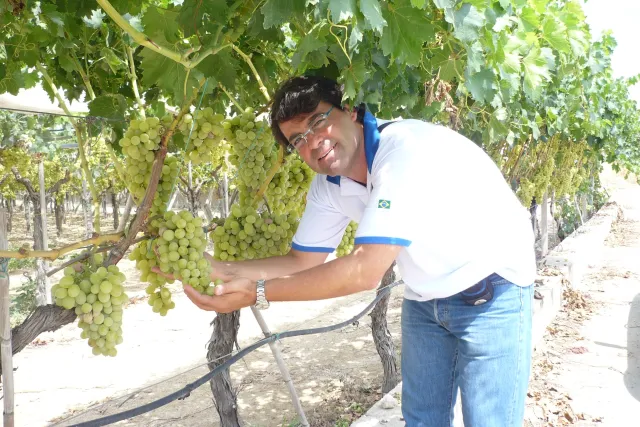
The school is designed for a broad audience, including farmers and ranch managers, crop consultants, water resource planners and irrigation practitioners, as well as scientists, educators, students, and personnel from a variety of agencies and sectors.
“This offers a unique, hands-on opportunity to learn directly from global leaders in the field, combining cutting-edge science, real-world applications and field experience,” Zaccaria said. “It’s an excellent investment of time for anyone committed to the future of crop production in semi-arid and arid environments.”
The educational event is co‑organized by the UC Davis College of Agricultural and Environmental Sciences, UC Agriculture and Natural Resources, the Chilean Water Technology Consortium and the California Irrigation Institute.
Lectures – presented by prominent experts from UC Davis, UC Cooperative Extension and other academic, agency and private partners – will draw on the latest research, technologies and practical applications.
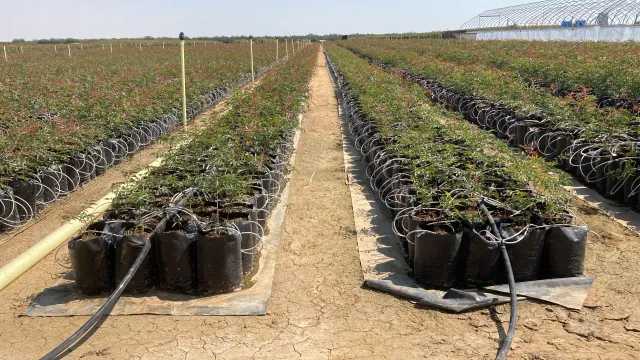
Topics include:
- Technical aspects of water delivery systems to allow for successful adoption and management of microirrigation systems
- Soil-water movement and soil-plant-water relations with microirrigation
- Microirrigation systems design, operation, maintenance, automation and performance evaluation
- Methods and tools for microirrigation scheduling
- Managing microirrigation for different crops (field and agronomic crops, vegetable crops, berry crops, fruit crops, nut crops, vineyards)
- Chemigation and fertigation
- Salinity management with microirrigation
All participants will receive:
- A UC Certificate of Completion
- A copy of the book Microirrigation for Crop Production, recently published by Elsevier
- Continuing Education Units (18.5 CEUs for lectures and 9.5 CEUs for field visits) from the American Society of Agronomy, as well as CEU credits from the Irrigation Association
Register soon to secure your spot, as class size is limited to 100 participants to ensure an optimal learning environment.
For the full program schedule, speaker lineup and a link to register, visit https://caii.org/international-micro-irrigation-school/.
Registration for the online option is at: https://caii.org/product/micro-irrigation-school-lectures-remote-streaming-registration/.
Zaccaria’s work in organizing the Microirrigation School is made possible by his Alexander and Elizabeth Swantz Endowed Specialist Position and related funds from the UC Davis College of Agricultural and Environmental Sciences.