UC Environmental Stewards assistant director inspires climate communication, action
“God gave me this voice. He let me talk!” retorted two-year-old Sarah-Mae Nelson, with hands on hips.
An indignant Sarah-Mae was responding to her grandmother, who was having conversation with a visitor at their house and trying unsuccessfully to shush the precocious toddler. It was an anecdote that would live long in family lore – and speaks volumes of Nelson’s voice and character.
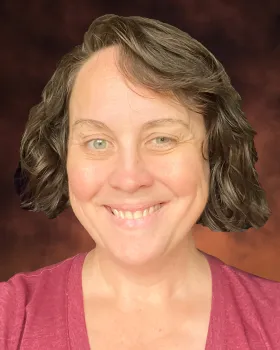
“I was a very chatty kid; if you think I'm chatty now, I was worse as a kid,” said Nelson, assistant director of the University of California Environmental Stewards program. “From what all of my elders have told me, I would talk about anything to anyone for any length of time; as long as I was awake, I was talking!”
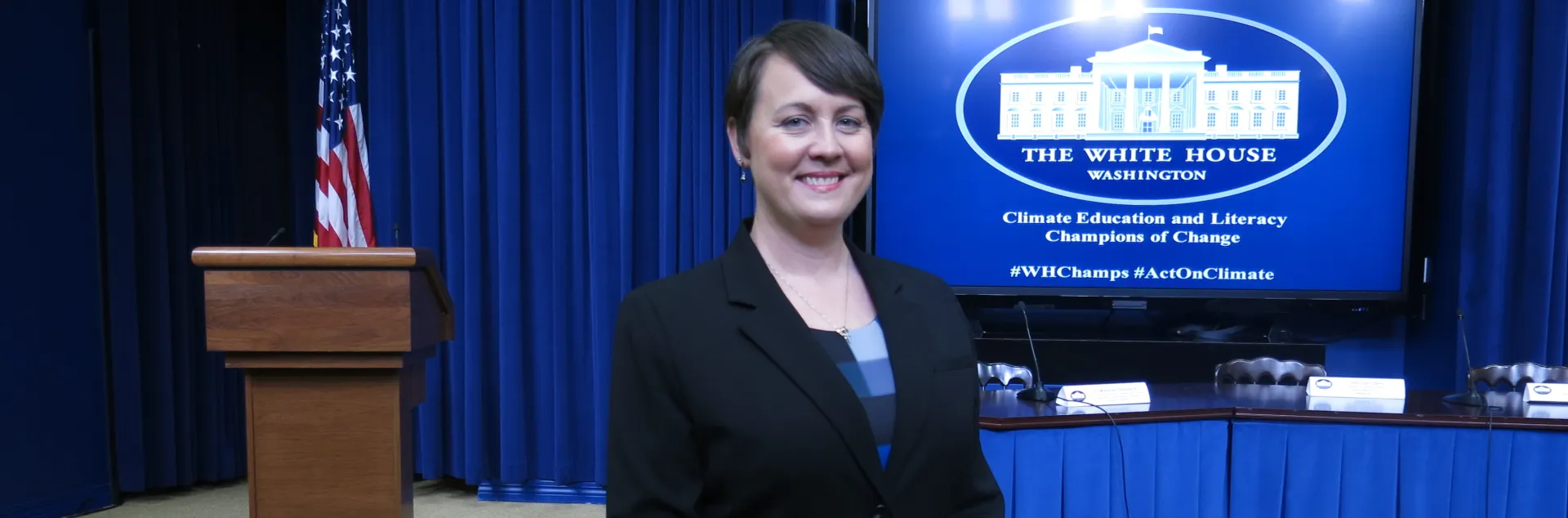
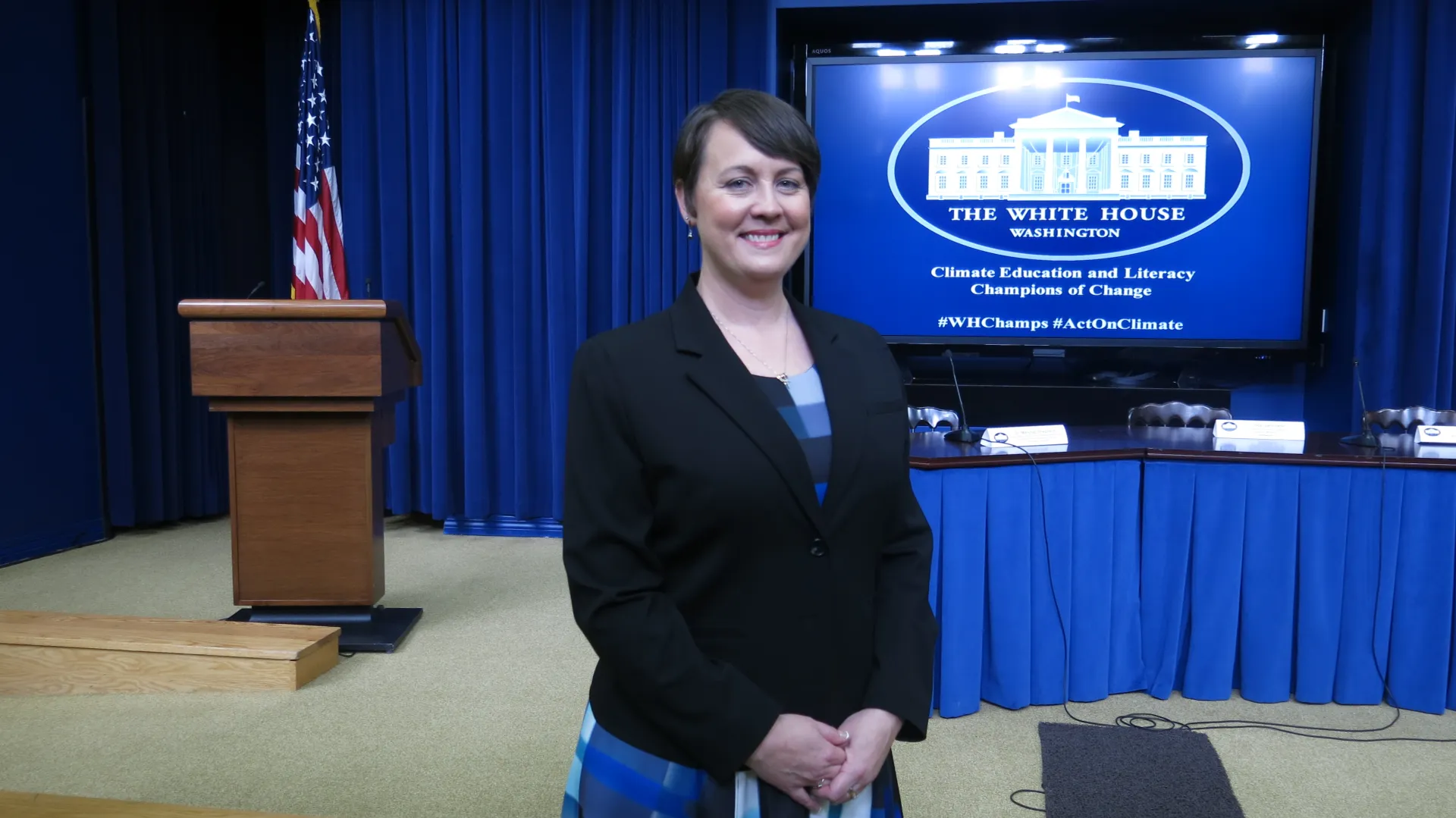
The natural-born communicator has taken that gift – along with her scientific interest and acumen – and translated them into a distinguished career in environmental education. She was recognized by President Obama in 2015 as a Champion of Change in Climate Education and Literacy, and in 2024 she was honored with a Lifetime Achievement Award by the California Association for Environmental and Outdoor Education.
“First of all, getting a lifetime achievement award when you're 45 feels really weird – you’re like: ‘Is it over?’” Nelson said jokingly.
With Women’s History Month themed around sustainability in 2026, UC Agriculture and Natural Resources is proud to recognize Nelson’s ever-growing legacy and her efforts to secure a healthy and thriving future for our planet.
It has been Nelson’s life work, from a very early age.
Nelson grew up with conservation ethic, environmental consciousness
Nelson was brought up in what she described as a “very conservative” family in Santa Clara County. Her father, grandfather, uncles and cousins all fished and hunted. She got her first fishing pole when she was two.
“We were outdoors people – people who depended on the natural environment for some of our food. My great-uncle was also a cattle rancher, and every year family members purchased a steer from him to fill our freezers for the year,” she recalled. “We knew that if you don’t take care of what brings you your food, then your food is not going to exist. So, I grew up being taught to conserve things, to protect things, to take care of life.”
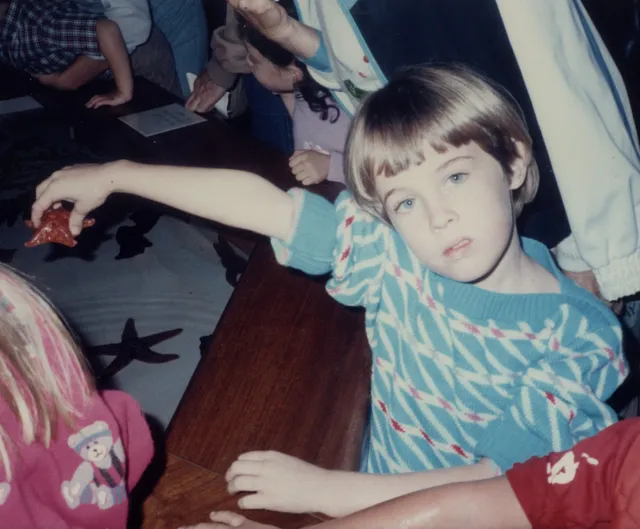
That sense of stewardship was also taught in her private Christian school, which she attended from kindergarten through high school. But an abiding concern for the planet’s environmental plight came from a different source – an issue of Ranger Rick magazine.
In that 1990 issue, Nelson read a story about a young woman who crash-landed her spaceship on a strange planet completely covered in garbage. One of the planet’s inhabitants helps repair the ship, and as the space traveler prepares to leave, she asks the creature: “What is the name of this planet?” And the creature replies: “They used to call it Earth.”
“As a 10-year-old who was being raised very environmentally aware, I was like, ‘Not on my watch!’” said Nelson. She subsequently made sure all household recycling was separated and any neighborhood trash was picked up, and she insisted that family members limit their showers to three minutes.
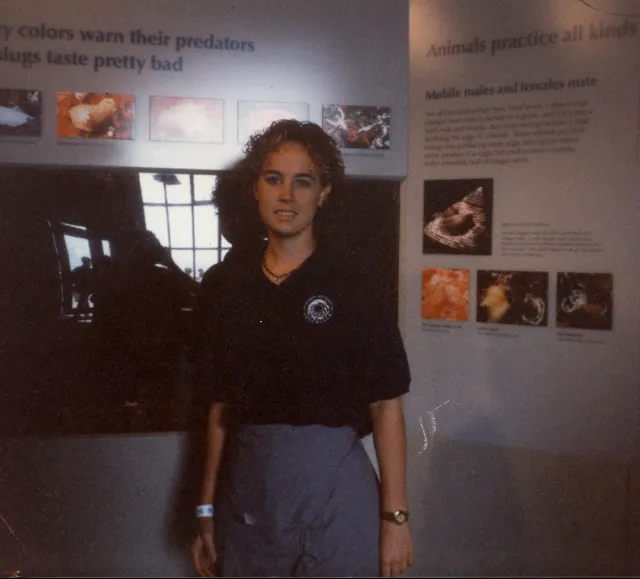
Fittingly, Nelson became a volunteer docent at the Monterey Bay Aquarium and, at age 16, her journey as an environmental educator began. From there, she went to UC Santa Cruz, where she earned a bachelor’s degree in marine biology.
She continued to volunteer at the aquarium, interpreting biological and ecological concepts to a wide range of audiences. And while Nelson enjoyed and appreciated the heads-down work of scientific research, she also discovered her passion and talent for explaining science.
“I will forever be grateful for the people in my life who said, ‘You are too good of a teacher to spend the rest of your life in a lab; you need to be in a teaching environment; you need to be where you can take what you and other people know, and share it with other people in a way that they can understand,” Nelson explained.
Monterey Bay Aquarium job launched climate communications career
One of those people who believed in Nelson’s abilities is Jim Covel, the longtime director of guest experience training and interpretation at the Monterey Bay Aquarium. Covel, the first person Nelson met at the aquarium when she was a teenager, hired her to the staff in 2006.
“Jim taught me – and everyone he trained – the art of interpreting science…when people ask me what language I interpret, I say science,” Nelson said.
She noted that her “aquarium dad” has been a major influence in her life, both professionally and personally.
“The aquarium is what led me to my national work, and then international work, with climate communication,” she said.
In her 12 years at the aquarium, she became a leading voice on interpreting climate science to the public. In 2011, Nelson became a founding member of the National Network for Ocean and Climate Change Interpretation. She championed evidence-based communication strategies that changed people’s perceptions about their relationship to climate change and inspired positive action.
It was her achievements in that field that led to recognition from the White House – and further motivated her to pursue a graduate degree in climate science and policy from the UC San Diego Scripps Institution of Oceanography. For her master’s degree project, Nelson designed a curriculum for a minor in climate studies, an interdisciplinary minor that is still offered by UCSD to this day.
While taking a break after her intensive one-year master’s program, Nelson was suddenly deluged by messages from 16 different people, across a variety of platforms and channels, about a job opportunity that seemed perfect for her.
It was a position at UC ANR, the umbrella organization of the UC Environmental Stewards program. It was the only job she applied to after graduate school.
Nelson’s work with Climate Stewards spreads science, awareness
In February 2019, Nelson began as an academic coordinator to help launch the UC Climate Stewards course. As a new offering under UC Environmental Stewards (which also administers the UC California Naturalist course), the Climate Stewards course prepares participants to communicate and engage in local efforts to advance community and ecosystem resilience.
“Just like good naturalists interpret nature, Sarah-Mae makes climate change relevant and meaningful using evidence-based climate communication methods,” said Greg Ira, director of UC Environmental Stewards. “She transformed our steering committee’s vision of a Climate Stewardship course into reality – with now 30 organizations running 20-plus courses per year.”
Through those partner organizations, Climate Stewards has reached more than 1,800 participants since launching in late 2020. The curriculum, developed by Nelson, has been adopted by four other states – Illinois, Pennsylvania, Washington and Oregon – with more states being added every year.
Since becoming assistant director of UC Environmental Stewards, Nelson is responsible for training instructors in both courses, Climate Stewards and California Naturalists. She is also developing a new, condensed version of the course for executives and board members who want a quick summary of climate stewardship. And she continues to make the certification accessible for more people.
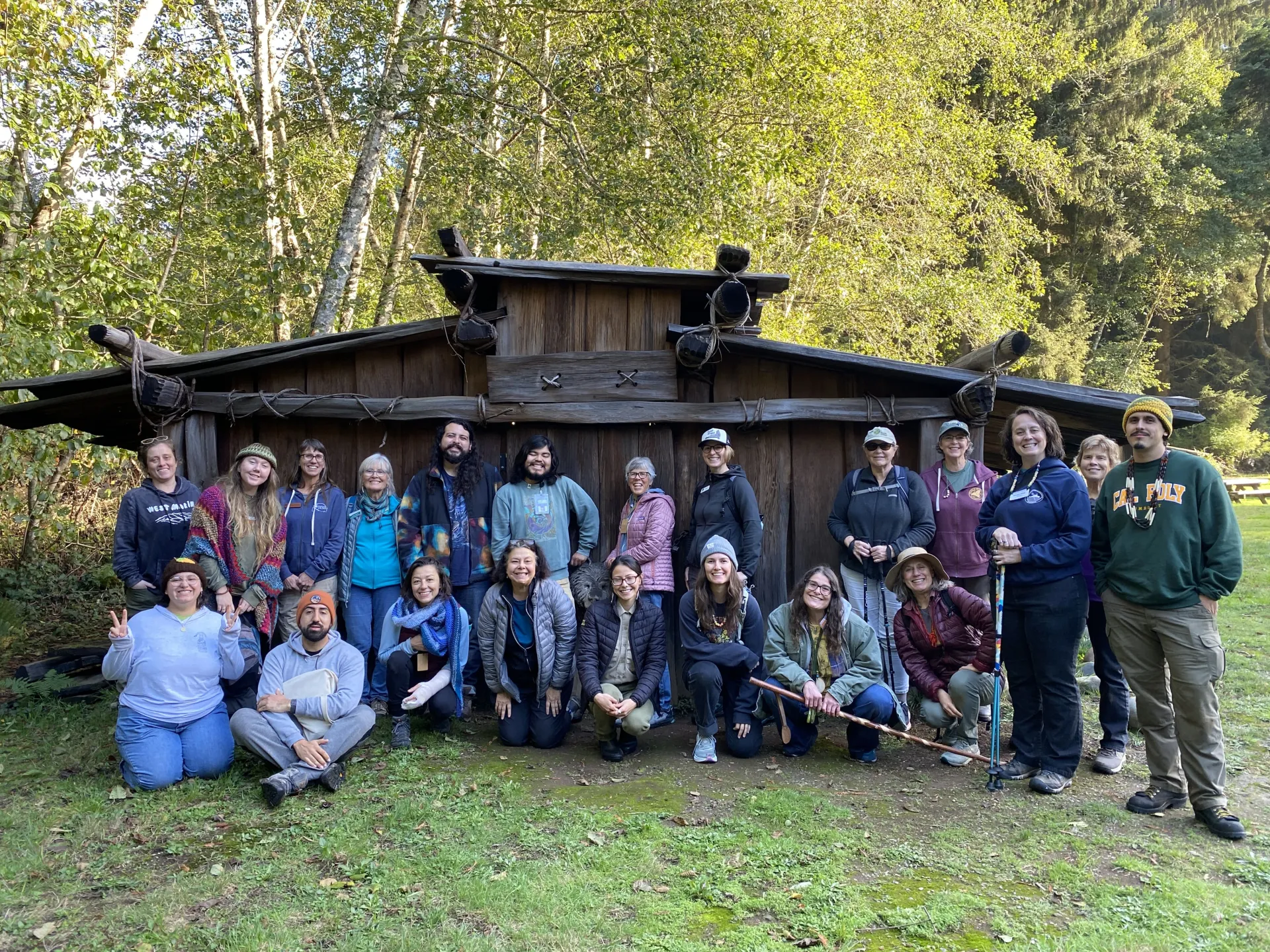
“Probably more than anything, the biggest threat to education and science in general is the echo chamber of information disorder that exists, especially online,” Nelson said. “One of the great things about our classes is that they bring together community members from different bubbles…they provide spaces for adult community educational experiences that that don’t happen otherwise, because we don’t really have spaces for adults to learn together.”
Nelson said she is filled with pride and awe when hearing about how participants have extended their knowledge into their communities.
Some have written children’s books about climate change. One person combatted the digital disinformation they witnessed while working for an online video platform. A vineyard owner co-enrolled with four of his employees to collaboratively learn how to make their operation more sustainable.
Recognizing the course’s value, the California Climate Action Corps now offers it to their members, further extending the reach of this climate-minded career development opportunity.
“All of these amazing things are happening in all of these places that I could never have dreamed of,” Nelson said.
Influential women inspired Nelson, who aspires to pay it forward
Nelson describes herself as “neuro-spicy” – which she prefers to “neurodivergent,” which implies there is just one set path from which others diverge. Her diagnosed conditions grant Nelson a special way of looking at and thinking about the world, which has helped illuminate her extraordinary career path.
She is also quick to credit her mentors and role models, including the many exceptional women in her “heavily matriarchal” family – whom she highlighted in a college essay she wrote, “Who Are They? They Are Me.”
She singled out her earliest intellectual hero, her great-grandmother Ceadres. With a personality as unique as her name, Ceadres was a “Renaissance woman” who introduced young Sarah-Mae to painting, Shakespeare and the natural wonders of the forest.
Nelson also cited the influence and example of Julie Packard, who retired last year as executive director of the Monterey Bay Aquarium after a remarkable career in ocean conservation.
“The world is different because of her – millions of people’s lives are different because of her,” Nelson said. “And I got to be one of the young women who learned how to be a marine scientist because of the road that Julie paved.”
As a 16-year-old who just started volunteering, Nelson was personally greeted by Packard as she walked through the aquarium. She never forgot the feeling of being seen and acknowledged by a strong, successful woman who had the career she aspired to achieve.
Years later, Nelson was part of the committee that hired a woman for a job at the aquarium. The new employee later confided that she had been inspired, when she was young, after hearing Nelson give an auditorium program at the aquarium during which she shared her academic and career journey.
Nelson also has emulated Packard in her self-effacing modesty. Nelson said she could not understand why she had been chosen for this Women’s History Month feature, believing that other women have accomplished so much more.
She wishes everyone could be uplifted and recognized for their contributions, in their own way.
“I’ve reflected and thought about the collage of all the women who painted the picture that is me,” Nelson said. “But then I started thinking about the women for whom I am part of their collage – it makes me feel so humble and so proud at the same time.”