

Project Context:
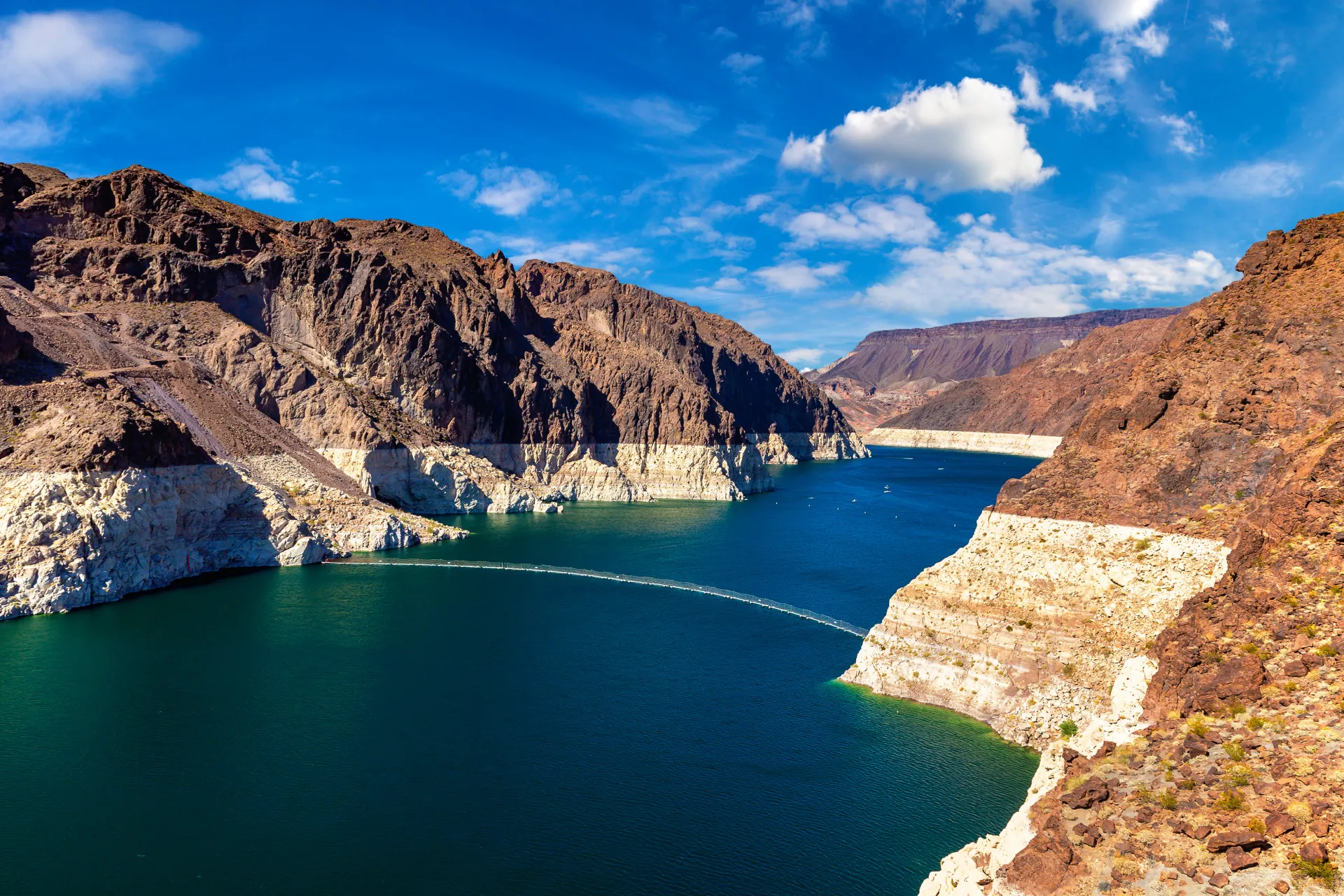
Climate Smart Agriculture team member Michael Jaquez is supporting a project that seeks to articulate the nuances surrounding the management of the Colorado River Basin. The Colorado River Basin provides a large portion of water to California residents and farmers. It is extremely important to the livelihoods of many, but the Colorado River Basin faces critical water shortages, and a reduction in inflow that threatens reservoir levels, primarily Lake Powell and Lake Mead.
There is a long and complex history surrounding the management of the Colorado River Basin, and those that it supplies. This basin is divided into two regions, the upper basin and the lower basin. Colorado, New Mexico, Utah, and Wyoming are the upper basin states, and Arizona, California, Nevada, and Mexico are the lower basin users (1922 Colorado River Compact). There are also many tribal nations across this area. Around 7.5 million acre feet of water go to the upper basin, 7.5 million acre feet of water go to the lower basin, and 1.5 million acre feet go to Mexico (1944 Mexican Water Treaty). In 2025, about 5.92 million acre feet were released to the lower basin, about 4 million acre feet to the upper basin, and 1.42 million acre feet to Mexico. The Colorado River Basin is not producing the amount of water that its users need, so changes to management must be made.
Immersive Model Preview:
To address this issue, Professor Dr. David Rosenburg with Utah State University (USU), in collaboration with Erik Porse, director of the California Institute for Water Resources (A department within the University of California, Agriculture and Natural Resources), is working on a new project focused on participatory modeling for the Colorado River Basin management. These modeling sessions utilize low inflow scenarios set in Lake Mead, and the model is based on the principles of divide reservoir inflow. Modeling sessions immerse collaborators into the world of basin management and provide an opportunity to be the one making decisions on management during an uncertain water supply future. The ideal collaborator is someone who's work directly impacts the Colorado River Basin, or someone who is impacted by the way the basin is managed. Collaborators assume different roles (Bureau of Reclamation, California, Arizona, Nevada, Mexico, and First Nations), and identify vulnerabilities for their role and strategies to address them. Some features of this model that differ from the real world are the ability to buy, sell water from a water account, choosing to consume or bank water allocations, and including First Nations as a priority user. Through these model sessions, the project aims to provoke alternative perspectives and ideas that will influence how the Colorado River Basin is managed in the future.
If you are interested in reading more about this project or participating in a modeling session, please visit the links below: