

What a day when Betty White visited the Vacaville Museum!
Not the beloved Betty White, the American actress, comedian, producer, activist, and animal welfare advocate who passed Dec. 31, 2021 at age 99.
It was her namesake.
It all began when the Vacaville Museum hosted a public function on Oct. 11 in its courtyard at 213 Buck Ave. to herald its much-praised gallery exhibit, "The Art of Death." The exhibit, which closes Nov. 15, "is filtered through the lenses of art, history, science, and culture, and explores the ways society depicts, honors and confronts death to reveal how our relationship with mortality continually evolved," according to executive director Clara Dawson.
The courtyard scenario: Museum Guild member Wanda Gardner is happily selling succulent-decorated pumpkins at a table when something lands on her hair--and quickly leaps onto the lap of Museum member Kerri Schillinger, who is intently listening to two members of the Northern California Amateur Paranormal Society share their experiences in investigating paranormal activities.
Surprise! Surprise!
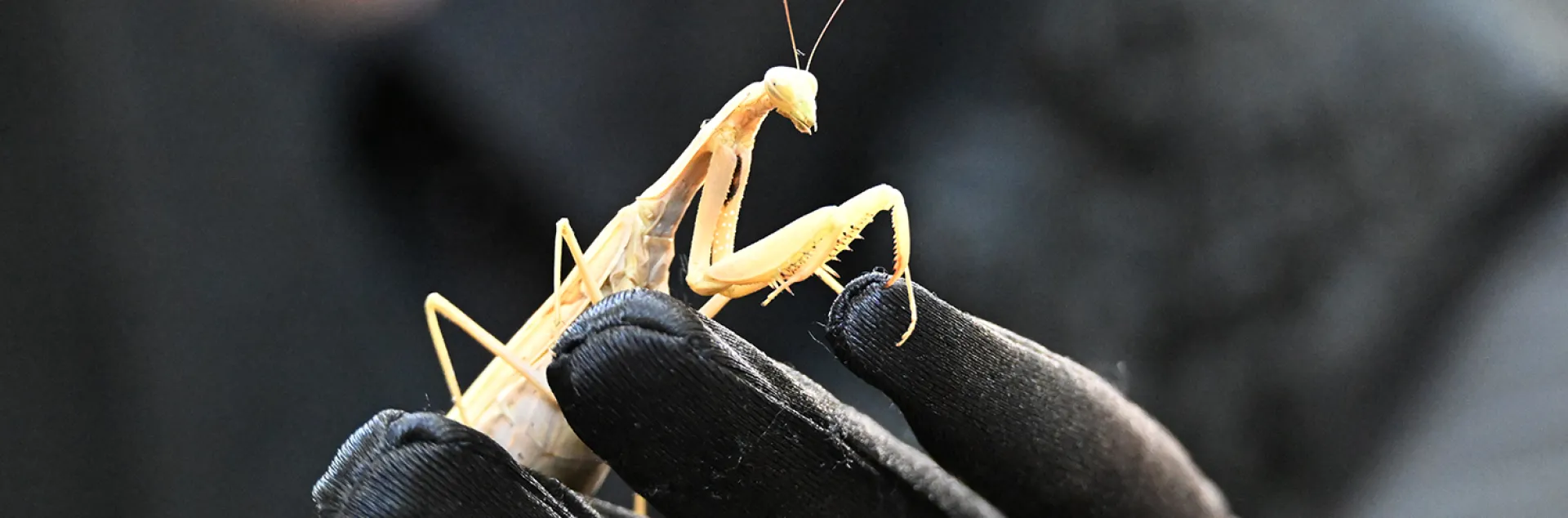
The "something" is a praying mantis, and a gravid one at that. The species? Mantis religiosa, as identified by mantis specialist Lohit Garikipati, a UC Davis doctoral alumnus studying for his doctorate at Richard Glider Graduate School at the American Museum of Natural History.
This mantis, commonly known as the European mantis, belongs to the Mantidae family, the largest family of the order Mantodea. It's found throughout Europe, Asia, and Africa, as well as North America.
And in the Vacaville Museum courtyard.
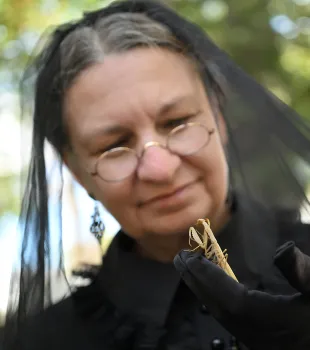
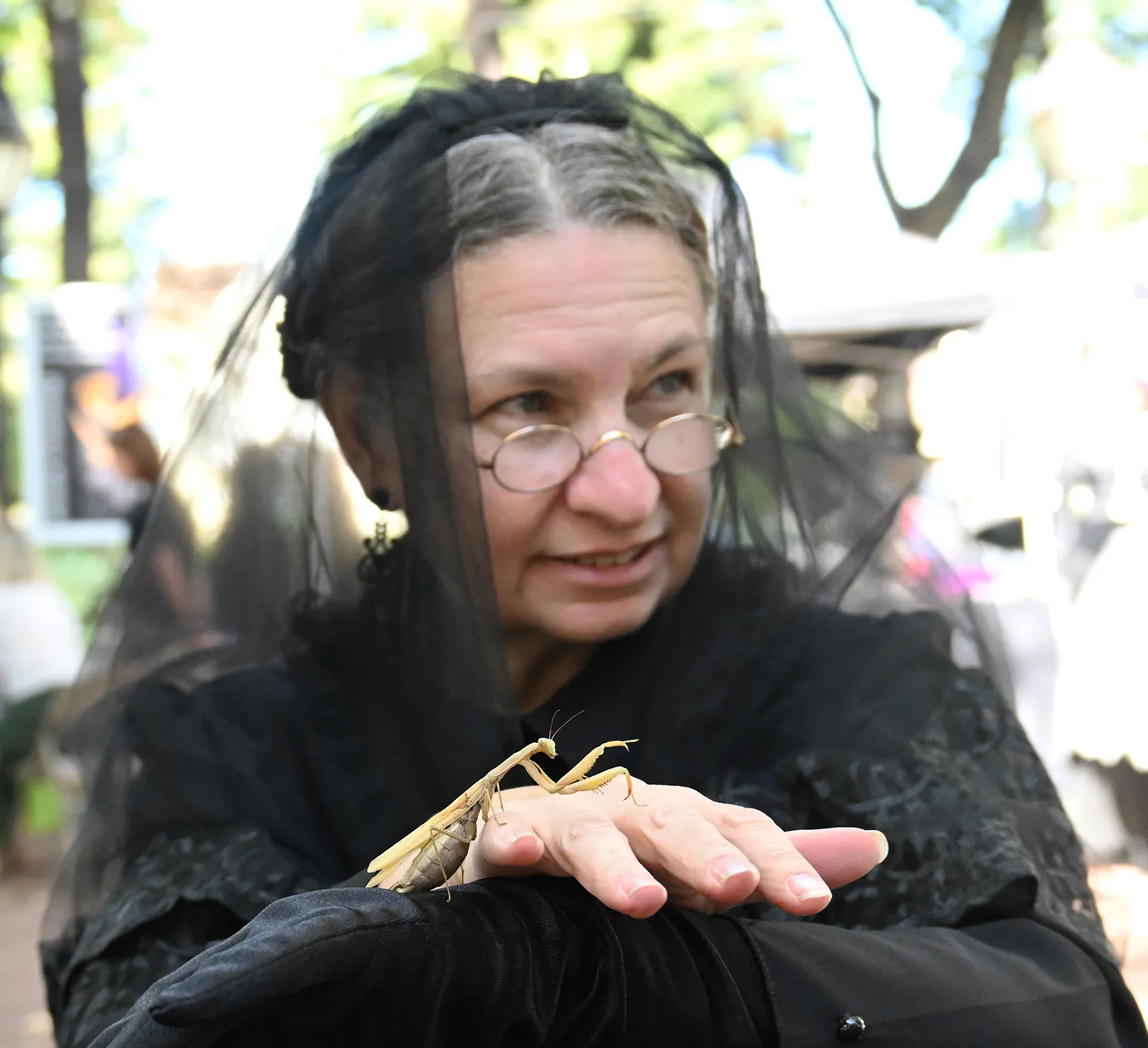
Schillinger , a fan of Betty White, quickly named the mantis after the beloved entertainer.
The light-brown mantis seemed in sharp contrast to Schllinger's black Victorian mourning dress, veil and gloves.
Was the mantis seeking a morning or "mourning" meal, in keeping with "The Art of Death" gallery exhibit? Perhaps.
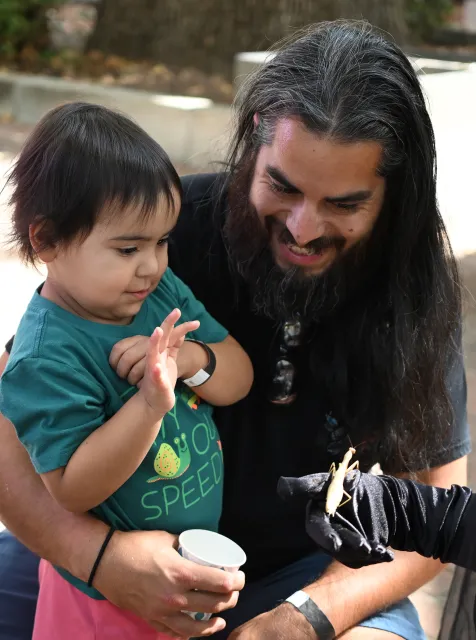
Schllinger turned the encounter into an educational experience, gently showing the mantis to children and adults alike. Many had never seen one, or seen one close-up It was almost like a scene from the Bohart Museum of Entomology petting zoo at the University of California, Davis.
Dressed in Black
About Schillinger's attire: "The custom of wearing black became popular from Queen Victorian, hence the Victorian era," she said. "Her husband died at 42 years old in 1861. She wore all black and continued in mourning dress for the rest of her life.“
“Widows would go through three stages of mourning, with different restrictions on each stage. The first and most stringent stage was called Full Mourning--and it would last one year and one day from the date of her husband's death. The clothing would be very plain (no ornaments or detailing, and very dull), with heavy fabric, and would be completely black. Jewelry could be worn - but it needed to be fairly plain and was often jet black. A thick black crape (a type of very matte fabric) veil would be worn over the face, also called "widow's weeds" or "weeping veil." The veil would be worn with a plain black bonnet. The veils in the first stage would often be floor length. Unfortunately, they were dyed with various chemicals including arsenic, and the widows breathing them in often got very sick--and many died. Many women fainted from difficulty breathing in hot weather."
“The second stage was called Second Mourning--and that is the style I was going for in my outfit," Schillinger related. "This would last for another 3 to 6 months. The veil would remain, but would now move to the back of the head and could be shorter. Some colors could be introduced into clothing at this point--like some colored trim. The jewelry could also start to have more color --like gold or gemstones."
"The third stage was called Half-Quarter Mourning--and this generally was what eventually brought the widow back to regular clothing. The crape veils were no longer used. Other colors of clothing could be worn--but they would gradually transition to these other colors. Some women never went back to colored clothing."
Schillinger, keenly interested in history, enjoys researching and delivering community presentations on various historic subjects. She is active in the Chief Solano Chapter of Daughters of the American Revolution. A longtime Vacaville businesswoman, she owns a bookkeeping business, Bull's-Eye Bookkeeping; is the CEO of Eras Natural Sciences, Inc. (which makes a natural wound care topical made from Manuka honey); and also runs a non-profit, Brilianis Brainworks. "I do seminars on right-brain versus left-brain thinkers and give out scholarships to right-brained students--who typically wouldn't qualify for traditional scholarships and who want to go to a trade school or community college."
As for Betty White, the praying mantis, she declined to leave the gloved hands of Kerri Schillinger.
Schillinger took her home.