
"Most people infected with St. Louis encephalitis virus do not have symptoms," according to the Centers for Disease Control and Prevention. "Those people who do become ill may experience fever, headache, nausea, vomiting, and tiredness. Some people may develop neuroinvasive disease, such as encephalitis (inflammation of the brain) or meningitis (inflammation of the membranes that surround the brain and spinal cord). In rare cases, long-term disability or death can occur."
If you're interested in research on mosquito-borne diseases, don't miss the UC Davis Department of Entomology and Nematology seminar on Wednesday, Jan. 28.
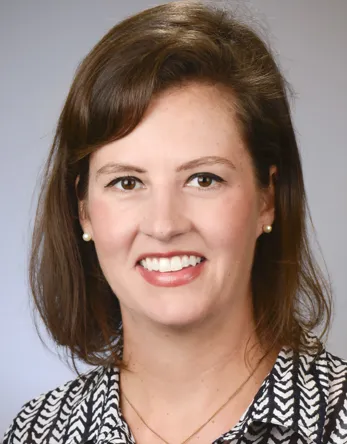
Professor Lark Coffey, a virologist in the Department of Pathology, Microbiology and Immunology, UC Davis School of Veterinary Medicine, will speak on "Reemerging St. Louis Encephalitis Virus in the Western United States and Fitness Dynamics in California Culex" at 12:10 p.m. in 122 Briggs Hall. The seminar also will be on Zoom. The Zoom link: https://ucdavis.zoom.us/j/95882849672.
"The human pathogenic orthoflavivirus St. Louis encephalitis virus (SLEV) reemerged in the western United States in 2015 after more than a decade of apparent absence and has since expanded throughout California with sustained interannual transmission," Coffey says in her abstract. "This shift from the historically sporadic pattern of SLEV activity prior to 2003 raises the question of whether contemporary SLEV strains differ in fitness in Culex vectors compared with earlier strains."
"To determine whether reemerging SLEV possess augmented infectivity and transmissibility that may have facilitated reestablishment, we compared the vector competence of five genotype III SLEV strains detected in California between 2016 and 2023 with a genotype V strain isolated in California in 2003," she noted. "We observed that multiple genotype III SLEV strains exhibit equal or greater vector infectivity in Culex quinquefasciatus (but not consistently in Culex tarsalis) than the 2003 genotype V strain, suggesting that enhanced fitness in this vector may contribute to the persistence and geographic spread of SLEV in California since its reemergence in 2015 and underscoring the need for continued vector
surveillance and targeted control efforts."
Coffey will be introduced by medical entomologist-geneticist Geoffrey Attardo, associate professor, UC Davis School of Entomology and Nematology.
Arthropod-Borne Virus Ecology and Evolution
Coffey focuses her research on arthropod-borne virus ecology and evolution with a goal of understanding how arboviruses persist via continuous cycling, how they invade new areas, and how they cross-species to cause human and veterinary disease.
She holds a bachelor's degree in biology (2000), cum laude, from the University of the South, Sewanee, Tenn., and a doctorate in experimental pathology and arbovirology (2005) from the University of Texas Medical Branch, Galveston, Texas. She titled her dissertation, "Ecology and Transmission Dynamics of Everglades Virus."
Coffey completed a post-doctoral fellowship in 2006 at UTMB; a senior postdoctoral fellowship in 2011 at the Institut Pasteur, Paris, France, and a senior post-doctoral fellowship in 2013 at the Blood Systems Research Institute, UC San Francisco. She joined the School of Veterinary Medicine as an assistant professor in 2013. She was named a Chancellor's Fellow in 2021, and a Fellow of the American Society of Tropical Medicine and Hygiene in 2022.
Seminar coordinator Marshall McMunn may be reached at msmcmunn@ucdavis.edu for technical issues.
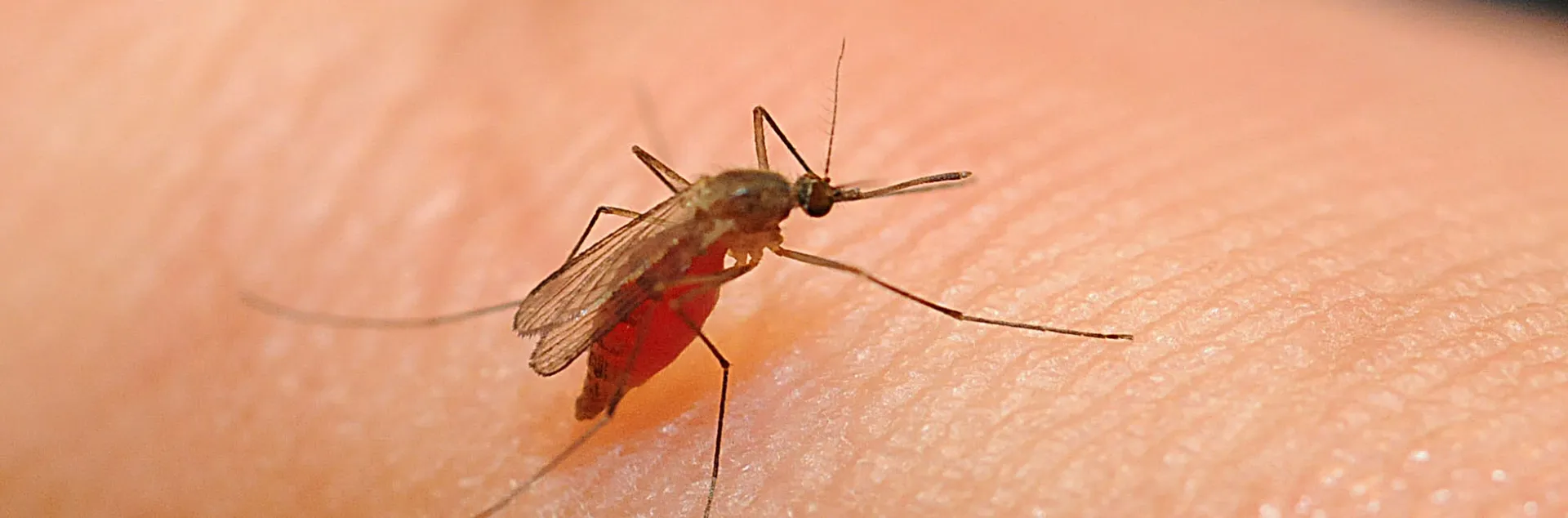
Cover image: A mosquito, Culex quinquefasciatus, drawing blood. (Photo by Kathy Keatley Garvey)